
Building Blocks of 6th Grade Math
Getting a passing grade and truly owning a skill are two very different things — and the students who thrive in 6th grade math, pre-algebra, and beyond are the ones who know the difference.
Starts Mon, Nov 2
11:00 PM UTC · 1h
4 sessions
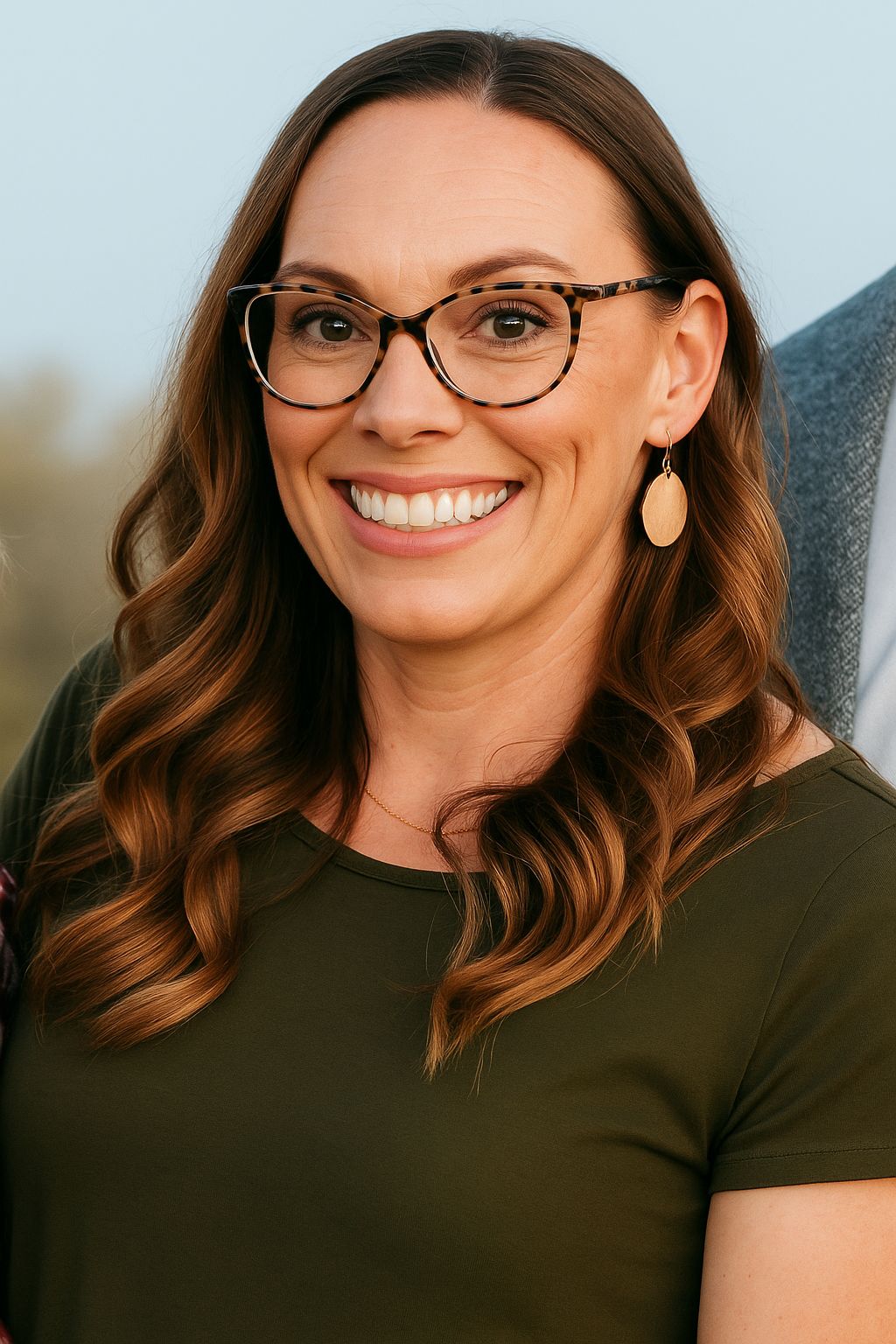
Sarah
4.6
Outcomes, not lecture notes.
Classify and analyze triangles by side length (equilateral, isosceles, scalene) and angle measure (acute, obtuse, right) and connect those properties to real-world uses in construction and navigation
Apply the Pythagorean theorem to right triangles and understand how triangulation is used in mapping and GPS systems
Plot and interpret points on the coordinate plane, using graphing to visualize mathematical relationships
Solve one-variable algebraic equations using the addition and subtraction properties of equality and inverse operations
Write equations from tables of values to represent proportional relationships between two quantities (e.g., y = 30x)
Convert fluently between fractions, decimals, and percentages and apply those conversions to real-world problem-solving scenarios
Calculate percentages in practical contexts — including sales, discounts, and comparisons — and explain what those numbers actually mean
Translate word problems and real-world scenarios into mathematical equations and solve them with confidence
Meet Sarah.
Sarah
Sarah Thompson is a forward-thinking virtual educator specializing in elementary education. With a Master's in Teaching from George Mason University and extensive experience designing multimedia-rich lessons, she transforms online classrooms into vibrant learning communities. Sarah's innovative approach—incorporating virtual field trips, interactive assessments, and real-time feedback—ensures that every student is engaged and empowered to achieve academic success.
Getting a passing grade and truly owning a skill are two very different things — and the students who thrive in 6th grade math, pre-algebra, and beyond are the ones who know the difference. Building Blocks of 6th Grade Math is a year-round supplemental class designed for driven 6th graders who want more than a surface-level pass on the concepts that show up again and again across every future math course. Students sharpen their mastery of fractions, decimals, and percentages; build real fluency with algebraic equations and proportional relationships; and develop a confident command of triangle geometry and coordinate plane graphing. Each session connects these core skills to real-world contexts — from calculating discounts to mapping coordinates to understanding how triangulation works in navigation — so the math feels purposeful, not abstract. This is the strategic edge that keeps ambitious students ahead of the curve, not just keeping up with it.
Make the Basics Automatic When a student is still working hard on an earlier skill, like fraction operations or long division, there's little attention left for the new idea that builds on it. We revisit those foundations until they're automatic, so students' brainpower goes where it's needed most.
Lock In This Year's Learning The school year moves fast, and students are often just on the cusp of getting a topic when the next unit begins. We circle back to key 6th grade concepts from earlier in the year, like ratios and rates or dividing fractions, that later units depend on.
Tackle What's in Front of You Whatever unit your class is in right now, from ratios and percents to expressions, equations, and statistics, students get guided practice and clear strategies for the kinds of problems they're seeing in school this month.
Preview What's Next Wouldn't we all love a sneak peek at our next challenge before the clock starts ticking and the points start counting? We preview upcoming concepts, like negative numbers on the number line or writing and solving one-step equations, so new topics feel familiar instead of intimidating.
Live Q&A
Cameras / mics optional
Recordings
Available within 1 hour, kept 90 days
Materials
No special materials required
Similar classes
free with a Varsity Tutors membership
14
DAYS04
HRS52
MINMon, Nov 2 • 11:00pm UTC
4 classes, starts in 14 days
Tue, Dec 1 • 10:30pm UTC
4 classes, starts in 43 days
Wed, Jan 6 • 11:30pm UTC
4 classes, starts in 79 days
Tue, Oct 20 • 11:00pm UTC
3 classes, starts tomorrow
Building Blocks of 6th Grade Math