Measure and Sketch Angles
Help Questions
4th Grade Math › Measure and Sketch Angles
Lisa is practicing angle measurement and sketching. She measures an angle as $$84°$$, then sketches an angle that is $$96°$$. What is the difference between the angle she sketched and the angle she measured?
$$12°$$ with the sketched angle being larger
$$18°$$ with the sketched angle being larger
$$12°$$ with the sketched angle being smaller
$$18°$$ with the sketched angle being smaller
Explanation
Lisa measured $$84°$$ and sketched $$96°$$. The difference is $$96° - 84° = 12°$$, and since $$96° > 84°$$, the sketched angle is larger. Choice A has the correct difference but wrong comparison. Choices C and D use $$18°$$, which might result from calculation errors like $$96 - 84 = 18$$ (incorrect arithmetic).
Maya uses a protractor to measure an angle and finds it is $$72°$$. She needs to sketch an angle that is $$18°$$ larger than the angle she measured. What should be the measure of the angle Maya sketches?
$$108°$$
$$126°$$
$$90°$$
$$54°$$
Explanation
Maya measured $$72°$$ and needs to sketch an angle $$18°$$ larger. $$72° + 18° = 90°$$. Choice A ($$54°$$) results from subtracting instead of adding. Choice C ($$108°$$) comes from adding $$72° + 36°$$ (doubling the $$18°$$). Choice D ($$126°$$) comes from adding $$72° + 54°$$ (tripling the $$18°$$).
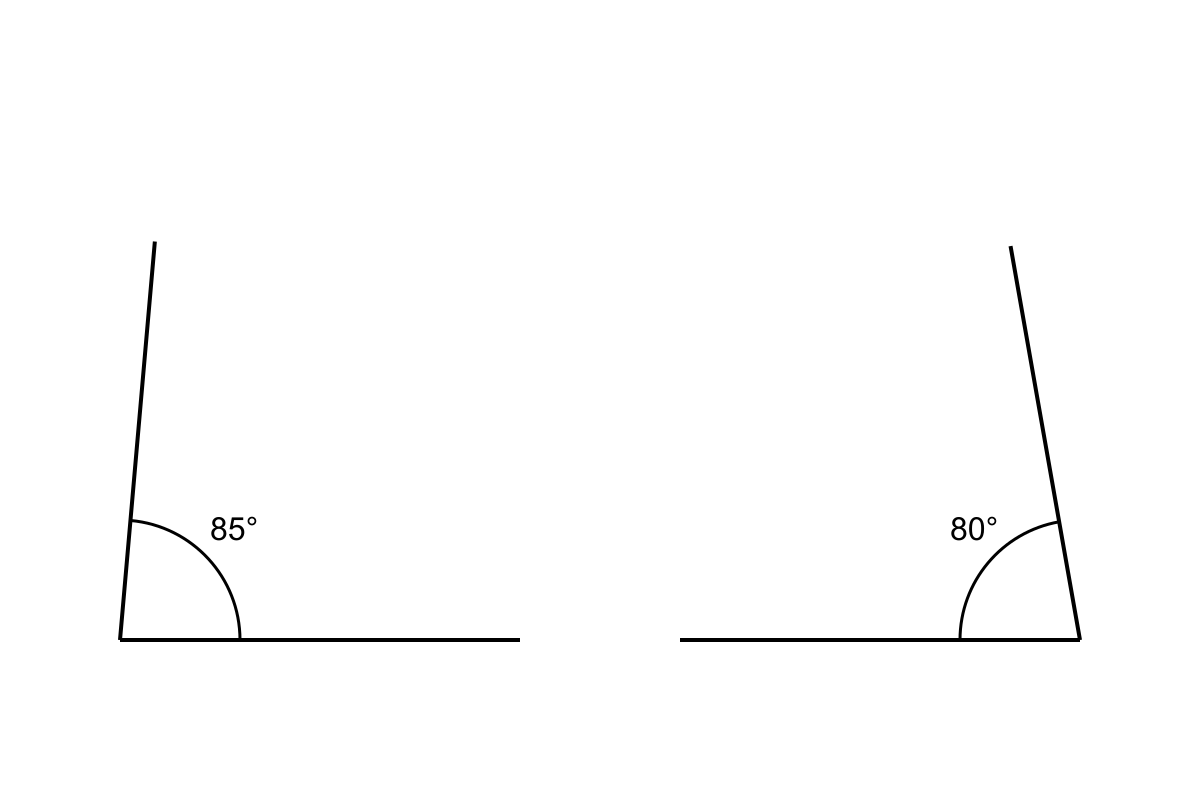
Examine the two angles shown in the diagram. If these angles were placed adjacent to each other (sharing a common ray), what would be the measure of the combined angle?
$$175°$$
$$185°$$
$$155°$$
$$165°$$
Explanation
The diagram shows two separate angles: one measuring $$85°$$ and another measuring $$80°$$. When placed adjacent to each other, the combined angle would measure $$85° + 80° = 165°$$. Choice A incorrectly adds $$85° + 70°$$. Choice C incorrectly adds $$85° + 90°$$. Choice D incorrectly adds $$85° + 100°$$.
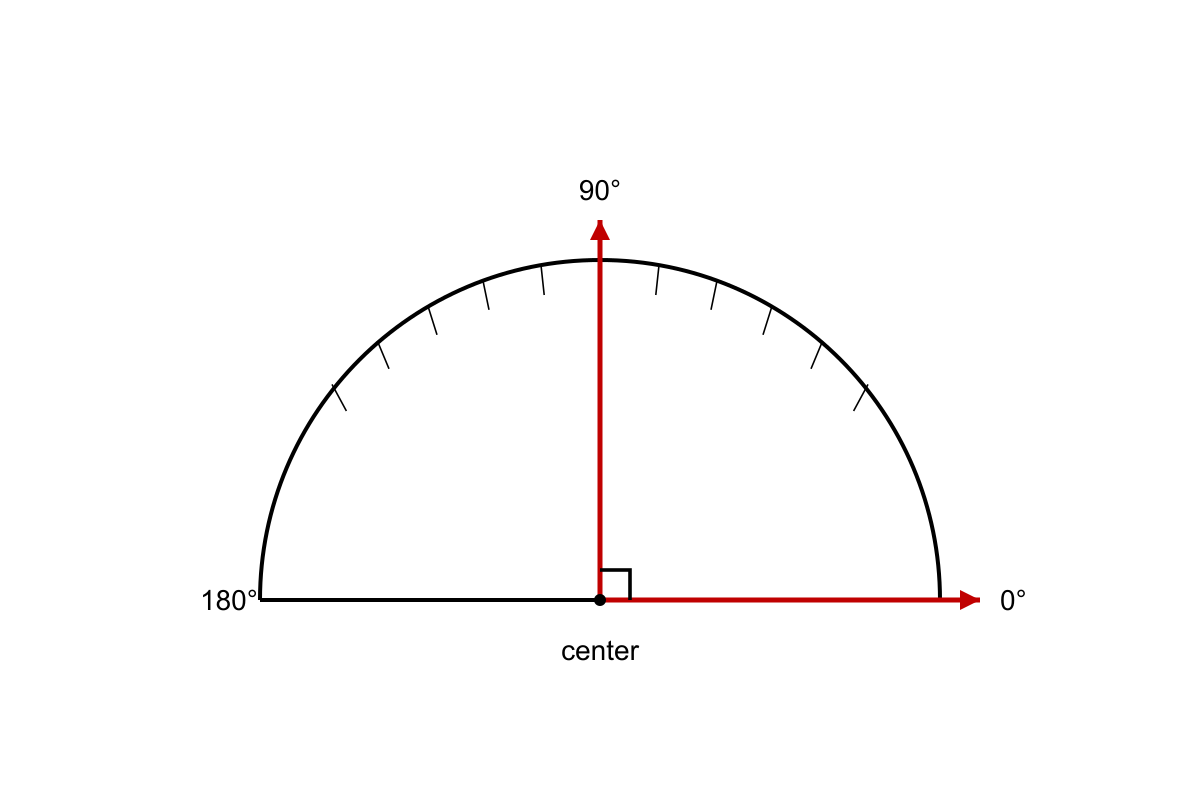
Look at the protractor measurement shown below. Carlos needs to sketch an angle that is $$25°$$ less than twice the measured angle. What should be the measure of Carlos's angle?
$$155°$$
$$145°$$
$$165°$$
$$135°$$
Explanation
The protractor shows an angle measuring $$90°$$. Twice this angle is $$90° × 2 = 180°$$. An angle that is $$25°$$ less than this would be $$180° - 25° = 155°$$. Choice A incorrectly calculates $$90° × 2 - 45°$$. Choice B incorrectly calculates $$90° × 2 - 35°$$. Choice D incorrectly calculates $$90° × 2 - 15°$$.
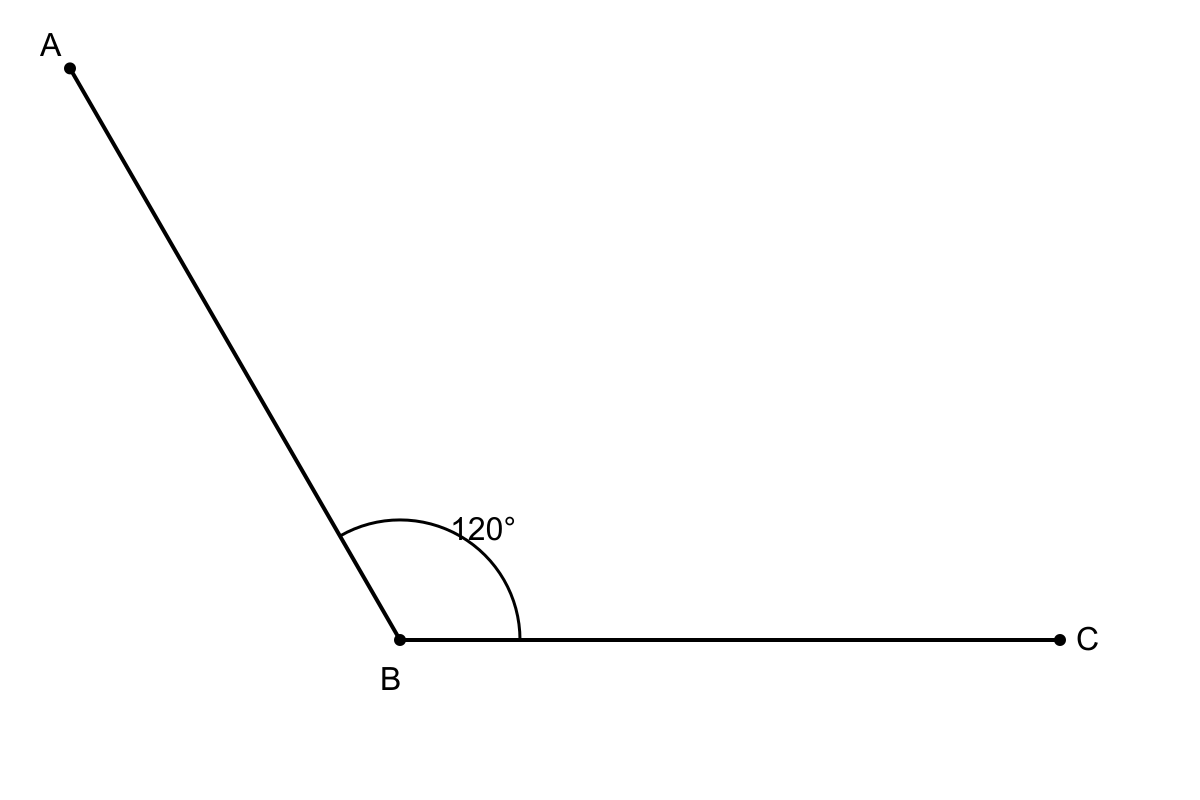
Examine the angle shown in the diagram below. Lisa wants to divide this angle into three equal parts. What would be the measure of each smaller angle?
$$40°$$
$$50°$$
$$45°$$
$$35°$$
Explanation
The angle shown measures $$120°$$. Dividing this into three equal parts: $$120° ÷ 3 = 40°$$. Choice A incorrectly calculates $$105° ÷ 3$$. Choice C incorrectly calculates $$135° ÷ 3$$. Choice D incorrectly calculates $$150° ÷ 3$$.
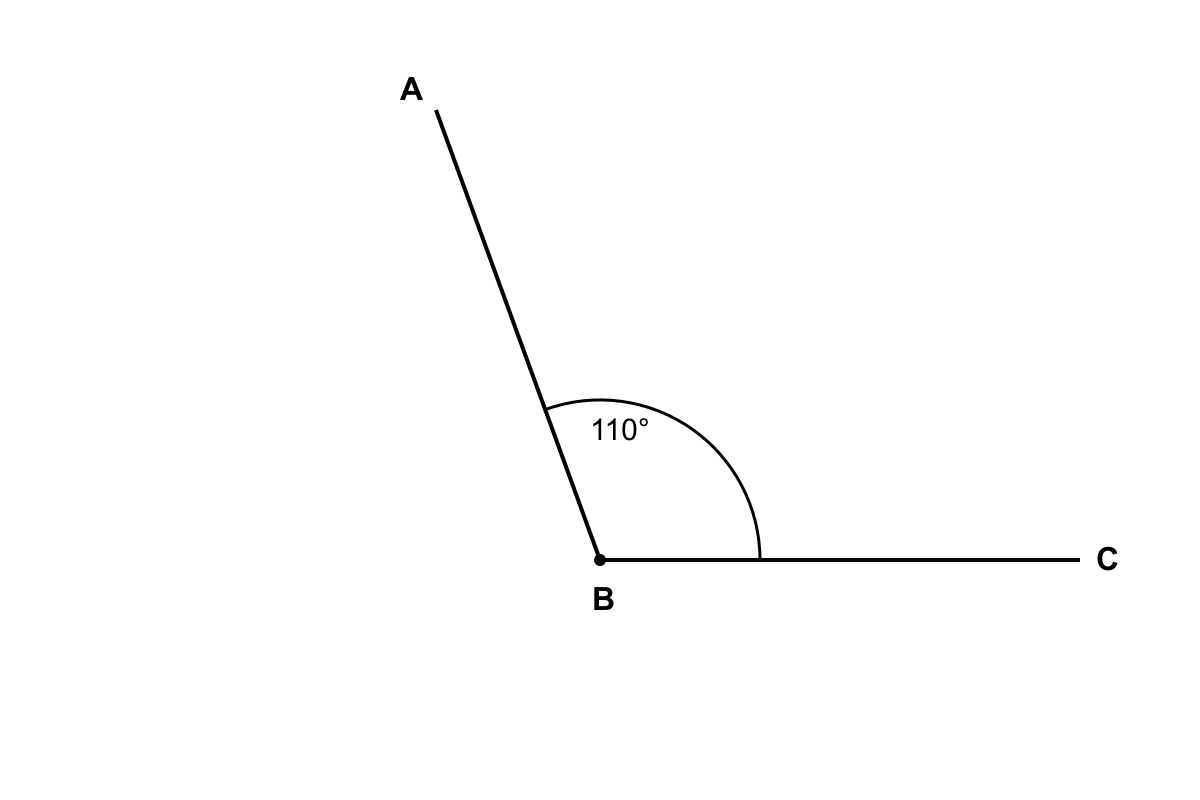
Study the angle shown in the figure. Emma measures this angle with her protractor but accidentally reads the wrong scale. If the correct measurement is $$110°$$ and Emma read $$70°$$, what is the difference between what she read and the actual measure?
$$50°$$
$$40°$$
$$35°$$
$$45°$$
Explanation
The actual angle measures $$110°$$, but Emma incorrectly read $$70°$$. The difference between her reading and the actual measure is $$110° - 70° = 40°$$. Choice A incorrectly calculates $$105° - 70°$$. Choice C incorrectly calculates $$115° - 70°$$. Choice D incorrectly calculates $$120° - 70°$$.
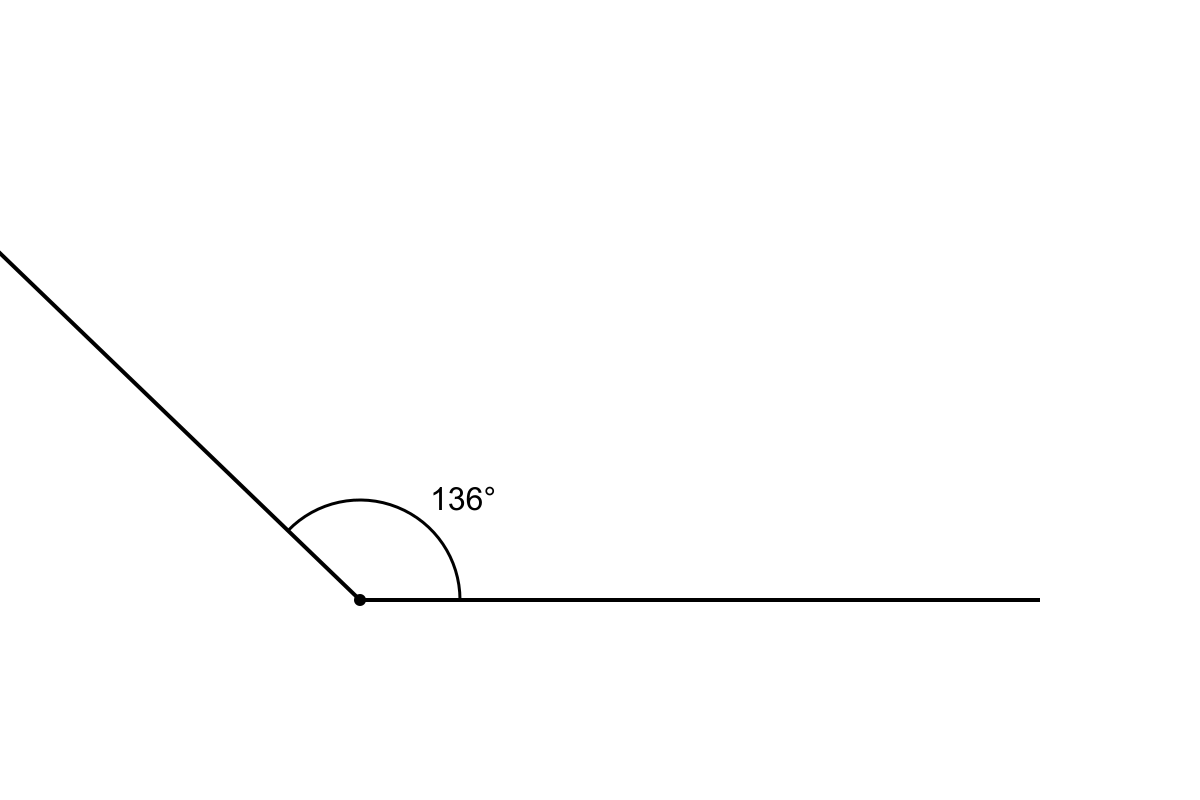
Look at the angle shown in the diagram. If you were to sketch an angle with half this measure, what would be the measure of your sketched angle?
$$102°$$
$$68°$$
$$136°$$
$$34°$$
Explanation
The angle shown measures $$136°$$. Half of $$136°$$ is $$136° ÷ 2 = 68°$$. Choice A ($$34°$$) is one-fourth of the original angle. Choice C ($$102°$$) results from subtracting $$34°$$ instead of dividing by $$2$$. Choice D ($$136°$$) is the original angle measure without any change.
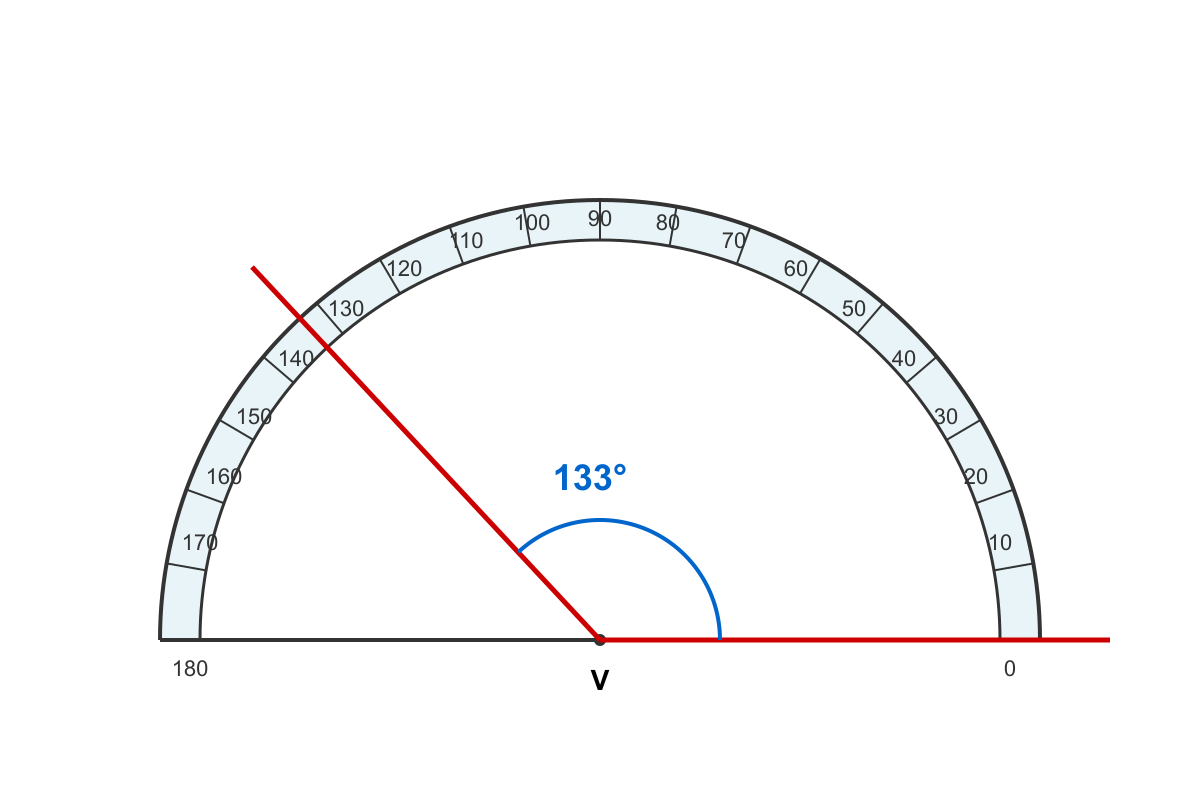
Examine the protractor measurement shown in the diagram. If this angle were part of a straight line, what would be the measure of the other angle that completes the straight line?
$$133°$$
$$90°$$
$$47°$$
$$180°$$
Explanation
The protractor shows an angle of $$133°$$. If this angle is part of a straight line ($$180°$$), the other angle would be $$180° - 133° = 47°$$. Choice B ($$90°$$) would only be correct if the original angle were $$90°$$. Choice C ($$133°$$) is the original angle measurement. Choice D ($$180°$$) is the total of a straight line, not the supplementary angle.
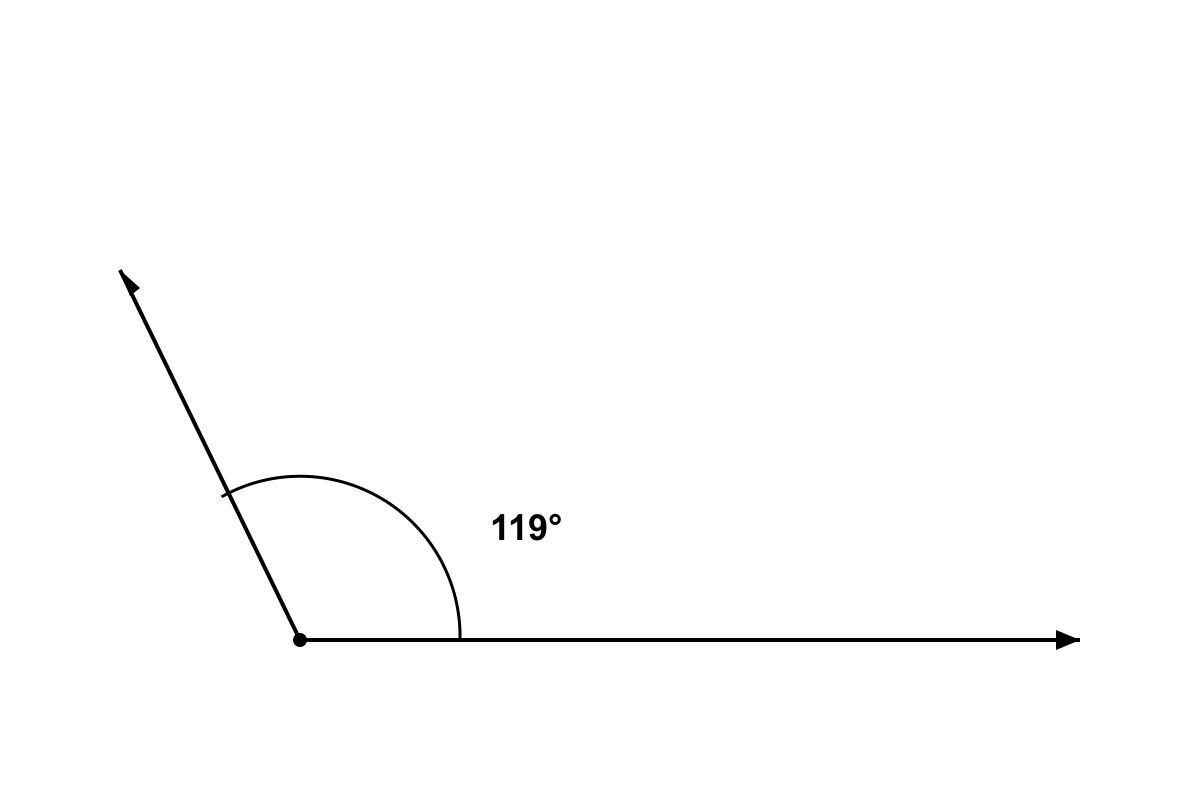
The diagram shows an angle measurement. If you were to sketch an angle that is supplementary to this angle, what would be its measure?
$$61°$$
$$29°$$
$$151°$$
$$119°$$
Explanation
The diagram shows an angle measuring $$119°$$. Supplementary angles add up to $$180°$$, so the supplementary angle would be $$180° - 119° = 61°$$. Choice A ($$29°$$) would be the complementary angle if the original were $$61°$$. Choice C ($$119°$$) is the original angle. Choice D ($$151°$$) results from adding instead of subtracting.
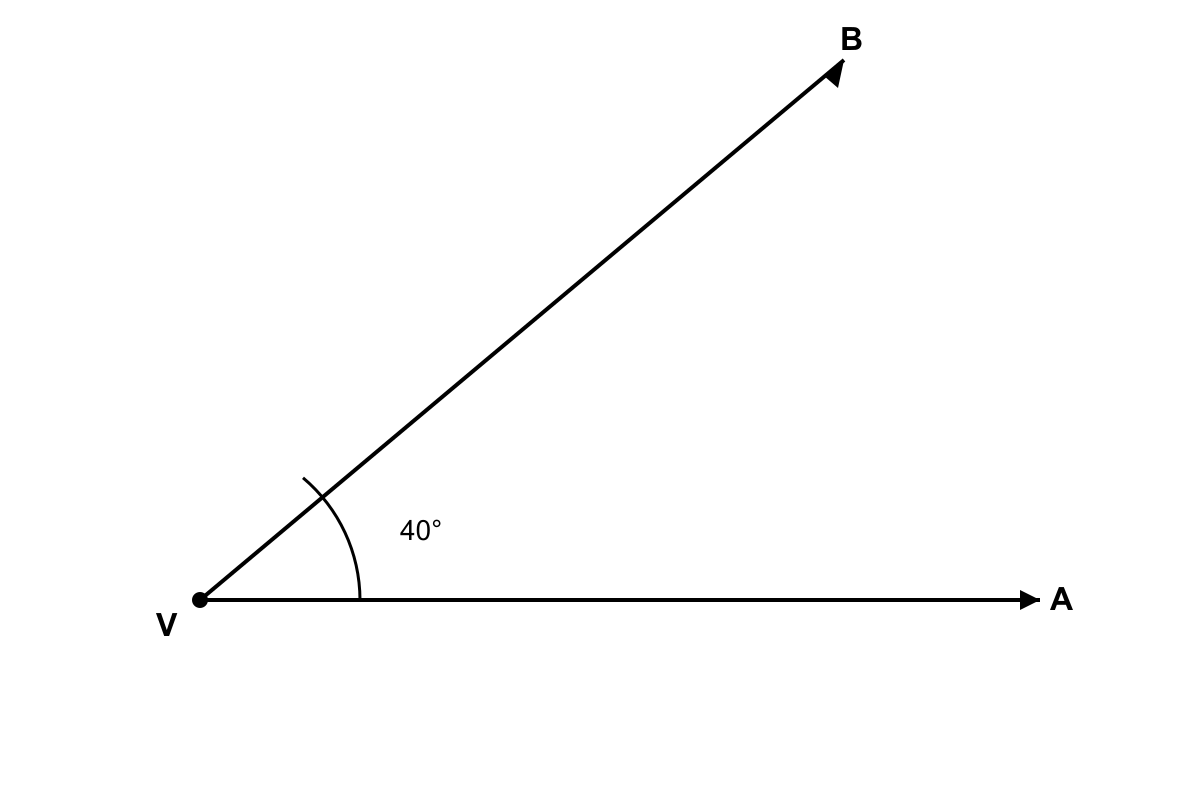
When using a protractor to measure the angle in the figure, which statement best describes the correct measurement process?
Place the protractor so both rays touch the curved edge and read the difference between the numbers
Place the center point anywhere on the first ray and read the outer scale measurement
Place the center point on the vertex and read where the second ray crosses the inner scale only
Place the center point on the vertex, align one ray with zero, and read where the second ray crosses the same scale
Explanation
The correct process requires placing the protractor's center point on the vertex, aligning one ray with the zero mark, and reading where the second ray crosses the same scale you started from. Choice A ignores proper alignment and scale consistency. Choice C places the center incorrectly. Choice D describes an invalid measurement technique.