What this deck covers
This deck focuses on Effects Of Government Intervention In Markets, giving you a quick way to review the definitions, rules, and examples that matter most for AP Microeconomics.
Study Effects Of Government Intervention In Markets in AP Microeconomics with focused flashcards that help you recognize the idea, recall the key rule, and apply it in practice-style prompts.
0% Complete
Identify one effect of a subsidy on market equilibrium.
Tap card or press Space to flip
It lowers the price and increases the quantity sold. Subsidy shifts supply right, creating new equilibrium.
How well did you know it?
Card 1 / 58
Space to flip · ← / → to move · once flipped, → Got it · ← Still learning
This deck focuses on Effects Of Government Intervention In Markets, giving you a quick way to review the definitions, rules, and examples that matter most for AP Microeconomics.
Work through these flashcards in short sessions. Try to answer each prompt before flipping the card, then revisit any cards you miss until the explanation feels automatic.
Answer: It lowers the price and increases the quantity sold. Subsidy shifts supply right, creating new equilibrium.
Answer: It can create a surplus if set above equilibrium price. Quantity supplied exceeds quantity demanded at floor price.
Answer: It typically increases producer surplus. Subsidies increase producer revenue and profit.
Answer: A financial charge imposed by the government on a product. Increases production costs for suppliers.
Answer: Results in a price decrease; no quantity change. Subsidy benefit goes entirely to consumers via price.
Answer: By the relative elasticities of supply and demand. Less elastic side bears greater tax burden.
Answer: Greater burden falls on consumers with less elastic demand. Less elastic side bears proportionally greater burden.
Answer: Equilibrium quantity typically increases. Lower costs increase production at all price levels.
Answer: Price controls, taxes, and subsidies can cause deadweight loss. Government interventions prevent efficient market outcomes.
Answer: The division of the tax burden between buyers and sellers. Depends on price elasticities of buyers and sellers.
Answer: It typically decreases consumer surplus. Higher prices reduce consumer benefit.
Answer: A payment from the government to producers to encourage production. Reduces producer costs, making production more profitable.
Answer: It typically increases producer surplus. Higher guaranteed price benefits producers despite surplus.
Answer: Results in a price decrease; no quantity change. Subsidy benefit goes entirely to consumers via price.
Answer: It can create a surplus if set above equilibrium price. Quantity supplied exceeds quantity demanded at floor price.
Answer: They increase the production or consumption of a beneficial good. Aligns private and social benefits through price incentives.
Answer: It typically increases supply. Subsidy reduces production costs, shifting supply rightward.
Answer: It raises the price and reduces the quantity sold. Tax shifts supply left, creating new equilibrium.
Answer: Smaller shortage compared to elastic demand. Limited demand response reduces shortage severity.
Answer: The division of the tax burden between buyers and sellers. Depends on price elasticities of buyers and sellers.
Answer: They internalize the external cost, reducing the quantity produced. Pigouvian taxes align private and social costs.
Answer: A maximum price set by the government below equilibrium. Prevents market price from rising to equilibrium level.
Answer: A payment from the government to producers to encourage production. Reduces producer costs, making production more profitable.
Answer: A minimum price set by the government above equilibrium. Prevents market price from falling to equilibrium level.
Answer: Consumer surplus typically increases. Lower prices from increased supply benefit consumers.
Answer: They increase the production or consumption of a beneficial good. Aligns private and social benefits through price incentives.
Answer: They internalize the external cost, reducing the quantity produced. Pigouvian taxes align private and social costs.
Answer: The loss of economic efficiency when equilibrium is not achieved. Represents welfare loss from market distortions.
Answer: It lowers the price and increases the quantity sold. Subsidy shifts supply right, creating new equilibrium.
Answer: It raises the price and reduces the quantity sold. Tax shifts supply left, creating new equilibrium.
Answer: It typically decreases consumer surplus. Higher prices reduce consumer benefit.
Answer: A shortage occurs. Price below equilibrium creates excess demand.
Answer: Smaller shortage compared to elastic demand. Limited demand response reduces shortage severity.
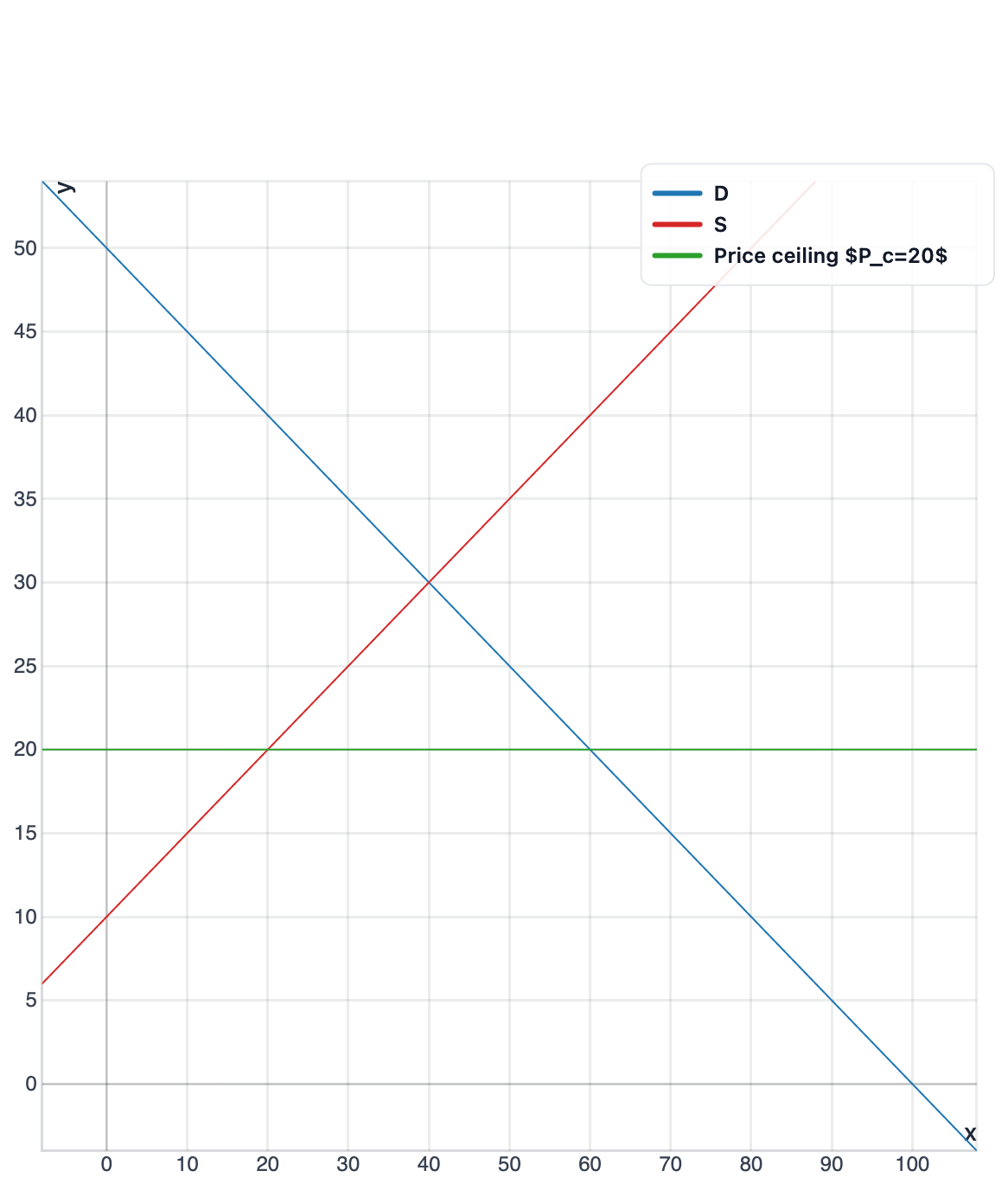
Answer: It can create a shortage if set below equilibrium price. Quantity demanded exceeds quantity supplied at ceiling price.
Answer: By the relative elasticities of supply and demand. Less elastic side bears greater tax burden.
Answer: A shortage occurs. Price below equilibrium creates excess demand.
Answer: Increases equilibrium quantity and decreases price. Returns market to original equilibrium point.
Answer: Consumer surplus typically increases. Lower prices from increased supply benefit consumers.
Answer: The difference between what producers receive and the minimum they would accept. Measures producer benefit from market participation.
Answer: It typically increases producer surplus. Higher guaranteed price benefits producers despite surplus.
Answer: To encourage production or consumption of a good. Government seeks to correct market failures or support industries.
Answer: Greater tax burden on consumers; price increases. Elastic supply shifts burden toward consumers.
Answer: It typically increases producer surplus. Subsidies increase producer revenue and profit.
Answer: Greater tax burden on consumers; smaller quantity change. Consumers absorb most tax with limited demand response.
Answer: Supply curve shifts leftward. Tax adds to production costs, reducing supply.
Answer: Increases equilibrium quantity and decreases price. Returns market to original equilibrium point.
Answer: It typically decreases supply. Tax increases production costs, shifting supply leftward.
Answer: A cost or benefit incurred by a third party not involved in the transaction. Spillover effects not reflected in market prices.
Answer: Supply curve shifts leftward. Tax adds to production costs, reducing supply.
Answer: A financial charge imposed by the government on a product. Increases production costs for suppliers.
Answer: Greater tax burden on consumers; price increases. Elastic supply shifts burden toward consumers.
Answer: Price controls, taxes, and subsidies can cause deadweight loss. Government interventions prevent efficient market outcomes.
Answer: Equilibrium quantity typically increases. Lower costs increase production at all price levels.
Answer: It can create a shortage if set below equilibrium price. Quantity demanded exceeds quantity supplied at ceiling price.
Answer: Greater tax burden on consumers; smaller quantity change. Consumers absorb most tax with limited demand response.
Answer: The difference between what consumers are willing to pay and what they actually pay. Measures consumer benefit from market participation.
Answer: Greater burden falls on consumers with less elastic demand. Less elastic side bears proportionally greater burden.