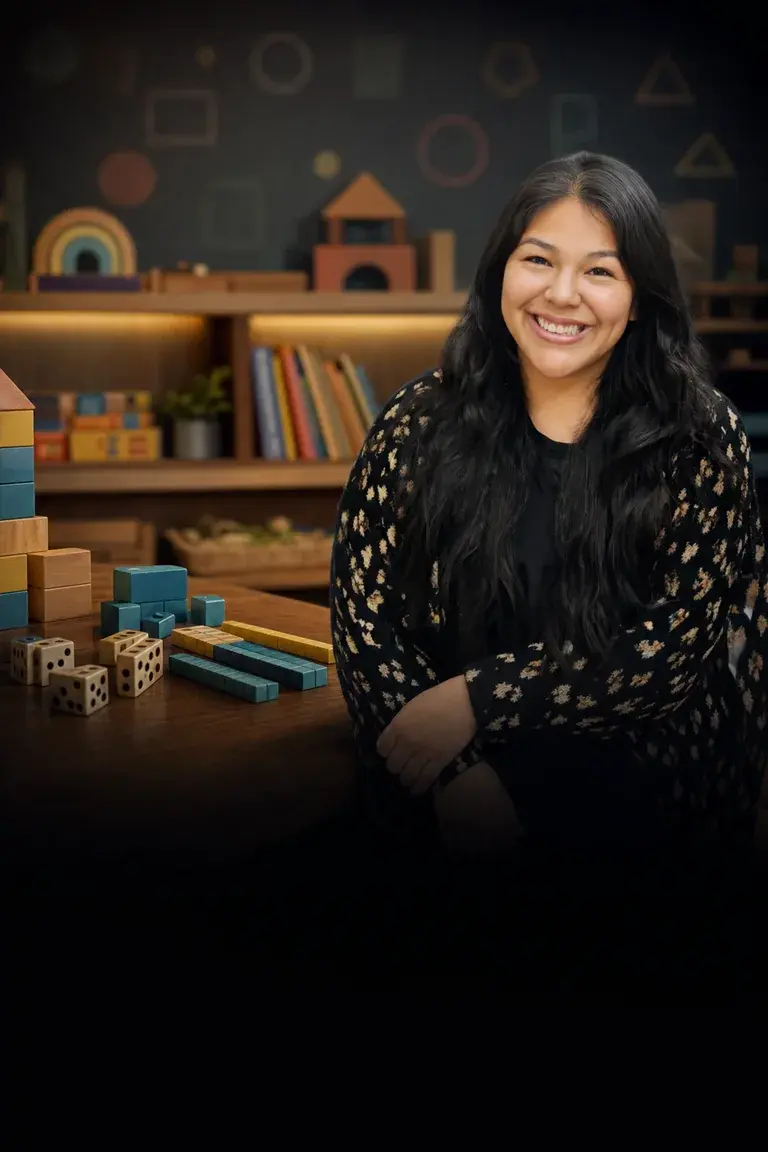
Building Blocks of 1st Grade Math
First grade math isn't just about passing a unit test — it's about building the numerical intuition that every future math class depends on.
Starts Sun, Nov 1
8:00 PM UTC · 45m
4 sessions

Stefany
4.4
Outcomes, not lecture notes.
Apply multiple addition strategies — including visual block models and mental math techniques — to solve problems accurately and efficiently
Distinguish between fractions and non-fractions by analyzing shapes and real-world objects for equal parts
Define and correctly use numerator and denominator to express and interpret fractions in standard form
Compare lengths using measurement vocabulary and apply basic units of measurement to real objects
Collect, organize, and represent data in simple graphs, then draw conclusions from the visual information
Identify and count combinations of coins (pennies, nickels, dimes, quarters) to reach target amounts
Read an analog clock to tell time in hours and minutes
Meet Stefany.
Stefany
Stefany Pineda is an innovative educational consultant who loves making teaching fun through cutting-edge technology and creative curriculum design. With a strong foundation in elementary education and expertise in STEM, Spanish, and math, she integrates VR, AR, and digital tools to create immersive learning experiences that boost student engagement and achievement.
First grade math isn't just about passing a unit test — it's about building the numerical intuition that every future math class depends on. Building Blocks of 1st Grade Math is a year-round supplemental class designed for students who want to move beyond surface-level familiarity and truly own the foundational skills their school curriculum covers: addition strategies, fractions, measurement, data and graphing, money, and time. Through visual tools, manipulatives, and interactive problem-solving, students don't just practice — they internalize. The student who enrolls here isn't struggling; they're being strategic, locking in mastery now so that every future math concept has a rock-solid foundation underneath it.
Make the Basics Automatic When a student is still working hard on an earlier skill, like counting to 100 or adding and subtracting within 10, there's little attention left for the new idea that builds on it. We revisit those foundations until they're automatic, so students' brainpower goes where it's needed most.
Lock In This Year's Learning The school year moves fast, and students are often just on the cusp of getting a topic when the next unit begins. We circle back to key 1st grade concepts from earlier in the year, like adding and subtracting within 20 or understanding tens and ones, that later units depend on.
Tackle What's in Front of You Whatever unit your class is in right now, from addition and subtraction to measurement and shapes, students get guided practice and clear strategies for the kinds of problems they're seeing in school this month.
Preview What's Next Wouldn't we all love a sneak peek at our next challenge before the clock starts ticking and the points start counting? We preview upcoming concepts, like comparing two-digit numbers or telling time, so new topics feel familiar instead of intimidating.
Live Q&A
Cameras / mics optional
Recordings
Available within 1 hour, kept 90 days
Materials
No special materials required
Similar classes

free with a Varsity Tutors membership
09
DAYS03
HRS59
MINSun, Nov 1 • 8:00pm UTC
4 classes, starts in 9 days
Mon, Nov 30 • 10:30pm UTC
4 classes, starts in 38 days
Sat, Jan 9 • 5:00pm UTC
4 classes, starts in 78 days
Thu, Oct 29 • 10:00pm UTC
2 classes, starts in 6 days
Building Blocks of 1st Grade Math