Reveal patterns in length of day and night - 5th Grade Science
Card 1 of 40
Antwon researched the lengths of day and night in different parts of the world on the same day. He created a data table to display the number of daylight hours a specific latitude received on the same day (November 8th). What pattern(s) does the data table reveal about the length of day and night?

Antwon researched the lengths of day and night in different parts of the world on the same day. He created a data table to display the number of daylight hours a specific latitude received on the same day (November 8th). What pattern(s) does the data table reveal about the length of day and night?
Tap to reveal answer
Antwon using a data table to present the information is a clear and organized way to help others understand what his research revealed. Based on the data, it can be seen that as the number of daylight hours increases, the number of nighttime hours decreases the further south traveled. At a latitude of 90o South, there are 24 hours of sunlight and 0 minutes/hours of daylight compared to a latitude of 90o North where there is absolutely no daylight. Analyzing data can reveal patterns that help us understand the natural world and make predictions about future events.
The Victoria State Education and Training department explains why this change takes place, "The Earth is one of several planets that orbit the sun, and the moon orbits the Earth. The Earth is essentially a sphere, and the sun is a nearby star, which is an unimaginably large ball of gas that radiates light and heat as products of nuclear reactions. The Earth orbits the sun once every 365 days and rotates about its axis once every 24 hours. Day and night are due to the Earth rotating on its axis, not its orbit around the sun. The term 'one day' is determined by the time the Earth takes to rotate once on its axis and includes both day time and night time."
Antwon using a data table to present the information is a clear and organized way to help others understand what his research revealed. Based on the data, it can be seen that as the number of daylight hours increases, the number of nighttime hours decreases the further south traveled. At a latitude of 90o South, there are 24 hours of sunlight and 0 minutes/hours of daylight compared to a latitude of 90o North where there is absolutely no daylight. Analyzing data can reveal patterns that help us understand the natural world and make predictions about future events.
The Victoria State Education and Training department explains why this change takes place, "The Earth is one of several planets that orbit the sun, and the moon orbits the Earth. The Earth is essentially a sphere, and the sun is a nearby star, which is an unimaginably large ball of gas that radiates light and heat as products of nuclear reactions. The Earth orbits the sun once every 365 days and rotates about its axis once every 24 hours. Day and night are due to the Earth rotating on its axis, not its orbit around the sun. The term 'one day' is determined by the time the Earth takes to rotate once on its axis and includes both day time and night time."
← Didn't Know|Knew It →
An Earth day is 24 hours because the Earth spins on its axis once every 24 hours.
An Earth day is 24 hours because the Earth spins on its axis once every 24 hours.
Tap to reveal answer
The Victoria State Education and Training department explains why this is true, "The Earth is one of several planets that orbit the sun, and the moon orbits the Earth. The Earth is essentially a sphere, and the sun is a nearby star, which is an unimaginably large ball of gas that radiates light and heat as products of nuclear reactions. The Earth orbits the sun once every 365 days and rotates about its axis once every 24 hours. Day and night are due to the Earth rotating on its axis, not its orbit around the sun. The term 'one day' is determined by the time the Earth takes to rotate once on its axis and includes both day time and night time."
The Earth rotating on its axis is the cause for day and night. When it is daytime for half of Earth, it is nighttime for the other half.
The Victoria State Education and Training department explains why this is true, "The Earth is one of several planets that orbit the sun, and the moon orbits the Earth. The Earth is essentially a sphere, and the sun is a nearby star, which is an unimaginably large ball of gas that radiates light and heat as products of nuclear reactions. The Earth orbits the sun once every 365 days and rotates about its axis once every 24 hours. Day and night are due to the Earth rotating on its axis, not its orbit around the sun. The term 'one day' is determined by the time the Earth takes to rotate once on its axis and includes both day time and night time."
The Earth rotating on its axis is the cause for day and night. When it is daytime for half of Earth, it is nighttime for the other half.
← Didn't Know|Knew It →
Why is half of the Earth dark and the other half white in this diagram?
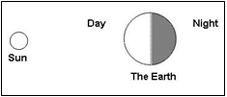
Source of diagram: The Victoria State Education and Training department
Why is half of the Earth dark and the other half white in this diagram?
Source of diagram: The Victoria State Education and Training department
Tap to reveal answer
The Victoria State Education and Training department explains why half of the Earth is in nighttime and the other daytime, "The Earth is one of several planets that orbit the sun, and the moon orbits the Earth. The Earth is essentially a sphere, and the sun is a nearby star, which is an unimaginably large ball of gas that radiates light and heat as products of nuclear reactions. The Earth orbits the sun once every 365 days and rotates about its axis once every 24 hours. Day and night are due to the Earth rotating on its axis, not its orbit around the sun. The term 'one day' is determined by the time the Earth takes to rotate once on its axis and includes both day time and night time."
At any one time, half of the Earth's sphere is in sunlight while the other half is in darkness. The Earth's rotation causes this change to take place every day. It is a predictable pattern that we can count on.
The Victoria State Education and Training department explains why half of the Earth is in nighttime and the other daytime, "The Earth is one of several planets that orbit the sun, and the moon orbits the Earth. The Earth is essentially a sphere, and the sun is a nearby star, which is an unimaginably large ball of gas that radiates light and heat as products of nuclear reactions. The Earth orbits the sun once every 365 days and rotates about its axis once every 24 hours. Day and night are due to the Earth rotating on its axis, not its orbit around the sun. The term 'one day' is determined by the time the Earth takes to rotate once on its axis and includes both day time and night time."
At any one time, half of the Earth's sphere is in sunlight while the other half is in darkness. The Earth's rotation causes this change to take place every day. It is a predictable pattern that we can count on.
← Didn't Know|Knew It →
Mr. Green's class is studying the Solar System and Milky Way Galaxy. Today they are doing an investigation in the lab. Asia and Chele are partners for today's activity. They are given a ping pong ball with a sticker on one side, a flashlight, and their lab journals with a pencil for recording observations or data. Mr. Green turns off the lights. Asia holds the ping pong ball that represents Earth at a slight angle (like its axis) while Chele shines a flashlight on the center of the ball. Asia slowly rotates the Earth counterclockwise, and they observe where the light shines and where it doesn't. They take notice of the sticker and whether the sun shines on it or it is in darkness while the Earth rotates. Their observations are below.

Based on Asia and Chele's observations, how do we know which areas of the world are experiencing daytime?
Mr. Green's class is studying the Solar System and Milky Way Galaxy. Today they are doing an investigation in the lab. Asia and Chele are partners for today's activity. They are given a ping pong ball with a sticker on one side, a flashlight, and their lab journals with a pencil for recording observations or data. Mr. Green turns off the lights. Asia holds the ping pong ball that represents Earth at a slight angle (like its axis) while Chele shines a flashlight on the center of the ball. Asia slowly rotates the Earth counterclockwise, and they observe where the light shines and where it doesn't. They take notice of the sticker and whether the sun shines on it or it is in darkness while the Earth rotates. Their observations are below.
Based on Asia and Chele's observations, how do we know which areas of the world are experiencing daytime?
Tap to reveal answer
The part of Earth facing the Sun will experience day time. The opposite side will be experiencing nighttime. The Earth's rotation on its axis determines daytime and night because of its location regarding the Sun.
The Victoria State Education and Training department explains why this is true, "The Earth is one of several planets that orbit the Sun, and the moon orbits the Earth. The Earth is essentially a sphere, and the Sun is a nearby star, which is an unimaginably large ball of gas that radiates light and heat as products of nuclear reactions. The Earth orbits the Sun once every 365 days and rotates about its axis once every 24 hours. Day and night are due to the Earth rotating on its axis, not its orbit around the Sun. The term 'one day' is determined by the time the Earth takes to rotate once on its axis and includes both day time and night time."
The part of Earth facing the Sun will experience day time. The opposite side will be experiencing nighttime. The Earth's rotation on its axis determines daytime and night because of its location regarding the Sun.
The Victoria State Education and Training department explains why this is true, "The Earth is one of several planets that orbit the Sun, and the moon orbits the Earth. The Earth is essentially a sphere, and the Sun is a nearby star, which is an unimaginably large ball of gas that radiates light and heat as products of nuclear reactions. The Earth orbits the Sun once every 365 days and rotates about its axis once every 24 hours. Day and night are due to the Earth rotating on its axis, not its orbit around the Sun. The term 'one day' is determined by the time the Earth takes to rotate once on its axis and includes both day time and night time."
← Didn't Know|Knew It →
Mr. Green's class is studying the Solar System and Milky Way Galaxy. Today they are doing an investigation in the lab. Asia and Chele are partners for today's activity. They are given a ping pong ball with a sticker on one side, a flashlight, and their lab journals with a pencil for recording observations or data. Mr. Green turns off the lights. Asia holds the ping pong ball that represents Earth at a slight angle (like its axis) while Chele shines a flashlight on the center of the ball. Asia slowly rotates the Earth counterclockwise, and they observe where the light shines and where it doesn't. They take notice of the sticker and whether the sun shines on it or it is in darkness while the Earth rotates. Their observations are below.
How does the amount of sunlight change as the Earth rotates?
Mr. Green's class is studying the Solar System and Milky Way Galaxy. Today they are doing an investigation in the lab. Asia and Chele are partners for today's activity. They are given a ping pong ball with a sticker on one side, a flashlight, and their lab journals with a pencil for recording observations or data. Mr. Green turns off the lights. Asia holds the ping pong ball that represents Earth at a slight angle (like its axis) while Chele shines a flashlight on the center of the ball. Asia slowly rotates the Earth counterclockwise, and they observe where the light shines and where it doesn't. They take notice of the sticker and whether the sun shines on it or it is in darkness while the Earth rotates. Their observations are below.
How does the amount of sunlight change as the Earth rotates?
Tap to reveal answer
The amount of sunlight changes at a location based on whether they are facing towards the Sun or away from the Sun. When facing directly towards the Sun, an area will experience daytime while the opposite side of Earth experiences night. The light starts to dim as the Earth rotates, and the location begins to experience nighttime. As the rotation takes place, the opposite of Earth becomes lighter as daytime begins.
The amount of sunlight changes at a location based on whether they are facing towards the Sun or away from the Sun. When facing directly towards the Sun, an area will experience daytime while the opposite side of Earth experiences night. The light starts to dim as the Earth rotates, and the location begins to experience nighttime. As the rotation takes place, the opposite of Earth becomes lighter as daytime begins.
← Didn't Know|Knew It →
Why do the Sun and the Moon appear to move across the sky from east to west instead of remaining in one place?
Why do the Sun and the Moon appear to move across the sky from east to west instead of remaining in one place?
Tap to reveal answer
The amount of sunlight changes at a location based on whether they are facing towards the Sun or away from the Sun. When facing directly towards the Sun, an area will experience daytime while the opposite side of Earth experiences night. The light starts to dim as the Earth rotates, and the location begins to experience nighttime. As the rotation takes place, the opposite of Earth becomes lighter as daytime begins.
The Victoria State Education and Training department explains why this is true, "The Earth is one of several planets that orbit the Sun, and the moon orbits the Earth. The Earth is essentially a sphere, and the Sun is a nearby star, which is an unimaginably large ball of gas that radiates light and heat as products of nuclear reactions. The Earth orbits the Sun once every 365 days and rotates about its axis once every 24 hours. Day and night are due to the Earth rotating on its axis, not its orbit around the Sun. The term 'one day' is determined by the time the Earth takes to rotate once on its axis and includes both day time and night time."
The amount of sunlight changes at a location based on whether they are facing towards the Sun or away from the Sun. When facing directly towards the Sun, an area will experience daytime while the opposite side of Earth experiences night. The light starts to dim as the Earth rotates, and the location begins to experience nighttime. As the rotation takes place, the opposite of Earth becomes lighter as daytime begins.
The Victoria State Education and Training department explains why this is true, "The Earth is one of several planets that orbit the Sun, and the moon orbits the Earth. The Earth is essentially a sphere, and the Sun is a nearby star, which is an unimaginably large ball of gas that radiates light and heat as products of nuclear reactions. The Earth orbits the Sun once every 365 days and rotates about its axis once every 24 hours. Day and night are due to the Earth rotating on its axis, not its orbit around the Sun. The term 'one day' is determined by the time the Earth takes to rotate once on its axis and includes both day time and night time."
← Didn't Know|Knew It →
Which of these is a direct result of Earth's rotation?
Which of these is a direct result of Earth's rotation?
Tap to reveal answer
The part of Earth facing the Sun will experience day time. The opposite side will be experiencing nighttime. The Earth's rotation on its axis determines daytime and night because of its location regarding the Sun. This rotation leads to a 24 hour day on Earth.
The Victoria State Education and Training department explains why this is true, "The Earth is one of several planets that orbit the Sun, and the moon orbits the Earth. The Earth is essentially a sphere, and the Sun is a nearby star, which is an unimaginably large ball of gas that radiates light and heat as products of nuclear reactions. The Earth orbits the Sun once every 365 days and rotates about its axis once every 24 hours. Day and night are due to the Earth rotating on its axis, not its orbit around the Sun. The term 'one day' is determined by the time the Earth takes to rotate once on its axis and includes both day time and night time."
The part of Earth facing the Sun will experience day time. The opposite side will be experiencing nighttime. The Earth's rotation on its axis determines daytime and night because of its location regarding the Sun. This rotation leads to a 24 hour day on Earth.
The Victoria State Education and Training department explains why this is true, "The Earth is one of several planets that orbit the Sun, and the moon orbits the Earth. The Earth is essentially a sphere, and the Sun is a nearby star, which is an unimaginably large ball of gas that radiates light and heat as products of nuclear reactions. The Earth orbits the Sun once every 365 days and rotates about its axis once every 24 hours. Day and night are due to the Earth rotating on its axis, not its orbit around the Sun. The term 'one day' is determined by the time the Earth takes to rotate once on its axis and includes both day time and night time."
← Didn't Know|Knew It →
Why does Earth have day and night?
Why does Earth have day and night?
Tap to reveal answer
The part of Earth facing the Sun will experience day time. The opposite side will be experiencing nighttime. The Earth's rotation on its axis determines daytime and night because of its location regarding the Sun.
The Victoria State Education and Training department explains why this is true, "The Earth is one of several planets that orbit the Sun, and the moon orbits the Earth. The Earth is essentially a sphere, and the Sun is a nearby star, which is an unimaginably large ball of gas that radiates light and heat as products of nuclear reactions. The Earth orbits the Sun once every 365 days and rotates about its axis once every 24 hours. Day and night are due to the Earth rotating on its axis, not its orbit around the Sun. The term 'one day' is determined by the time the Earth takes to rotate once on its axis and includes both day time and night time."
The part of Earth facing the Sun will experience day time. The opposite side will be experiencing nighttime. The Earth's rotation on its axis determines daytime and night because of its location regarding the Sun.
The Victoria State Education and Training department explains why this is true, "The Earth is one of several planets that orbit the Sun, and the moon orbits the Earth. The Earth is essentially a sphere, and the Sun is a nearby star, which is an unimaginably large ball of gas that radiates light and heat as products of nuclear reactions. The Earth orbits the Sun once every 365 days and rotates about its axis once every 24 hours. Day and night are due to the Earth rotating on its axis, not its orbit around the Sun. The term 'one day' is determined by the time the Earth takes to rotate once on its axis and includes both day time and night time."
← Didn't Know|Knew It →
Which of the following motions defines the length of Earth's day?
Which of the following motions defines the length of Earth's day?
Tap to reveal answer
The part of Earth facing the Sun will experience day time. The opposite side will be experiencing nighttime. The Earth's rotation on its axis determines daytime and night because of its location regarding the Sun.
The Victoria State Education and Training department explains why this is true, "The Earth is one of several planets that orbit the Sun, and the moon orbits the Earth. The Earth is essentially a sphere, and the Sun is a nearby star, which is an unimaginably large ball of gas that radiates light and heat as products of nuclear reactions. The Earth orbits the Sun once every 365 days and rotates about its axis once every 24 hours. Day and night are due to the Earth rotating on its axis, not its orbit around the Sun. The term 'one day' is determined by the time the Earth takes to rotate once on its axis and includes both day time and night time."
The part of Earth facing the Sun will experience day time. The opposite side will be experiencing nighttime. The Earth's rotation on its axis determines daytime and night because of its location regarding the Sun.
The Victoria State Education and Training department explains why this is true, "The Earth is one of several planets that orbit the Sun, and the moon orbits the Earth. The Earth is essentially a sphere, and the Sun is a nearby star, which is an unimaginably large ball of gas that radiates light and heat as products of nuclear reactions. The Earth orbits the Sun once every 365 days and rotates about its axis once every 24 hours. Day and night are due to the Earth rotating on its axis, not its orbit around the Sun. The term 'one day' is determined by the time the Earth takes to rotate once on its axis and includes both day time and night time."
← Didn't Know|Knew It →
Jimena knows that Earth rotates on its axis. How much time has passed after one rotation of Earth on its axis?
Jimena knows that Earth rotates on its axis. How much time has passed after one rotation of Earth on its axis?
Tap to reveal answer
The Victoria State Education and Training department explains why this is true, "The Earth is one of several planets that orbit the Sun, and the moon orbits the Earth. The Earth is essentially a sphere, and the Sun is a nearby star, which is an unimaginably large ball of gas that radiates light and heat as products of nuclear reactions. The Earth orbits the Sun once every 365 days and rotates about its axis once every 24 hours. Day and night are due to the Earth rotating on its axis, not its orbit around the Sun. The term 'one day' is determined by the time the Earth takes to rotate once on its axis and includes both day time and night time."
The Victoria State Education and Training department explains why this is true, "The Earth is one of several planets that orbit the Sun, and the moon orbits the Earth. The Earth is essentially a sphere, and the Sun is a nearby star, which is an unimaginably large ball of gas that radiates light and heat as products of nuclear reactions. The Earth orbits the Sun once every 365 days and rotates about its axis once every 24 hours. Day and night are due to the Earth rotating on its axis, not its orbit around the Sun. The term 'one day' is determined by the time the Earth takes to rotate once on its axis and includes both day time and night time."
← Didn't Know|Knew It →
Antwon researched the lengths of day and night in different parts of the world on the same day. He created a data table to display the number of daylight hours a specific latitude received on the same day (November 8th). What pattern(s) does the data table reveal about the length of day and night?
Antwon researched the lengths of day and night in different parts of the world on the same day. He created a data table to display the number of daylight hours a specific latitude received on the same day (November 8th). What pattern(s) does the data table reveal about the length of day and night?
Tap to reveal answer
Antwon using a data table to present the information is a clear and organized way to help others understand what his research revealed. Based on the data, it can be seen that as the number of daylight hours increases, the number of nighttime hours decreases the further south traveled. At a latitude of 90o South, there are 24 hours of sunlight and 0 minutes/hours of daylight compared to a latitude of 90o North where there is absolutely no daylight. Analyzing data can reveal patterns that help us understand the natural world and make predictions about future events.
The Victoria State Education and Training department explains why this change takes place, "The Earth is one of several planets that orbit the sun, and the moon orbits the Earth. The Earth is essentially a sphere, and the sun is a nearby star, which is an unimaginably large ball of gas that radiates light and heat as products of nuclear reactions. The Earth orbits the sun once every 365 days and rotates about its axis once every 24 hours. Day and night are due to the Earth rotating on its axis, not its orbit around the sun. The term 'one day' is determined by the time the Earth takes to rotate once on its axis and includes both day time and night time."
Antwon using a data table to present the information is a clear and organized way to help others understand what his research revealed. Based on the data, it can be seen that as the number of daylight hours increases, the number of nighttime hours decreases the further south traveled. At a latitude of 90o South, there are 24 hours of sunlight and 0 minutes/hours of daylight compared to a latitude of 90o North where there is absolutely no daylight. Analyzing data can reveal patterns that help us understand the natural world and make predictions about future events.
The Victoria State Education and Training department explains why this change takes place, "The Earth is one of several planets that orbit the sun, and the moon orbits the Earth. The Earth is essentially a sphere, and the sun is a nearby star, which is an unimaginably large ball of gas that radiates light and heat as products of nuclear reactions. The Earth orbits the sun once every 365 days and rotates about its axis once every 24 hours. Day and night are due to the Earth rotating on its axis, not its orbit around the sun. The term 'one day' is determined by the time the Earth takes to rotate once on its axis and includes both day time and night time."
← Didn't Know|Knew It →
An Earth day is 24 hours because the Earth spins on its axis once every 24 hours.
An Earth day is 24 hours because the Earth spins on its axis once every 24 hours.
Tap to reveal answer
The Victoria State Education and Training department explains why this is true, "The Earth is one of several planets that orbit the sun, and the moon orbits the Earth. The Earth is essentially a sphere, and the sun is a nearby star, which is an unimaginably large ball of gas that radiates light and heat as products of nuclear reactions. The Earth orbits the sun once every 365 days and rotates about its axis once every 24 hours. Day and night are due to the Earth rotating on its axis, not its orbit around the sun. The term 'one day' is determined by the time the Earth takes to rotate once on its axis and includes both day time and night time."
The Earth rotating on its axis is the cause for day and night. When it is daytime for half of Earth, it is nighttime for the other half.
The Victoria State Education and Training department explains why this is true, "The Earth is one of several planets that orbit the sun, and the moon orbits the Earth. The Earth is essentially a sphere, and the sun is a nearby star, which is an unimaginably large ball of gas that radiates light and heat as products of nuclear reactions. The Earth orbits the sun once every 365 days and rotates about its axis once every 24 hours. Day and night are due to the Earth rotating on its axis, not its orbit around the sun. The term 'one day' is determined by the time the Earth takes to rotate once on its axis and includes both day time and night time."
The Earth rotating on its axis is the cause for day and night. When it is daytime for half of Earth, it is nighttime for the other half.
← Didn't Know|Knew It →
Why is half of the Earth dark and the other half white in this diagram?
Source of diagram: The Victoria State Education and Training department
Why is half of the Earth dark and the other half white in this diagram?
Source of diagram: The Victoria State Education and Training department
Tap to reveal answer
The Victoria State Education and Training department explains why half of the Earth is in nighttime and the other daytime, "The Earth is one of several planets that orbit the sun, and the moon orbits the Earth. The Earth is essentially a sphere, and the sun is a nearby star, which is an unimaginably large ball of gas that radiates light and heat as products of nuclear reactions. The Earth orbits the sun once every 365 days and rotates about its axis once every 24 hours. Day and night are due to the Earth rotating on its axis, not its orbit around the sun. The term 'one day' is determined by the time the Earth takes to rotate once on its axis and includes both day time and night time."
At any one time, half of the Earth's sphere is in sunlight while the other half is in darkness. The Earth's rotation causes this change to take place every day. It is a predictable pattern that we can count on.
The Victoria State Education and Training department explains why half of the Earth is in nighttime and the other daytime, "The Earth is one of several planets that orbit the sun, and the moon orbits the Earth. The Earth is essentially a sphere, and the sun is a nearby star, which is an unimaginably large ball of gas that radiates light and heat as products of nuclear reactions. The Earth orbits the sun once every 365 days and rotates about its axis once every 24 hours. Day and night are due to the Earth rotating on its axis, not its orbit around the sun. The term 'one day' is determined by the time the Earth takes to rotate once on its axis and includes both day time and night time."
At any one time, half of the Earth's sphere is in sunlight while the other half is in darkness. The Earth's rotation causes this change to take place every day. It is a predictable pattern that we can count on.
← Didn't Know|Knew It →
Mr. Green's class is studying the Solar System and Milky Way Galaxy. Today they are doing an investigation in the lab. Asia and Chele are partners for today's activity. They are given a ping pong ball with a sticker on one side, a flashlight, and their lab journals with a pencil for recording observations or data. Mr. Green turns off the lights. Asia holds the ping pong ball that represents Earth at a slight angle (like its axis) while Chele shines a flashlight on the center of the ball. Asia slowly rotates the Earth counterclockwise, and they observe where the light shines and where it doesn't. They take notice of the sticker and whether the sun shines on it or it is in darkness while the Earth rotates. Their observations are below.
Based on Asia and Chele's observations, how do we know which areas of the world are experiencing daytime?
Mr. Green's class is studying the Solar System and Milky Way Galaxy. Today they are doing an investigation in the lab. Asia and Chele are partners for today's activity. They are given a ping pong ball with a sticker on one side, a flashlight, and their lab journals with a pencil for recording observations or data. Mr. Green turns off the lights. Asia holds the ping pong ball that represents Earth at a slight angle (like its axis) while Chele shines a flashlight on the center of the ball. Asia slowly rotates the Earth counterclockwise, and they observe where the light shines and where it doesn't. They take notice of the sticker and whether the sun shines on it or it is in darkness while the Earth rotates. Their observations are below.
Based on Asia and Chele's observations, how do we know which areas of the world are experiencing daytime?
Tap to reveal answer
The part of Earth facing the Sun will experience day time. The opposite side will be experiencing nighttime. The Earth's rotation on its axis determines daytime and night because of its location regarding the Sun.
The Victoria State Education and Training department explains why this is true, "The Earth is one of several planets that orbit the Sun, and the moon orbits the Earth. The Earth is essentially a sphere, and the Sun is a nearby star, which is an unimaginably large ball of gas that radiates light and heat as products of nuclear reactions. The Earth orbits the Sun once every 365 days and rotates about its axis once every 24 hours. Day and night are due to the Earth rotating on its axis, not its orbit around the Sun. The term 'one day' is determined by the time the Earth takes to rotate once on its axis and includes both day time and night time."
The part of Earth facing the Sun will experience day time. The opposite side will be experiencing nighttime. The Earth's rotation on its axis determines daytime and night because of its location regarding the Sun.
The Victoria State Education and Training department explains why this is true, "The Earth is one of several planets that orbit the Sun, and the moon orbits the Earth. The Earth is essentially a sphere, and the Sun is a nearby star, which is an unimaginably large ball of gas that radiates light and heat as products of nuclear reactions. The Earth orbits the Sun once every 365 days and rotates about its axis once every 24 hours. Day and night are due to the Earth rotating on its axis, not its orbit around the Sun. The term 'one day' is determined by the time the Earth takes to rotate once on its axis and includes both day time and night time."
← Didn't Know|Knew It →
Mr. Green's class is studying the Solar System and Milky Way Galaxy. Today they are doing an investigation in the lab. Asia and Chele are partners for today's activity. They are given a ping pong ball with a sticker on one side, a flashlight, and their lab journals with a pencil for recording observations or data. Mr. Green turns off the lights. Asia holds the ping pong ball that represents Earth at a slight angle (like its axis) while Chele shines a flashlight on the center of the ball. Asia slowly rotates the Earth counterclockwise, and they observe where the light shines and where it doesn't. They take notice of the sticker and whether the sun shines on it or it is in darkness while the Earth rotates. Their observations are below.
How does the amount of sunlight change as the Earth rotates?
Mr. Green's class is studying the Solar System and Milky Way Galaxy. Today they are doing an investigation in the lab. Asia and Chele are partners for today's activity. They are given a ping pong ball with a sticker on one side, a flashlight, and their lab journals with a pencil for recording observations or data. Mr. Green turns off the lights. Asia holds the ping pong ball that represents Earth at a slight angle (like its axis) while Chele shines a flashlight on the center of the ball. Asia slowly rotates the Earth counterclockwise, and they observe where the light shines and where it doesn't. They take notice of the sticker and whether the sun shines on it or it is in darkness while the Earth rotates. Their observations are below.
How does the amount of sunlight change as the Earth rotates?
Tap to reveal answer
The amount of sunlight changes at a location based on whether they are facing towards the Sun or away from the Sun. When facing directly towards the Sun, an area will experience daytime while the opposite side of Earth experiences night. The light starts to dim as the Earth rotates, and the location begins to experience nighttime. As the rotation takes place, the opposite of Earth becomes lighter as daytime begins.
The amount of sunlight changes at a location based on whether they are facing towards the Sun or away from the Sun. When facing directly towards the Sun, an area will experience daytime while the opposite side of Earth experiences night. The light starts to dim as the Earth rotates, and the location begins to experience nighttime. As the rotation takes place, the opposite of Earth becomes lighter as daytime begins.
← Didn't Know|Knew It →
Why do the Sun and the Moon appear to move across the sky from east to west instead of remaining in one place?
Why do the Sun and the Moon appear to move across the sky from east to west instead of remaining in one place?
Tap to reveal answer
The amount of sunlight changes at a location based on whether they are facing towards the Sun or away from the Sun. When facing directly towards the Sun, an area will experience daytime while the opposite side of Earth experiences night. The light starts to dim as the Earth rotates, and the location begins to experience nighttime. As the rotation takes place, the opposite of Earth becomes lighter as daytime begins.
The Victoria State Education and Training department explains why this is true, "The Earth is one of several planets that orbit the Sun, and the moon orbits the Earth. The Earth is essentially a sphere, and the Sun is a nearby star, which is an unimaginably large ball of gas that radiates light and heat as products of nuclear reactions. The Earth orbits the Sun once every 365 days and rotates about its axis once every 24 hours. Day and night are due to the Earth rotating on its axis, not its orbit around the Sun. The term 'one day' is determined by the time the Earth takes to rotate once on its axis and includes both day time and night time."
The amount of sunlight changes at a location based on whether they are facing towards the Sun or away from the Sun. When facing directly towards the Sun, an area will experience daytime while the opposite side of Earth experiences night. The light starts to dim as the Earth rotates, and the location begins to experience nighttime. As the rotation takes place, the opposite of Earth becomes lighter as daytime begins.
The Victoria State Education and Training department explains why this is true, "The Earth is one of several planets that orbit the Sun, and the moon orbits the Earth. The Earth is essentially a sphere, and the Sun is a nearby star, which is an unimaginably large ball of gas that radiates light and heat as products of nuclear reactions. The Earth orbits the Sun once every 365 days and rotates about its axis once every 24 hours. Day and night are due to the Earth rotating on its axis, not its orbit around the Sun. The term 'one day' is determined by the time the Earth takes to rotate once on its axis and includes both day time and night time."
← Didn't Know|Knew It →
Which of these is a direct result of Earth's rotation?
Which of these is a direct result of Earth's rotation?
Tap to reveal answer
The part of Earth facing the Sun will experience day time. The opposite side will be experiencing nighttime. The Earth's rotation on its axis determines daytime and night because of its location regarding the Sun. This rotation leads to a 24 hour day on Earth.
The Victoria State Education and Training department explains why this is true, "The Earth is one of several planets that orbit the Sun, and the moon orbits the Earth. The Earth is essentially a sphere, and the Sun is a nearby star, which is an unimaginably large ball of gas that radiates light and heat as products of nuclear reactions. The Earth orbits the Sun once every 365 days and rotates about its axis once every 24 hours. Day and night are due to the Earth rotating on its axis, not its orbit around the Sun. The term 'one day' is determined by the time the Earth takes to rotate once on its axis and includes both day time and night time."
The part of Earth facing the Sun will experience day time. The opposite side will be experiencing nighttime. The Earth's rotation on its axis determines daytime and night because of its location regarding the Sun. This rotation leads to a 24 hour day on Earth.
The Victoria State Education and Training department explains why this is true, "The Earth is one of several planets that orbit the Sun, and the moon orbits the Earth. The Earth is essentially a sphere, and the Sun is a nearby star, which is an unimaginably large ball of gas that radiates light and heat as products of nuclear reactions. The Earth orbits the Sun once every 365 days and rotates about its axis once every 24 hours. Day and night are due to the Earth rotating on its axis, not its orbit around the Sun. The term 'one day' is determined by the time the Earth takes to rotate once on its axis and includes both day time and night time."
← Didn't Know|Knew It →
Why does Earth have day and night?
Why does Earth have day and night?
Tap to reveal answer
The part of Earth facing the Sun will experience day time. The opposite side will be experiencing nighttime. The Earth's rotation on its axis determines daytime and night because of its location regarding the Sun.
The Victoria State Education and Training department explains why this is true, "The Earth is one of several planets that orbit the Sun, and the moon orbits the Earth. The Earth is essentially a sphere, and the Sun is a nearby star, which is an unimaginably large ball of gas that radiates light and heat as products of nuclear reactions. The Earth orbits the Sun once every 365 days and rotates about its axis once every 24 hours. Day and night are due to the Earth rotating on its axis, not its orbit around the Sun. The term 'one day' is determined by the time the Earth takes to rotate once on its axis and includes both day time and night time."
The part of Earth facing the Sun will experience day time. The opposite side will be experiencing nighttime. The Earth's rotation on its axis determines daytime and night because of its location regarding the Sun.
The Victoria State Education and Training department explains why this is true, "The Earth is one of several planets that orbit the Sun, and the moon orbits the Earth. The Earth is essentially a sphere, and the Sun is a nearby star, which is an unimaginably large ball of gas that radiates light and heat as products of nuclear reactions. The Earth orbits the Sun once every 365 days and rotates about its axis once every 24 hours. Day and night are due to the Earth rotating on its axis, not its orbit around the Sun. The term 'one day' is determined by the time the Earth takes to rotate once on its axis and includes both day time and night time."
← Didn't Know|Knew It →
Which of the following motions defines the length of Earth's day?
Which of the following motions defines the length of Earth's day?
Tap to reveal answer
The part of Earth facing the Sun will experience day time. The opposite side will be experiencing nighttime. The Earth's rotation on its axis determines daytime and night because of its location regarding the Sun.
The Victoria State Education and Training department explains why this is true, "The Earth is one of several planets that orbit the Sun, and the moon orbits the Earth. The Earth is essentially a sphere, and the Sun is a nearby star, which is an unimaginably large ball of gas that radiates light and heat as products of nuclear reactions. The Earth orbits the Sun once every 365 days and rotates about its axis once every 24 hours. Day and night are due to the Earth rotating on its axis, not its orbit around the Sun. The term 'one day' is determined by the time the Earth takes to rotate once on its axis and includes both day time and night time."
The part of Earth facing the Sun will experience day time. The opposite side will be experiencing nighttime. The Earth's rotation on its axis determines daytime and night because of its location regarding the Sun.
The Victoria State Education and Training department explains why this is true, "The Earth is one of several planets that orbit the Sun, and the moon orbits the Earth. The Earth is essentially a sphere, and the Sun is a nearby star, which is an unimaginably large ball of gas that radiates light and heat as products of nuclear reactions. The Earth orbits the Sun once every 365 days and rotates about its axis once every 24 hours. Day and night are due to the Earth rotating on its axis, not its orbit around the Sun. The term 'one day' is determined by the time the Earth takes to rotate once on its axis and includes both day time and night time."
← Didn't Know|Knew It →
Jimena knows that Earth rotates on its axis. How much time has passed after one rotation of Earth on its axis?
Jimena knows that Earth rotates on its axis. How much time has passed after one rotation of Earth on its axis?
Tap to reveal answer
The Victoria State Education and Training department explains why this is true, "The Earth is one of several planets that orbit the Sun, and the moon orbits the Earth. The Earth is essentially a sphere, and the Sun is a nearby star, which is an unimaginably large ball of gas that radiates light and heat as products of nuclear reactions. The Earth orbits the Sun once every 365 days and rotates about its axis once every 24 hours. Day and night are due to the Earth rotating on its axis, not its orbit around the Sun. The term 'one day' is determined by the time the Earth takes to rotate once on its axis and includes both day time and night time."
The Victoria State Education and Training department explains why this is true, "The Earth is one of several planets that orbit the Sun, and the moon orbits the Earth. The Earth is essentially a sphere, and the Sun is a nearby star, which is an unimaginably large ball of gas that radiates light and heat as products of nuclear reactions. The Earth orbits the Sun once every 365 days and rotates about its axis once every 24 hours. Day and night are due to the Earth rotating on its axis, not its orbit around the Sun. The term 'one day' is determined by the time the Earth takes to rotate once on its axis and includes both day time and night time."
← Didn't Know|Knew It →