Integrals - AP Calculus AB
Card 1 of 3487
A ball is thrown into the air. It's height, after t seconds is modeled by the formula:
$h(t)=-15t^2$+30t feet.
At what time will the velocity equal zero?
A ball is thrown into the air. It's height, after t seconds is modeled by the formula:
$h(t)=-15t^2$+30t feet.
At what time will the velocity equal zero?
Tap to reveal answer
In order to find where the velocity is equal to zero, take the derivative of the function and set it equal to zero.
h(t) = –15t2 + 30t
h'(t) = –30t + 30
0 = –30t + 30
Then solve for "t".
–30 = –30t
t = 1
The velocity will be 0 at 1 second.
In order to find where the velocity is equal to zero, take the derivative of the function and set it equal to zero.
h(t) = –15t2 + 30t
h'(t) = –30t + 30
0 = –30t + 30
Then solve for "t".
–30 = –30t
t = 1
The velocity will be 0 at 1 second.
← Didn't Know|Knew It →
Evaluate the definite integral
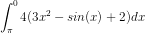
Evaluate the definite integral
Tap to reveal answer
Here we are using several basic properties of definite integrals as well as the fundamental theorem of calculus.
First, you can pull coefficients out to the front of integrals.

Second, we notice that our lower bound is bigger than our upper bound. You can switch the upper and lower bounds if you also switch the sign.

Lastly, our integral "distributes" over addition and subtraction. That means you can split the integral by each term and integrate each term separately.

Now we integrate and calculate using the Fundamental Theorem of Calculus.


Here we are using several basic properties of definite integrals as well as the fundamental theorem of calculus.
First, you can pull coefficients out to the front of integrals.
Second, we notice that our lower bound is bigger than our upper bound. You can switch the upper and lower bounds if you also switch the sign.
Lastly, our integral "distributes" over addition and subtraction. That means you can split the integral by each term and integrate each term separately.
Now we integrate and calculate using the Fundamental Theorem of Calculus.
← Didn't Know|Knew It →
If  are continuous functions,
 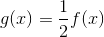 ,
, 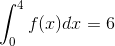 , and
, and 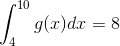 , find
  .
.
If
Tap to reveal answer
We proceed as follows
 . (Start)
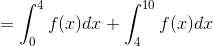 . (Break up the integral using the additive rule.)
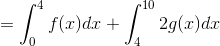 . (We don't have information about the 2nd integral, so we solve our first equation for
  and replace it in this integral.)
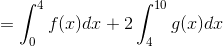 . (Factor out the
  using linearity.)
 . (Substitute in what we were given.)
 .
.
We proceed as follows
← Didn't Know|Knew It →
Tap to reveal answer
← Didn't Know|Knew It →
Tap to reveal answer
← Didn't Know|Knew It →
Tap to reveal answer
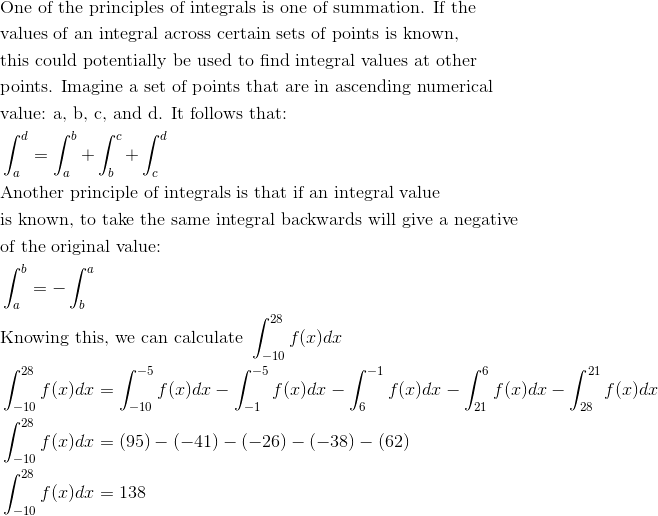
← Didn't Know|Knew It →
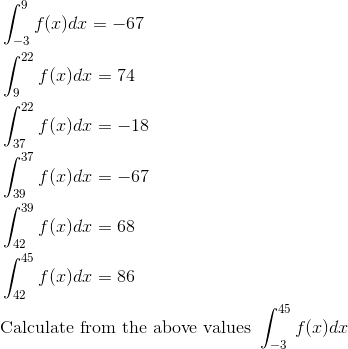
Tap to reveal answer
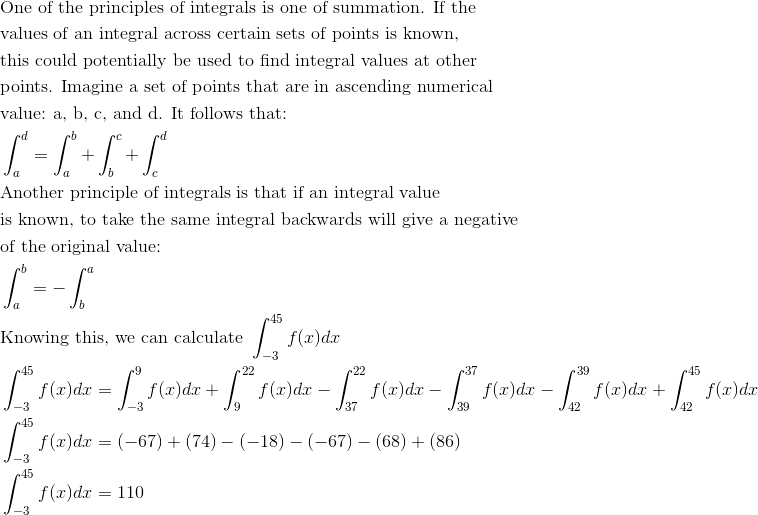
← Didn't Know|Knew It →
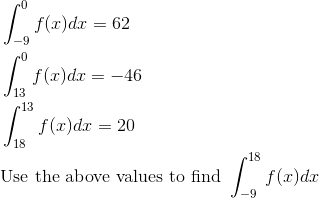
Tap to reveal answer
← Didn't Know|Knew It →
Tap to reveal answer
← Didn't Know|Knew It →
Tap to reveal answer
← Didn't Know|Knew It →
Tap to reveal answer
← Didn't Know|Knew It →
Tap to reveal answer
← Didn't Know|Knew It →
Tap to reveal answer
← Didn't Know|Knew It →
Tap to reveal answer
← Didn't Know|Knew It →
Tap to reveal answer
← Didn't Know|Knew It →
Tap to reveal answer
← Didn't Know|Knew It →
Tap to reveal answer
← Didn't Know|Knew It →
Tap to reveal answer
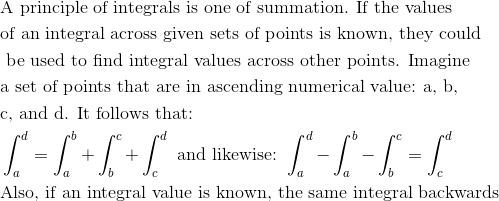
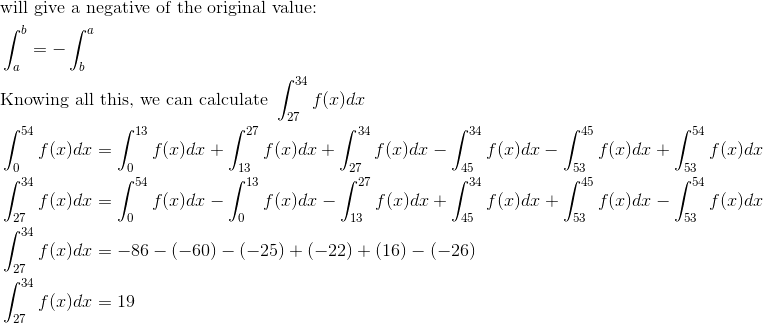
← Didn't Know|Knew It →
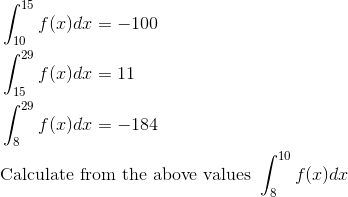
Tap to reveal answer
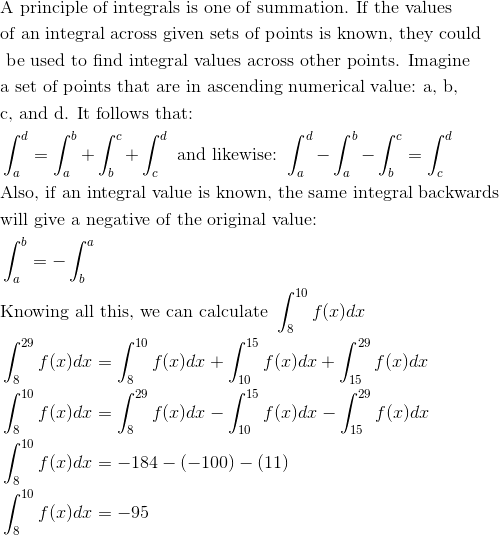
← Didn't Know|Knew It →
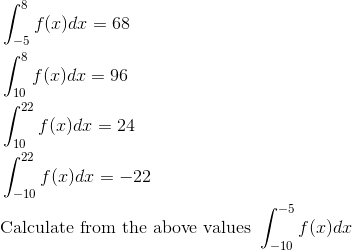
Tap to reveal answer
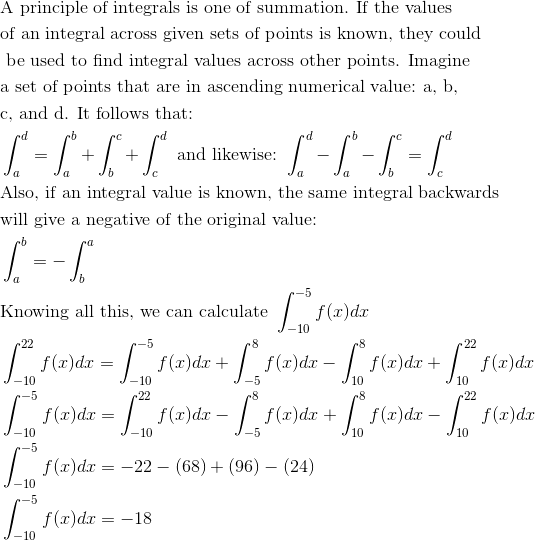
← Didn't Know|Knew It →