Cities & Urban Land Use - AP Human Geography
Card 1 of 412
The Gravity Model in geography suggests that and are the two most significant factors in determining the extent of the relationship and interaction between two cities.
The Gravity Model in geography suggests that and are the two most significant factors in determining the extent of the relationship and interaction between two cities.
Tap to reveal answer
The Gravity Model is based on Isaac Newton’s law of gravitation. It is a mathematical formula, so it cannot rely on something like “cultural output” because this is unquantifiable. It instead relies on population size and distance. The Gravity Model holds that the interaction between two places can be determined by the product of the population of both places, divided by the square of their distance from one another. The primary implication of this model is that distance is not the only determining factor in the interaction between two cities. For example, although Kingston, Canada is much closer to New York City than London it also has a much lower population than London so the interaction between London and New York City is likely to be higher than the interaction between Kingston and New York City.
The Gravity Model is based on Isaac Newton’s law of gravitation. It is a mathematical formula, so it cannot rely on something like “cultural output” because this is unquantifiable. It instead relies on population size and distance. The Gravity Model holds that the interaction between two places can be determined by the product of the population of both places, divided by the square of their distance from one another. The primary implication of this model is that distance is not the only determining factor in the interaction between two cities. For example, although Kingston, Canada is much closer to New York City than London it also has a much lower population than London so the interaction between London and New York City is likely to be higher than the interaction between Kingston and New York City.
← Didn't Know|Knew It →
What name is given to a portion of land reserved for farms, parks, and forests to prevent the continuation of an urban sprawl?
What name is given to a portion of land reserved for farms, parks, and forests to prevent the continuation of an urban sprawl?
Tap to reveal answer
Many contemporary cities have enacted measures to prevent the continuous urban sprawl that results from their ever-growing populations. They reserve a portion of land for farms, parks, forests, and other such things. This is called a “greenbelt.”
Many contemporary cities have enacted measures to prevent the continuous urban sprawl that results from their ever-growing populations. They reserve a portion of land for farms, parks, forests, and other such things. This is called a “greenbelt.”
← Didn't Know|Knew It →
A city’s metropolitan area includes .
A city’s metropolitan area includes .
Tap to reveal answer
The “metropolitan area” of a city is defined as all the areas surrounding a city that can be said to have a high-level of economic or social integration with the city. So, if the majority of people who live in an area outside of a city’s political limits still commute to the city for work, school, or recreation than that area is said to be within the city’s “metropolitan area.” The definition is based on economic and social integration, NOT on physical proximity.
The “metropolitan area” of a city is defined as all the areas surrounding a city that can be said to have a high-level of economic or social integration with the city. So, if the majority of people who live in an area outside of a city’s political limits still commute to the city for work, school, or recreation than that area is said to be within the city’s “metropolitan area.” The definition is based on economic and social integration, NOT on physical proximity.
← Didn't Know|Knew It →
The highly urbanized stretch of land that runs along the eastern seaboard of the United States, from Boston to Washington D.C., is an example of a(n) .
The highly urbanized stretch of land that runs along the eastern seaboard of the United States, from Boston to Washington D.C., is an example of a(n) .
Tap to reveal answer
The term “megalopolis” is used to describe a stretch of land that contains multiple cities and connecting suburban regions. The stretch of land from Boston to Washington D.C. also includes New York City, Philadelphia, Baltimore, and all the attending suburban areas. It is a highly urbanized stretch of land and therefore it is called a “megalopolis.”
The term “megalopolis” is used to describe a stretch of land that contains multiple cities and connecting suburban regions. The stretch of land from Boston to Washington D.C. also includes New York City, Philadelphia, Baltimore, and all the attending suburban areas. It is a highly urbanized stretch of land and therefore it is called a “megalopolis.”
← Didn't Know|Knew It →
Which of these is a feature of ghettoization in American cities?
Which of these is a feature of ghettoization in American cities?
Tap to reveal answer
The term “ghettoization” is used to refer to the degradation of inner cities in America. It occurs when affluent white Americans move out of inner cities to the suburbs and this population is replaced with much poorer populations. It occurred throughout the United States in the twentieth century and is one of the more significant problems facing American cities in the twenty-first century.
The term “ghettoization” is used to refer to the degradation of inner cities in America. It occurs when affluent white Americans move out of inner cities to the suburbs and this population is replaced with much poorer populations. It occurred throughout the United States in the twentieth century and is one of the more significant problems facing American cities in the twenty-first century.
← Didn't Know|Knew It →
Which of the following is true of an edge city?
Which of the following is true of an edge city?
Tap to reveal answer
Edge cities are secondary commerical centers of urban areas. Cities that have been abandoned are colloquially known as "ghost towns." The other types of cities do not have specific names, and are not considered edge cities.
Edge cities are secondary commerical centers of urban areas. Cities that have been abandoned are colloquially known as "ghost towns." The other types of cities do not have specific names, and are not considered edge cities.
← Didn't Know|Knew It →
According to most contemporary estimates which of these cities was the most populous in the world at the beginning of the European colonial era (circa 1500 CE)?
According to most contemporary estimates which of these cities was the most populous in the world at the beginning of the European colonial era (circa 1500 CE)?
Tap to reveal answer
The European colonial era begins with the voyage of Columbus in 1492. At this time the capital city of the Aztec Empire, called Tenochtitlan, was by most estimates the most populous city in the world. Loose estimates, which are all that are possible, place the population of Tenochtitlan at around 200,000 people.
The European colonial era begins with the voyage of Columbus in 1492. At this time the capital city of the Aztec Empire, called Tenochtitlan, was by most estimates the most populous city in the world. Loose estimates, which are all that are possible, place the population of Tenochtitlan at around 200,000 people.
← Didn't Know|Knew It →
Which of the following is the largest metropolitan area in the world in 2015?
Which of the following is the largest metropolitan area in the world in 2015?
Tap to reveal answer
In 2015, Tokyo is the world's largest metropolitan area, with a population of about 38 million people. None of the other options have more than 30 million people.
In 2015, Tokyo is the world's largest metropolitan area, with a population of about 38 million people. None of the other options have more than 30 million people.
← Didn't Know|Knew It →
Which of the following is a not megacity?
Which of the following is a not megacity?
Tap to reveal answer
A "megacity" is an urban or metropolitan area which has a population over 10 million people.
Here are the populations of the cities from this question:
Tokyo: 37,900,000
Seoul: 26,100,000
Shanghai: 25,400,000
Jerusalem: 809,112
London: 8,540,000
Tokyo is currently the most populated city today. Jerusalem does not even reach 1 million so it can not be classified as a megacity.
A "megacity" is an urban or metropolitan area which has a population over 10 million people.
Here are the populations of the cities from this question:
Tokyo: 37,900,000
Seoul: 26,100,000
Shanghai: 25,400,000
Jerusalem: 809,112
London: 8,540,000
Tokyo is currently the most populated city today. Jerusalem does not even reach 1 million so it can not be classified as a megacity.
← Didn't Know|Knew It →
A century ago most of the world’s biggest cities were found ; now most of the world’s biggest cities are found .
A century ago most of the world’s biggest cities were found ; now most of the world’s biggest cities are found .
Tap to reveal answer
A century ago the world’s biggest cities were New York City, London, and Paris. They were the centers of the global population, however as the population of the developing world has skyrocketed in the last century so has the population of megacities in the developing world. In 2015 most of the world’s biggest cities can be found in India, China, and the African continent.
A century ago the world’s biggest cities were New York City, London, and Paris. They were the centers of the global population, however as the population of the developing world has skyrocketed in the last century so has the population of megacities in the developing world. In 2015 most of the world’s biggest cities can be found in India, China, and the African continent.
← Didn't Know|Knew It →
If current population trends continue, by 2025 almost all of the world’s most populous cities will be found in .
If current population trends continue, by 2025 almost all of the world’s most populous cities will be found in .
Tap to reveal answer
If the current trend continues most of the world’s most populous cities will be found in Asia, specifically South and East Asia, in the year 2025. Cities like Beijing, Shanghai, Tianjin, Delhi, Mumbai, Kolkata, Dhaka, and Guangzhou are growing at dramatic rates when compared to much of the rest of the world and will soon eclipse their western counterparts.
If the current trend continues most of the world’s most populous cities will be found in Asia, specifically South and East Asia, in the year 2025. Cities like Beijing, Shanghai, Tianjin, Delhi, Mumbai, Kolkata, Dhaka, and Guangzhou are growing at dramatic rates when compared to much of the rest of the world and will soon eclipse their western counterparts.
← Didn't Know|Knew It →
Which of these is not a characteristic feature of a megacity?
Which of these is not a characteristic feature of a megacity?
Tap to reveal answer
A “megacity” is a city that has a very large, and growing, population. Megacities are typically found in the developing world. They are characterized by high natural population growth, as well as high rates of immigration. They generally suffer from extreme pollution and poverty and will usually feature widespread slum settlements to house the working masses.
A “megacity” is a city that has a very large, and growing, population. Megacities are typically found in the developing world. They are characterized by high natural population growth, as well as high rates of immigration. They generally suffer from extreme pollution and poverty and will usually feature widespread slum settlements to house the working masses.
← Didn't Know|Knew It →
Megacities are mostly emerging in .
Megacities are mostly emerging in .
Tap to reveal answer
The term “megacity” is used to describe a city that has an extremely large, and growing, population. In the previous half-century megacities have been emerging all over the developing world as the population of urban environments like Mumbai, Shanghai, Lagos, and Dhaka explodes.
The term “megacity” is used to describe a city that has an extremely large, and growing, population. In the previous half-century megacities have been emerging all over the developing world as the population of urban environments like Mumbai, Shanghai, Lagos, and Dhaka explodes.
← Didn't Know|Knew It →
Which of these cities lies on the border between Europe and Asia?
Which of these cities lies on the border between Europe and Asia?
Tap to reveal answer
Istanbul, the capital city of Turkey, lies on the Bosphorus Strait, at the border between Europe and Asia. Due to its strategic location Istanbul has been of great significance for several centuries and has often been fought over between regional powers.
Istanbul, the capital city of Turkey, lies on the Bosphorus Strait, at the border between Europe and Asia. Due to its strategic location Istanbul has been of great significance for several centuries and has often been fought over between regional powers.
← Didn't Know|Knew It →
Which of the following is the is the most populous city in Asia?
Which of the following is the is the most populous city in Asia?
Tap to reveal answer
According to most estimates Tokyo is not just the most populous city in Asia, it is the most populous city in the world. Almost thirty million people live in Tokyo.
According to most estimates Tokyo is not just the most populous city in Asia, it is the most populous city in the world. Almost thirty million people live in Tokyo.
← Didn't Know|Knew It →
Cities around the world have various sizes based on the population of the city. A Megacity is a city which has a population of over ten million people. Today there are 14 Megacities in the world.
Which of the following is NOT a Megacity?
Cities around the world have various sizes based on the population of the city. A Megacity is a city which has a population of over ten million people. Today there are 14 Megacities in the world.
Which of the following is NOT a Megacity?
Tap to reveal answer
Jerusalem, Israel is not a Megacity. It only has a population of about 800,000. Though it is a very important city in the world, as it is often fought over and boasts a significant historic site of three of the major world religions (Judaism, Christianity, and Islam). It's population is not currently growing, probably due to violence and war as well as the religious focus of the city rather than economic growth.
Tokyo, Japan is a Megacity and is the most populated city in the world, boasting a population of 38 million.
New York, USA is a Megacity and was one of the first two Megacities in the world. The current population of New York is 23 million.
Jakarta, Indonesia is number 3 in the world in population rank, coming in behind Tokyo and Shanghai. Jakarta has a population of 31 million.
Paris, France is one of the smaller Megacities in the world, but nevertheless it is a Megacity. Paris has a population of 12 million.
Jerusalem, Israel is not a Megacity. It only has a population of about 800,000. Though it is a very important city in the world, as it is often fought over and boasts a significant historic site of three of the major world religions (Judaism, Christianity, and Islam). It's population is not currently growing, probably due to violence and war as well as the religious focus of the city rather than economic growth.
Tokyo, Japan is a Megacity and is the most populated city in the world, boasting a population of 38 million.
New York, USA is a Megacity and was one of the first two Megacities in the world. The current population of New York is 23 million.
Jakarta, Indonesia is number 3 in the world in population rank, coming in behind Tokyo and Shanghai. Jakarta has a population of 31 million.
Paris, France is one of the smaller Megacities in the world, but nevertheless it is a Megacity. Paris has a population of 12 million.
← Didn't Know|Knew It →
In Hoyt's Sector Model, where is the factory/industry zone located?
In Hoyt's Sector Model, where is the factory/industry zone located?
Tap to reveal answer
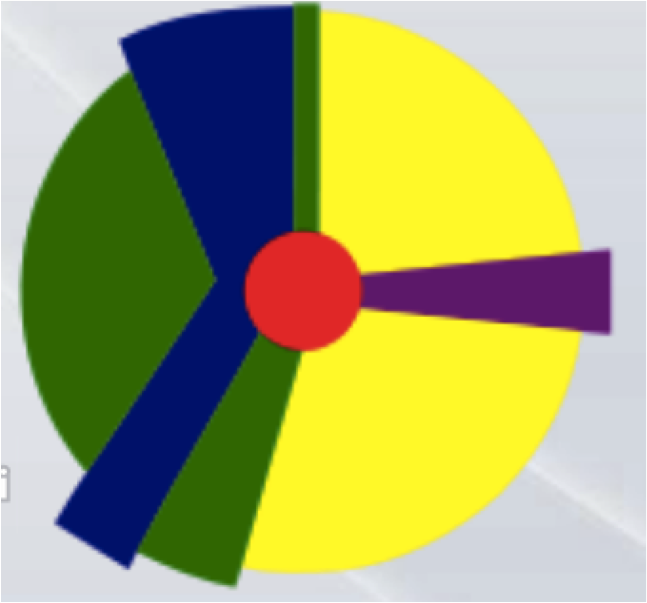
The factory/industry zone is the blue on the left, and it is located surrounded by the low class residential zone (green) and touching the central business district (red).
The factory/industry zone is the blue on the left, and it is located surrounded by the low class residential zone (green) and touching the central business district (red).
← Didn't Know|Knew It →
A key problem poorer inner-city neighborhoods in America face due to their geographical position is .
A key problem poorer inner-city neighborhoods in America face due to their geographical position is .
Tap to reveal answer
In major American cities, poor urban areas suffer from a variety of problems due to a few specific realities of their geographic locations. Poor inner-city neighborhoods are usually much more densely populated than their wealthier counterparts, but with fewer amenities due to their worse infrastructure. One of the best examples of the problems produced by these issues is the lack of quality food options from high-end grocers, farmers' markets, or specialty stores.
In major American cities, poor urban areas suffer from a variety of problems due to a few specific realities of their geographic locations. Poor inner-city neighborhoods are usually much more densely populated than their wealthier counterparts, but with fewer amenities due to their worse infrastructure. One of the best examples of the problems produced by these issues is the lack of quality food options from high-end grocers, farmers' markets, or specialty stores.
← Didn't Know|Knew It →
Finding a coffee shop and a sandwich shop next door to one another is an example of .
Finding a coffee shop and a sandwich shop next door to one another is an example of .
Tap to reveal answer
Agglomeration is a real-world marketing ploy in which establishments are located close to one another to help convince like-minded consumers who may walk out of one establishment and want to go to another. For example, coffee shops and sandwich shops tend to be located close to one another with the idea that customers may leave the coffee shop and want a sandwich, or vice versa.
Agglomeration is a real-world marketing ploy in which establishments are located close to one another to help convince like-minded consumers who may walk out of one establishment and want to go to another. For example, coffee shops and sandwich shops tend to be located close to one another with the idea that customers may leave the coffee shop and want a sandwich, or vice versa.
← Didn't Know|Knew It →
In Mexico, the population of Mexico City metropolitan area is over 20 million people. The next largest metropolitan area, Guadalajara, has approximately 4.5 million people. This disparity in population sizes makes Mexico City an example of .
In Mexico, the population of Mexico City metropolitan area is over 20 million people. The next largest metropolitan area, Guadalajara, has approximately 4.5 million people. This disparity in population sizes makes Mexico City an example of .
Tap to reveal answer
Mexico's population distribution is an example of a primate city. Mexico City has a population that is more than double the population of Guadalajara, therefore not qualifying the population to be under a rank-size rule. Cities can be world cities, alpha cities, or capital cities and not have the population disparities found in countries like Mexico.
Mexico's population distribution is an example of a primate city. Mexico City has a population that is more than double the population of Guadalajara, therefore not qualifying the population to be under a rank-size rule. Cities can be world cities, alpha cities, or capital cities and not have the population disparities found in countries like Mexico.
← Didn't Know|Knew It →