Calculating the perimeter of a rectangle - GMAT Quantitative
Card 0 of 64
A rectangle has a length of  and width of
  . Solve for the perimeter.
A rectangle has a length of
Tap to see back →




A farmer decides to build a fence two feet around his rectangular field. The field is  feet long and
  feet wide. How long should the fencing be in order to build the fence around the field?
A farmer decides to build a fence two feet around his rectangular field. The field is
Tap to see back →
The fence is 2 feet around the field. Therefore the area actually enclosed by the fence is 4 feet longer and 4 feet wider than the field.
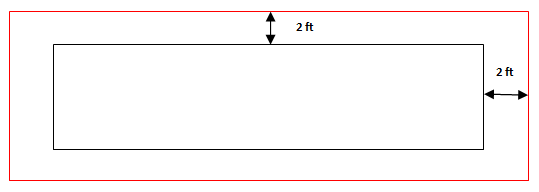
The length of fencing needed is the perimeter of the area enclosed which is calculated as follows:

The fencing should be 90 feet.
The fence is 2 feet around the field. Therefore the area actually enclosed by the fence is 4 feet longer and 4 feet wider than the field.
The length of fencing needed is the perimeter of the area enclosed which is calculated as follows:
The fencing should be 90 feet.
If a rectangle has an area of  and a length of
  , what is its perimeter?
If a rectangle has an area of
Tap to see back →
To find the perimeter, we need the length and the width. We are only given the length, so first we must find the width using the given area:


The perimeter is simply two times the length plus two times the width, so we can now use the known length and width to calculate the perimeter:


To find the perimeter, we need the length and the width. We are only given the length, so first we must find the width using the given area:
The perimeter is simply two times the length plus two times the width, so we can now use the known length and width to calculate the perimeter:
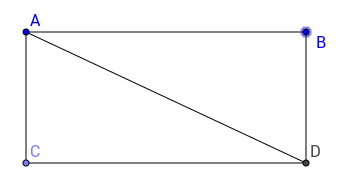
The diagonal  of the rectangle
  is
is  cm long and
  is
is  cm long. What is the perimeter of the rectangle?
The diagonal
Tap to see back →
We can see that the hypotenuse AD of triangle ABD is 15 cm. We should check whether ABD is a Pythagorean Triple, whose sides are in the ratio  , where
  is a constant. Since AD is 15 and BD is 9, the triangle must be a Pythagorean Triple with
  , therefore AB must be 12 cm long. Now we know all the lengths of the sides of our triangle, we can find the perimeter which will be given by
  , which gives us 42, our final answer.
We can see that the hypotenuse AD of triangle ABD is 15 cm. We should check whether ABD is a Pythagorean Triple, whose sides are in the ratio
The area of rectangle  is
is  , and the diagonal has length
  . What is the perimeter of rectangle
  ?
?
The area of rectangle
Tap to see back →
Given the information we are provided, we could set up an quadratic equation, however, this equation would be really complicated to solve, instead we should try to find whether the diagonal of this rectangle can be the hypotenuse of Pythagorean triangle. The hypotenuse AD of triangle ADC, has length 10, therefore if it is a Pythagorean Triple, its other lengths must be 6 and 8, since the sides are in ratio  where
where  is a constant. By testing, we see that if
  and
and  we get an area of 48 for this rectangle, by multiplying DC by AC. This is the original area of our rectangle, therefore, these must be the right lenghts and the final answer is given by
  , which is 28.
Alternatively, we could have found the missing lengths with trial and error, by doing so, we would have picked length for which, the area is 48 and tried to see whether the diagonal would remain 10, until we get the working set 6 and 8.
Given the information we are provided, we could set up an quadratic equation, however, this equation would be really complicated to solve, instead we should try to find whether the diagonal of this rectangle can be the hypotenuse of Pythagorean triangle. The hypotenuse AD of triangle ADC, has length 10, therefore if it is a Pythagorean Triple, its other lengths must be 6 and 8, since the sides are in ratio
Alternatively, we could have found the missing lengths with trial and error, by doing so, we would have picked length for which, the area is 48 and tried to see whether the diagonal would remain 10, until we get the working set 6 and 8.
The width of a rectangle is twice the length. Find an equation representing the perimeter.


The width of a rectangle is twice the length. Find an equation representing the perimeter.
Tap to see back →
The perimeter of a rectangle can be found by adding up all the sides:

We are told the width of the rectangle is twice its length so  , inserting this into our equation for the perimeter leaves us with:
 , which is II
The perimeter of a rectangle can be found by adding up all the sides:
We are told the width of the rectangle is twice its length so
Find the perimeter of a rectangle whose width is  and length is
  .
.
Find the perimeter of a rectangle whose width is
Tap to see back →
To solve, simply use the formula for the perimeter of a rectangle:

To solve, simply use the formula for the perimeter of a rectangle:
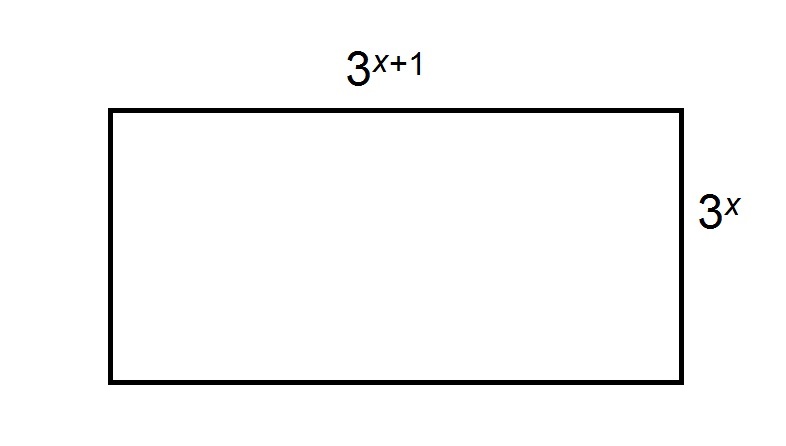
Note: figure NOT drawn to scale
Give the perimeter of the above rectangle.
Note: figure NOT drawn to scale
Give the perimeter of the above rectangle.
Tap to see back →
The perimeter of a rectangle is the sum of the lengths of its sides. Since a rectangle has two pairs of sides of the same lengths, this will be




The perimeter of a rectangle is the sum of the lengths of its sides. Since a rectangle has two pairs of sides of the same lengths, this will be
Find the perimeter of a rectangle whose width is and length is .
Find the perimeter of a rectangle whose width is
Tap to see back →
To solve, simply use the formula for the perimeter of a rectangle:
To solve, simply use the formula for the perimeter of a rectangle:
A rectangle has a length of and width of . Solve for the perimeter.
A rectangle has a length of
Tap to see back →
A farmer decides to build a fence two feet around his rectangular field. The field is feet long and feet wide. How long should the fencing be in order to build the fence around the field?
A farmer decides to build a fence two feet around his rectangular field. The field is
Tap to see back →
The fence is 2 feet around the field. Therefore the area actually enclosed by the fence is 4 feet longer and 4 feet wider than the field.
The length of fencing needed is the perimeter of the area enclosed which is calculated as follows:
The fencing should be 90 feet.
The fence is 2 feet around the field. Therefore the area actually enclosed by the fence is 4 feet longer and 4 feet wider than the field.
The length of fencing needed is the perimeter of the area enclosed which is calculated as follows:
The fencing should be 90 feet.
If a rectangle has an area of and a length of , what is its perimeter?
If a rectangle has an area of
Tap to see back →
To find the perimeter, we need the length and the width. We are only given the length, so first we must find the width using the given area:
The perimeter is simply two times the length plus two times the width, so we can now use the known length and width to calculate the perimeter:
To find the perimeter, we need the length and the width. We are only given the length, so first we must find the width using the given area:
The perimeter is simply two times the length plus two times the width, so we can now use the known length and width to calculate the perimeter:
The diagonal of the rectangle is cm long and is cm long. What is the perimeter of the rectangle?
The diagonal
Tap to see back →
We can see that the hypotenuse AD of triangle ABD is 15 cm. We should check whether ABD is a Pythagorean Triple, whose sides are in the ratio , where is a constant. Since AD is 15 and BD is 9, the triangle must be a Pythagorean Triple with , therefore AB must be 12 cm long. Now we know all the lengths of the sides of our triangle, we can find the perimeter which will be given by , which gives us 42, our final answer.
We can see that the hypotenuse AD of triangle ABD is 15 cm. We should check whether ABD is a Pythagorean Triple, whose sides are in the ratio
The area of rectangle is , and the diagonal has length . What is the perimeter of rectangle ?
The area of rectangle
Tap to see back →
Given the information we are provided, we could set up an quadratic equation, however, this equation would be really complicated to solve, instead we should try to find whether the diagonal of this rectangle can be the hypotenuse of Pythagorean triangle. The hypotenuse AD of triangle ADC, has length 10, therefore if it is a Pythagorean Triple, its other lengths must be 6 and 8, since the sides are in ratio where is a constant. By testing, we see that if and we get an area of 48 for this rectangle, by multiplying DC by AC. This is the original area of our rectangle, therefore, these must be the right lenghts and the final answer is given by , which is 28.
Alternatively, we could have found the missing lengths with trial and error, by doing so, we would have picked length for which, the area is 48 and tried to see whether the diagonal would remain 10, until we get the working set 6 and 8.
Given the information we are provided, we could set up an quadratic equation, however, this equation would be really complicated to solve, instead we should try to find whether the diagonal of this rectangle can be the hypotenuse of Pythagorean triangle. The hypotenuse AD of triangle ADC, has length 10, therefore if it is a Pythagorean Triple, its other lengths must be 6 and 8, since the sides are in ratio
Alternatively, we could have found the missing lengths with trial and error, by doing so, we would have picked length for which, the area is 48 and tried to see whether the diagonal would remain 10, until we get the working set 6 and 8.
The width of a rectangle is twice the length. Find an equation representing the perimeter.
The width of a rectangle is twice the length. Find an equation representing the perimeter.
Tap to see back →
The perimeter of a rectangle can be found by adding up all the sides:
We are told the width of the rectangle is twice its length so , inserting this into our equation for the perimeter leaves us with:
, which is II
The perimeter of a rectangle can be found by adding up all the sides:
We are told the width of the rectangle is twice its length so
Note: figure NOT drawn to scale
Give the perimeter of the above rectangle.
Note: figure NOT drawn to scale
Give the perimeter of the above rectangle.
Tap to see back →
The perimeter of a rectangle is the sum of the lengths of its sides. Since a rectangle has two pairs of sides of the same lengths, this will be
The perimeter of a rectangle is the sum of the lengths of its sides. Since a rectangle has two pairs of sides of the same lengths, this will be
Find the perimeter of a rectangle whose width is and length is .
Find the perimeter of a rectangle whose width is
Tap to see back →
To solve, simply use the formula for the perimeter of a rectangle:
To solve, simply use the formula for the perimeter of a rectangle:
A rectangle has a length of and width of . Solve for the perimeter.
A rectangle has a length of
Tap to see back →
A farmer decides to build a fence two feet around his rectangular field. The field is feet long and feet wide. How long should the fencing be in order to build the fence around the field?
A farmer decides to build a fence two feet around his rectangular field. The field is
Tap to see back →
The fence is 2 feet around the field. Therefore the area actually enclosed by the fence is 4 feet longer and 4 feet wider than the field.
The length of fencing needed is the perimeter of the area enclosed which is calculated as follows:
The fencing should be 90 feet.
The fence is 2 feet around the field. Therefore the area actually enclosed by the fence is 4 feet longer and 4 feet wider than the field.
The length of fencing needed is the perimeter of the area enclosed which is calculated as follows:
The fencing should be 90 feet.
If a rectangle has an area of and a length of , what is its perimeter?
If a rectangle has an area of
Tap to see back →
To find the perimeter, we need the length and the width. We are only given the length, so first we must find the width using the given area:
The perimeter is simply two times the length plus two times the width, so we can now use the known length and width to calculate the perimeter:
To find the perimeter, we need the length and the width. We are only given the length, so first we must find the width using the given area:
The perimeter is simply two times the length plus two times the width, so we can now use the known length and width to calculate the perimeter: