DSQ: Calculating the length of an edge of a cube - GMAT Quantitative
Card 1 of 40
What is the length of the edge of a cube?
-
Its volume is 1,728 cubic meters.
-
Its surface area is 864 square meters
What is the length of the edge of a cube?
-
Its volume is 1,728 cubic meters.
-
Its surface area is 864 square meters
Tap to reveal answer
Call the sidelength, surface area, and volume of the cube  ,
,  , and
, and  , respectively.
Then

or, equivalently,

So, given statement 1 alone - that is, given only the volume, you can demonstrate the sidelength to be

Also,

or, equivalently,

Given statement 2 alone - that is, given only the surface area, you can demonstrate the sidelength to be
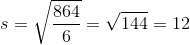
Therefore, the answer is that either statement alone is sufficient.
Call the sidelength, surface area, and volume of the cube
Then
or, equivalently,
So, given statement 1 alone - that is, given only the volume, you can demonstrate the sidelength to be
Also,
or, equivalently,
Given statement 2 alone - that is, given only the surface area, you can demonstrate the sidelength to be
Therefore, the answer is that either statement alone is sufficient.
← Didn't Know|Knew It →
A sphere is inscribed inside a cube. What is the volume of the sphere?
Statement 1: The surface area of the cube is 216.
Statement 2: The volume of the cube is 216.
A sphere is inscribed inside a cube. What is the volume of the sphere?
Statement 1: The surface area of the cube is 216.
Statement 2: The volume of the cube is 216.
Tap to reveal answer
The diameter of a sphere inscribed inside a cube is equal to the length of one of the edges of a cube. From either the surface area or the volume of a cube, the appropriate formula can be used to calculate this length. Half this is the radius, from which the formula  can be used to find the volume of the sphere.
The diameter of a sphere inscribed inside a cube is equal to the length of one of the edges of a cube. From either the surface area or the volume of a cube, the appropriate formula can be used to calculate this length. Half this is the radius, from which the formula
← Didn't Know|Knew It →
What is the length of edge  of cube
  ?
?
(1)  .
.
(2)  .
.
What is the length of edge
(1)
(2)
Tap to reveal answer
In order to find the length of an edge, we would need any information about one of the faces of the cube or about the diagonal of the cube.
Statement 1 gives us the length of the diagonal of the cube, since the formula for the diagonal is  where
where  is the length of an edge of the cube and
  is the length of the diagonal we are able to find the length of the edge. Therefore statement 1 alone is sufficient.
Statement 2 alones is insufficient, it gives us something we can already tell knowing that ABCDEFGH is a cube.
Statement 1 alone is sufficient.
In order to find the length of an edge, we would need any information about one of the faces of the cube or about the diagonal of the cube.
Statement 1 gives us the length of the diagonal of the cube, since the formula for the diagonal is
Statement 2 alones is insufficient, it gives us something we can already tell knowing that ABCDEFGH is a cube.
Statement 1 alone is sufficient.
← Didn't Know|Knew It →
 is a cube. What is the length of edge
  ?
?
(1) The volume of the cube is  .
.
(2) The area of face  is
is  .
.
(1) The volume of the cube is
(2) The area of face
Tap to reveal answer
Like we have previously seen, to find the length of an edge, we need to have information about the other faces or anything else within the cube.
Statement 1 tells us that the volume of the cube is  , from this we can find the length of the side of the cube. Statement 1 alone is sufficient.
Statement 2, tells us that the area of ABCD is  , similarily, by taking the square root of this number, we can find the length of the edge of the cube.
Therefore each statement alone is sufficient.
Like we have previously seen, to find the length of an edge, we need to have information about the other faces or anything else within the cube.
Statement 1 tells us that the volume of the cube is
Statement 2, tells us that the area of ABCD is
Therefore each statement alone is sufficient.
← Didn't Know|Knew It →
Find the length of an edge of the cube.
- The volume of the cube is
 .
.
- The surface area of the cube is
 .
.
Find the length of an edge of the cube.
- The volume of the cube is
- The surface area of the cube is
Tap to reveal answer
Statement 1: Use the volume formula for a cube to solve for the side length.
 where
where  represents the length of the edge

Statement 2: Use the surface area formula for a cube to solve for the side length.



Each statement alone is sufficient to answer the question.
Statement 1: Use the volume formula for a cube to solve for the side length.
Statement 2: Use the surface area formula for a cube to solve for the side length.
Each statement alone is sufficient to answer the question.
← Didn't Know|Knew It →
What is the length of the edge of a cube?
-
Its volume is 1,728 cubic meters.
-
Its surface area is 864 square meters
What is the length of the edge of a cube?
-
Its volume is 1,728 cubic meters.
-
Its surface area is 864 square meters
Tap to reveal answer
Call the sidelength, surface area, and volume of the cube , , and , respectively.
Then
or, equivalently,
So, given statement 1 alone - that is, given only the volume, you can demonstrate the sidelength to be
Also,
or, equivalently,
Given statement 2 alone - that is, given only the surface area, you can demonstrate the sidelength to be
Therefore, the answer is that either statement alone is sufficient.
Call the sidelength, surface area, and volume of the cube
Then
or, equivalently,
So, given statement 1 alone - that is, given only the volume, you can demonstrate the sidelength to be
Also,
or, equivalently,
Given statement 2 alone - that is, given only the surface area, you can demonstrate the sidelength to be
Therefore, the answer is that either statement alone is sufficient.
← Didn't Know|Knew It →
A sphere is inscribed inside a cube. What is the volume of the sphere?
Statement 1: The surface area of the cube is 216.
Statement 2: The volume of the cube is 216.
A sphere is inscribed inside a cube. What is the volume of the sphere?
Statement 1: The surface area of the cube is 216.
Statement 2: The volume of the cube is 216.
Tap to reveal answer
The diameter of a sphere inscribed inside a cube is equal to the length of one of the edges of a cube. From either the surface area or the volume of a cube, the appropriate formula can be used to calculate this length. Half this is the radius, from which the formula can be used to find the volume of the sphere.
The diameter of a sphere inscribed inside a cube is equal to the length of one of the edges of a cube. From either the surface area or the volume of a cube, the appropriate formula can be used to calculate this length. Half this is the radius, from which the formula
← Didn't Know|Knew It →
What is the length of edge of cube ?
(1) .
(2) .
What is the length of edge
(1)
(2)
Tap to reveal answer
In order to find the length of an edge, we would need any information about one of the faces of the cube or about the diagonal of the cube.
Statement 1 gives us the length of the diagonal of the cube, since the formula for the diagonal is where is the length of an edge of the cube and is the length of the diagonal we are able to find the length of the edge. Therefore statement 1 alone is sufficient.
Statement 2 alones is insufficient, it gives us something we can already tell knowing that ABCDEFGH is a cube.
Statement 1 alone is sufficient.
In order to find the length of an edge, we would need any information about one of the faces of the cube or about the diagonal of the cube.
Statement 1 gives us the length of the diagonal of the cube, since the formula for the diagonal is
Statement 2 alones is insufficient, it gives us something we can already tell knowing that ABCDEFGH is a cube.
Statement 1 alone is sufficient.
← Didn't Know|Knew It →
is a cube. What is the length of edge ?
(1) The volume of the cube is .
(2) The area of face is .
(1) The volume of the cube is
(2) The area of face
Tap to reveal answer
Like we have previously seen, to find the length of an edge, we need to have information about the other faces or anything else within the cube.
Statement 1 tells us that the volume of the cube is , from this we can find the length of the side of the cube. Statement 1 alone is sufficient.
Statement 2, tells us that the area of ABCD is , similarily, by taking the square root of this number, we can find the length of the edge of the cube.
Therefore each statement alone is sufficient.
Like we have previously seen, to find the length of an edge, we need to have information about the other faces or anything else within the cube.
Statement 1 tells us that the volume of the cube is
Statement 2, tells us that the area of ABCD is
Therefore each statement alone is sufficient.
← Didn't Know|Knew It →
Find the length of an edge of the cube.
- The volume of the cube is .
- The surface area of the cube is .
Find the length of an edge of the cube.
- The volume of the cube is
- The surface area of the cube is
Tap to reveal answer
Statement 1: Use the volume formula for a cube to solve for the side length.
where represents the length of the edge
Statement 2: Use the surface area formula for a cube to solve for the side length.
Each statement alone is sufficient to answer the question.
Statement 1: Use the volume formula for a cube to solve for the side length.
Statement 2: Use the surface area formula for a cube to solve for the side length.
Each statement alone is sufficient to answer the question.
← Didn't Know|Knew It →
What is the length of the edge of a cube?
-
Its volume is 1,728 cubic meters.
-
Its surface area is 864 square meters
What is the length of the edge of a cube?
-
Its volume is 1,728 cubic meters.
-
Its surface area is 864 square meters
Tap to reveal answer
Call the sidelength, surface area, and volume of the cube , , and , respectively.
Then
or, equivalently,
So, given statement 1 alone - that is, given only the volume, you can demonstrate the sidelength to be
Also,
or, equivalently,
Given statement 2 alone - that is, given only the surface area, you can demonstrate the sidelength to be
Therefore, the answer is that either statement alone is sufficient.
Call the sidelength, surface area, and volume of the cube
Then
or, equivalently,
So, given statement 1 alone - that is, given only the volume, you can demonstrate the sidelength to be
Also,
or, equivalently,
Given statement 2 alone - that is, given only the surface area, you can demonstrate the sidelength to be
Therefore, the answer is that either statement alone is sufficient.
← Didn't Know|Knew It →
A sphere is inscribed inside a cube. What is the volume of the sphere?
Statement 1: The surface area of the cube is 216.
Statement 2: The volume of the cube is 216.
A sphere is inscribed inside a cube. What is the volume of the sphere?
Statement 1: The surface area of the cube is 216.
Statement 2: The volume of the cube is 216.
Tap to reveal answer
The diameter of a sphere inscribed inside a cube is equal to the length of one of the edges of a cube. From either the surface area or the volume of a cube, the appropriate formula can be used to calculate this length. Half this is the radius, from which the formula can be used to find the volume of the sphere.
The diameter of a sphere inscribed inside a cube is equal to the length of one of the edges of a cube. From either the surface area or the volume of a cube, the appropriate formula can be used to calculate this length. Half this is the radius, from which the formula
← Didn't Know|Knew It →
What is the length of edge of cube ?
(1) .
(2) .
What is the length of edge
(1)
(2)
Tap to reveal answer
In order to find the length of an edge, we would need any information about one of the faces of the cube or about the diagonal of the cube.
Statement 1 gives us the length of the diagonal of the cube, since the formula for the diagonal is where is the length of an edge of the cube and is the length of the diagonal we are able to find the length of the edge. Therefore statement 1 alone is sufficient.
Statement 2 alones is insufficient, it gives us something we can already tell knowing that ABCDEFGH is a cube.
Statement 1 alone is sufficient.
In order to find the length of an edge, we would need any information about one of the faces of the cube or about the diagonal of the cube.
Statement 1 gives us the length of the diagonal of the cube, since the formula for the diagonal is
Statement 2 alones is insufficient, it gives us something we can already tell knowing that ABCDEFGH is a cube.
Statement 1 alone is sufficient.
← Didn't Know|Knew It →
is a cube. What is the length of edge ?
(1) The volume of the cube is .
(2) The area of face is .
(1) The volume of the cube is
(2) The area of face
Tap to reveal answer
Like we have previously seen, to find the length of an edge, we need to have information about the other faces or anything else within the cube.
Statement 1 tells us that the volume of the cube is , from this we can find the length of the side of the cube. Statement 1 alone is sufficient.
Statement 2, tells us that the area of ABCD is , similarily, by taking the square root of this number, we can find the length of the edge of the cube.
Therefore each statement alone is sufficient.
Like we have previously seen, to find the length of an edge, we need to have information about the other faces or anything else within the cube.
Statement 1 tells us that the volume of the cube is
Statement 2, tells us that the area of ABCD is
Therefore each statement alone is sufficient.
← Didn't Know|Knew It →
Find the length of an edge of the cube.
- The volume of the cube is .
- The surface area of the cube is .
Find the length of an edge of the cube.
- The volume of the cube is
- The surface area of the cube is
Tap to reveal answer
Statement 1: Use the volume formula for a cube to solve for the side length.
where represents the length of the edge
Statement 2: Use the surface area formula for a cube to solve for the side length.
Each statement alone is sufficient to answer the question.
Statement 1: Use the volume formula for a cube to solve for the side length.
Statement 2: Use the surface area formula for a cube to solve for the side length.
Each statement alone is sufficient to answer the question.
← Didn't Know|Knew It →
What is the length of the edge of a cube?
-
Its volume is 1,728 cubic meters.
-
Its surface area is 864 square meters
What is the length of the edge of a cube?
-
Its volume is 1,728 cubic meters.
-
Its surface area is 864 square meters
Tap to reveal answer
Call the sidelength, surface area, and volume of the cube , , and , respectively.
Then
or, equivalently,
So, given statement 1 alone - that is, given only the volume, you can demonstrate the sidelength to be
Also,
or, equivalently,
Given statement 2 alone - that is, given only the surface area, you can demonstrate the sidelength to be
Therefore, the answer is that either statement alone is sufficient.
Call the sidelength, surface area, and volume of the cube
Then
or, equivalently,
So, given statement 1 alone - that is, given only the volume, you can demonstrate the sidelength to be
Also,
or, equivalently,
Given statement 2 alone - that is, given only the surface area, you can demonstrate the sidelength to be
Therefore, the answer is that either statement alone is sufficient.
← Didn't Know|Knew It →
A sphere is inscribed inside a cube. What is the volume of the sphere?
Statement 1: The surface area of the cube is 216.
Statement 2: The volume of the cube is 216.
A sphere is inscribed inside a cube. What is the volume of the sphere?
Statement 1: The surface area of the cube is 216.
Statement 2: The volume of the cube is 216.
Tap to reveal answer
The diameter of a sphere inscribed inside a cube is equal to the length of one of the edges of a cube. From either the surface area or the volume of a cube, the appropriate formula can be used to calculate this length. Half this is the radius, from which the formula can be used to find the volume of the sphere.
The diameter of a sphere inscribed inside a cube is equal to the length of one of the edges of a cube. From either the surface area or the volume of a cube, the appropriate formula can be used to calculate this length. Half this is the radius, from which the formula
← Didn't Know|Knew It →
What is the length of edge of cube ?
(1) .
(2) .
What is the length of edge
(1)
(2)
Tap to reveal answer
In order to find the length of an edge, we would need any information about one of the faces of the cube or about the diagonal of the cube.
Statement 1 gives us the length of the diagonal of the cube, since the formula for the diagonal is where is the length of an edge of the cube and is the length of the diagonal we are able to find the length of the edge. Therefore statement 1 alone is sufficient.
Statement 2 alones is insufficient, it gives us something we can already tell knowing that ABCDEFGH is a cube.
Statement 1 alone is sufficient.
In order to find the length of an edge, we would need any information about one of the faces of the cube or about the diagonal of the cube.
Statement 1 gives us the length of the diagonal of the cube, since the formula for the diagonal is
Statement 2 alones is insufficient, it gives us something we can already tell knowing that ABCDEFGH is a cube.
Statement 1 alone is sufficient.
← Didn't Know|Knew It →
is a cube. What is the length of edge ?
(1) The volume of the cube is .
(2) The area of face is .
(1) The volume of the cube is
(2) The area of face
Tap to reveal answer
Like we have previously seen, to find the length of an edge, we need to have information about the other faces or anything else within the cube.
Statement 1 tells us that the volume of the cube is , from this we can find the length of the side of the cube. Statement 1 alone is sufficient.
Statement 2, tells us that the area of ABCD is , similarily, by taking the square root of this number, we can find the length of the edge of the cube.
Therefore each statement alone is sufficient.
Like we have previously seen, to find the length of an edge, we need to have information about the other faces or anything else within the cube.
Statement 1 tells us that the volume of the cube is
Statement 2, tells us that the area of ABCD is
Therefore each statement alone is sufficient.
← Didn't Know|Knew It →
Find the length of an edge of the cube.
- The volume of the cube is .
- The surface area of the cube is .
Find the length of an edge of the cube.
- The volume of the cube is
- The surface area of the cube is
Tap to reveal answer
Statement 1: Use the volume formula for a cube to solve for the side length.
where represents the length of the edge
Statement 2: Use the surface area formula for a cube to solve for the side length.
Each statement alone is sufficient to answer the question.
Statement 1: Use the volume formula for a cube to solve for the side length.
Statement 2: Use the surface area formula for a cube to solve for the side length.
Each statement alone is sufficient to answer the question.
← Didn't Know|Knew It →