DSQ: Calculating the perimeter of a polygon - GMAT Quantitative
Card 1 of 40
You are given a regular hexagon and a regular pentagon. Which one has the greater perimeter?
Statement 1: The hexagon and the pentagon have the same area
Statement 2: The apothem of the hexagon is greater than that of the pentagon
You are given a regular hexagon and a regular pentagon. Which one has the greater perimeter?
Statement 1: The hexagon and the pentagon have the same area
Statement 2: The apothem of the hexagon is greater than that of the pentagon
Tap to reveal answer
The area of a polygon is one-half the product of its perimeter and its apothem (the perpendicular distance from the center to a side). Therefore,
 ,
,
or

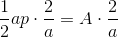

Therefore, the perimeter can be determined from both area and apothem, but not from one alone. Neither statement alone gives you enough information, but from both statements together, it can be determined that the pentagon has the greater perimeter.
The area of a polygon is one-half the product of its perimeter and its apothem (the perpendicular distance from the center to a side). Therefore,
or
Therefore, the perimeter can be determined from both area and apothem, but not from one alone. Neither statement alone gives you enough information, but from both statements together, it can be determined that the pentagon has the greater perimeter.
← Didn't Know|Knew It →
Given a regular hexagon and a regular octagon, which, if either, has the greater perimeter?
Statement 1: The sidelength of the octagon is one foot.
Statement 2: The sidelength of the hexagon is fifteen inches.
Given a regular hexagon and a regular octagon, which, if either, has the greater perimeter?
Statement 1: The sidelength of the octagon is one foot.
Statement 2: The sidelength of the hexagon is fifteen inches.
Tap to reveal answer
Each of the two statements allows you to find out the perimeter of one of the polygons by multiplying its sidelength by the number of its sides. However, neither statement offers any clues to the perimeter of the other polygon. Both statements together, however, allow you to determine and to compare both perimeters.
Each of the two statements allows you to find out the perimeter of one of the polygons by multiplying its sidelength by the number of its sides. However, neither statement offers any clues to the perimeter of the other polygon. Both statements together, however, allow you to determine and to compare both perimeters.
← Didn't Know|Knew It →
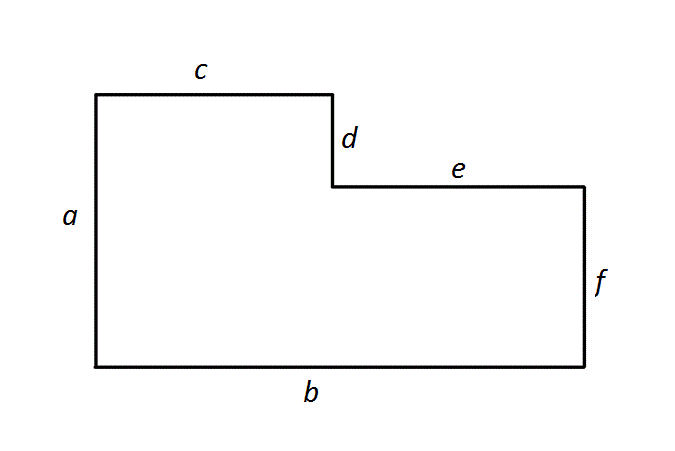
Note: Figure NOT drawn to scale. All angles shown are right angles.
What is the perimeter of the above figure?
Statement 1: 
Statement 2: 
Note: Figure NOT drawn to scale. All angles shown are right angles.
What is the perimeter of the above figure?
Statement 1:
Statement 2:
Tap to reveal answer
The figure can be seen as a  rectangle cut out of an
  rectangle.
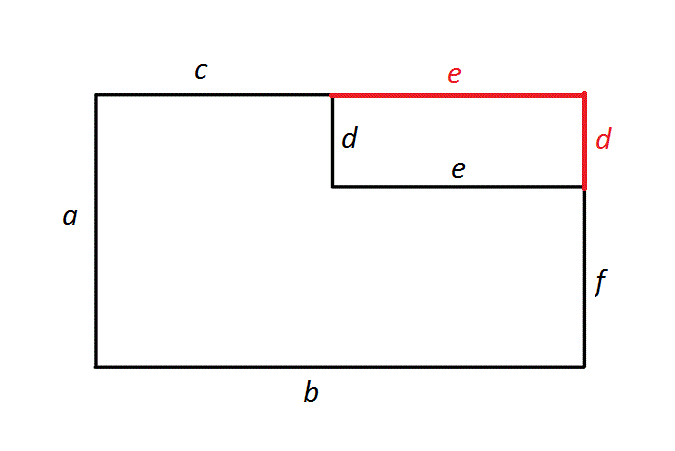
The perimeter of the composite figure is
 .
.
However, since opposite sides of a rectangle are congruent, then, as can be seen in the figure,  and
and  .
.
The perimeter can then be rewritten:




Therefore, it is necessary and sufficient to know  and
and  ; the other four sidelengths are not needed to determine the perimeter of the figure.
The figure can be seen as a
The perimeter of the composite figure is
However, since opposite sides of a rectangle are congruent, then, as can be seen in the figure,
The perimeter can then be rewritten:
Therefore, it is necessary and sufficient to know
← Didn't Know|Knew It →
Consider regular decagon  .
.
I) Side  is 56 inches long.
II) Side  plus Side
  is equivalent to 112 inches.
Find the perimeter of  .
.
Consider regular decagon
I) Side
II) Side
Find the perimeter of
Tap to reveal answer
To find perimeter, we need the length of all the sides. Note that we are dealing with a regular polygon, so all of its sides are equal.
Statement I gives us one side length. Multiply the side by ten (decagons have ten sides):

Statement II gives us the length of two sides together. Multiply by 5 to get the total perimeter:

To find perimeter, we need the length of all the sides. Note that we are dealing with a regular polygon, so all of its sides are equal.
Statement I gives us one side length. Multiply the side by ten (decagons have ten sides):
Statement II gives us the length of two sides together. Multiply by 5 to get the total perimeter:
← Didn't Know|Knew It →
Consider pentagon  .
.
I) Side  has the same length as side
  , 5 inches.
II) Side  is one-third the length of side
  , and sides
  and
and  have the same length as side
  .
.
What is the perimeter of  ?
?
Consider pentagon
I) Side
II) Side
What is the perimeter of
Tap to reveal answer
Consider pentagon  .
.
I) Side  has the same length as side
  , 5 inches.
II) Side  is one-third the length of sides
  ,
,  and
and  .
.
What is the perimeter of  ?
?
To find perimeter, we need to know the length of all the sides.
Statement I gives us the lengths of two sides.
Statement II relates one of the sides given in Statement I to the other three sides:


Consider pentagon
I) Side
II) Side
What is the perimeter of
To find perimeter, we need to know the length of all the sides.
Statement I gives us the lengths of two sides.
Statement II relates one of the sides given in Statement I to the other three sides:
← Didn't Know|Knew It →
Consider regular decagon .
I) Side is 56 inches long.
II) Side plus Side is equivalent to 112 inches.
Find the perimeter of .
Consider regular decagon
I) Side
II) Side
Find the perimeter of
Tap to reveal answer
To find perimeter, we need the length of all the sides. Note that we are dealing with a regular polygon, so all of its sides are equal.
Statement I gives us one side length. Multiply the side by ten (decagons have ten sides):
Statement II gives us the length of two sides together. Multiply by 5 to get the total perimeter:
To find perimeter, we need the length of all the sides. Note that we are dealing with a regular polygon, so all of its sides are equal.
Statement I gives us one side length. Multiply the side by ten (decagons have ten sides):
Statement II gives us the length of two sides together. Multiply by 5 to get the total perimeter:
← Didn't Know|Knew It →
You are given a regular hexagon and a regular pentagon. Which one has the greater perimeter?
Statement 1: The hexagon and the pentagon have the same area
Statement 2: The apothem of the hexagon is greater than that of the pentagon
You are given a regular hexagon and a regular pentagon. Which one has the greater perimeter?
Statement 1: The hexagon and the pentagon have the same area
Statement 2: The apothem of the hexagon is greater than that of the pentagon
Tap to reveal answer
The area of a polygon is one-half the product of its perimeter and its apothem (the perpendicular distance from the center to a side). Therefore,
,
or
Therefore, the perimeter can be determined from both area and apothem, but not from one alone. Neither statement alone gives you enough information, but from both statements together, it can be determined that the pentagon has the greater perimeter.
The area of a polygon is one-half the product of its perimeter and its apothem (the perpendicular distance from the center to a side). Therefore,
or
Therefore, the perimeter can be determined from both area and apothem, but not from one alone. Neither statement alone gives you enough information, but from both statements together, it can be determined that the pentagon has the greater perimeter.
← Didn't Know|Knew It →
Given a regular hexagon and a regular octagon, which, if either, has the greater perimeter?
Statement 1: The sidelength of the octagon is one foot.
Statement 2: The sidelength of the hexagon is fifteen inches.
Given a regular hexagon and a regular octagon, which, if either, has the greater perimeter?
Statement 1: The sidelength of the octagon is one foot.
Statement 2: The sidelength of the hexagon is fifteen inches.
Tap to reveal answer
Each of the two statements allows you to find out the perimeter of one of the polygons by multiplying its sidelength by the number of its sides. However, neither statement offers any clues to the perimeter of the other polygon. Both statements together, however, allow you to determine and to compare both perimeters.
Each of the two statements allows you to find out the perimeter of one of the polygons by multiplying its sidelength by the number of its sides. However, neither statement offers any clues to the perimeter of the other polygon. Both statements together, however, allow you to determine and to compare both perimeters.
← Didn't Know|Knew It →
Note: Figure NOT drawn to scale. All angles shown are right angles.
What is the perimeter of the above figure?
Statement 1:
Statement 2:
Note: Figure NOT drawn to scale. All angles shown are right angles.
What is the perimeter of the above figure?
Statement 1:
Statement 2:
Tap to reveal answer
The figure can be seen as a rectangle cut out of an rectangle.
The perimeter of the composite figure is
.
However, since opposite sides of a rectangle are congruent, then, as can be seen in the figure, and .
The perimeter can then be rewritten:
Therefore, it is necessary and sufficient to know and ; the other four sidelengths are not needed to determine the perimeter of the figure.
The figure can be seen as a
The perimeter of the composite figure is
However, since opposite sides of a rectangle are congruent, then, as can be seen in the figure,
The perimeter can then be rewritten:
Therefore, it is necessary and sufficient to know
← Didn't Know|Knew It →
Consider pentagon .
I) Side has the same length as side , 5 inches.
II) Side is one-third the length of side , and sides and have the same length as side .
What is the perimeter of ?
Consider pentagon
I) Side
II) Side
What is the perimeter of
Tap to reveal answer
Consider pentagon .
I) Side has the same length as side , 5 inches.
II) Side is one-third the length of sides , and .
What is the perimeter of ?
To find perimeter, we need to know the length of all the sides.
Statement I gives us the lengths of two sides.
Statement II relates one of the sides given in Statement I to the other three sides:
Consider pentagon
I) Side
II) Side
What is the perimeter of
To find perimeter, we need to know the length of all the sides.
Statement I gives us the lengths of two sides.
Statement II relates one of the sides given in Statement I to the other three sides:
← Didn't Know|Knew It →
You are given a regular hexagon and a regular pentagon. Which one has the greater perimeter?
Statement 1: The hexagon and the pentagon have the same area
Statement 2: The apothem of the hexagon is greater than that of the pentagon
You are given a regular hexagon and a regular pentagon. Which one has the greater perimeter?
Statement 1: The hexagon and the pentagon have the same area
Statement 2: The apothem of the hexagon is greater than that of the pentagon
Tap to reveal answer
The area of a polygon is one-half the product of its perimeter and its apothem (the perpendicular distance from the center to a side). Therefore,
,
or
Therefore, the perimeter can be determined from both area and apothem, but not from one alone. Neither statement alone gives you enough information, but from both statements together, it can be determined that the pentagon has the greater perimeter.
The area of a polygon is one-half the product of its perimeter and its apothem (the perpendicular distance from the center to a side). Therefore,
or
Therefore, the perimeter can be determined from both area and apothem, but not from one alone. Neither statement alone gives you enough information, but from both statements together, it can be determined that the pentagon has the greater perimeter.
← Didn't Know|Knew It →
Given a regular hexagon and a regular octagon, which, if either, has the greater perimeter?
Statement 1: The sidelength of the octagon is one foot.
Statement 2: The sidelength of the hexagon is fifteen inches.
Given a regular hexagon and a regular octagon, which, if either, has the greater perimeter?
Statement 1: The sidelength of the octagon is one foot.
Statement 2: The sidelength of the hexagon is fifteen inches.
Tap to reveal answer
Each of the two statements allows you to find out the perimeter of one of the polygons by multiplying its sidelength by the number of its sides. However, neither statement offers any clues to the perimeter of the other polygon. Both statements together, however, allow you to determine and to compare both perimeters.
Each of the two statements allows you to find out the perimeter of one of the polygons by multiplying its sidelength by the number of its sides. However, neither statement offers any clues to the perimeter of the other polygon. Both statements together, however, allow you to determine and to compare both perimeters.
← Didn't Know|Knew It →
Note: Figure NOT drawn to scale. All angles shown are right angles.
What is the perimeter of the above figure?
Statement 1:
Statement 2:
Note: Figure NOT drawn to scale. All angles shown are right angles.
What is the perimeter of the above figure?
Statement 1:
Statement 2:
Tap to reveal answer
The figure can be seen as a rectangle cut out of an rectangle.
The perimeter of the composite figure is
.
However, since opposite sides of a rectangle are congruent, then, as can be seen in the figure, and .
The perimeter can then be rewritten:
Therefore, it is necessary and sufficient to know and ; the other four sidelengths are not needed to determine the perimeter of the figure.
The figure can be seen as a
The perimeter of the composite figure is
However, since opposite sides of a rectangle are congruent, then, as can be seen in the figure,
The perimeter can then be rewritten:
Therefore, it is necessary and sufficient to know
← Didn't Know|Knew It →
Consider regular decagon .
I) Side is 56 inches long.
II) Side plus Side is equivalent to 112 inches.
Find the perimeter of .
Consider regular decagon
I) Side
II) Side
Find the perimeter of
Tap to reveal answer
To find perimeter, we need the length of all the sides. Note that we are dealing with a regular polygon, so all of its sides are equal.
Statement I gives us one side length. Multiply the side by ten (decagons have ten sides):
Statement II gives us the length of two sides together. Multiply by 5 to get the total perimeter:
To find perimeter, we need the length of all the sides. Note that we are dealing with a regular polygon, so all of its sides are equal.
Statement I gives us one side length. Multiply the side by ten (decagons have ten sides):
Statement II gives us the length of two sides together. Multiply by 5 to get the total perimeter:
← Didn't Know|Knew It →
Consider pentagon .
I) Side has the same length as side , 5 inches.
II) Side is one-third the length of side , and sides and have the same length as side .
What is the perimeter of ?
Consider pentagon
I) Side
II) Side
What is the perimeter of
Tap to reveal answer
Consider pentagon .
I) Side has the same length as side , 5 inches.
II) Side is one-third the length of sides , and .
What is the perimeter of ?
To find perimeter, we need to know the length of all the sides.
Statement I gives us the lengths of two sides.
Statement II relates one of the sides given in Statement I to the other three sides:
Consider pentagon
I) Side
II) Side
What is the perimeter of
To find perimeter, we need to know the length of all the sides.
Statement I gives us the lengths of two sides.
Statement II relates one of the sides given in Statement I to the other three sides:
← Didn't Know|Knew It →
You are given a regular hexagon and a regular pentagon. Which one has the greater perimeter?
Statement 1: The hexagon and the pentagon have the same area
Statement 2: The apothem of the hexagon is greater than that of the pentagon
You are given a regular hexagon and a regular pentagon. Which one has the greater perimeter?
Statement 1: The hexagon and the pentagon have the same area
Statement 2: The apothem of the hexagon is greater than that of the pentagon
Tap to reveal answer
The area of a polygon is one-half the product of its perimeter and its apothem (the perpendicular distance from the center to a side). Therefore,
,
or
Therefore, the perimeter can be determined from both area and apothem, but not from one alone. Neither statement alone gives you enough information, but from both statements together, it can be determined that the pentagon has the greater perimeter.
The area of a polygon is one-half the product of its perimeter and its apothem (the perpendicular distance from the center to a side). Therefore,
or
Therefore, the perimeter can be determined from both area and apothem, but not from one alone. Neither statement alone gives you enough information, but from both statements together, it can be determined that the pentagon has the greater perimeter.
← Didn't Know|Knew It →
Given a regular hexagon and a regular octagon, which, if either, has the greater perimeter?
Statement 1: The sidelength of the octagon is one foot.
Statement 2: The sidelength of the hexagon is fifteen inches.
Given a regular hexagon and a regular octagon, which, if either, has the greater perimeter?
Statement 1: The sidelength of the octagon is one foot.
Statement 2: The sidelength of the hexagon is fifteen inches.
Tap to reveal answer
Each of the two statements allows you to find out the perimeter of one of the polygons by multiplying its sidelength by the number of its sides. However, neither statement offers any clues to the perimeter of the other polygon. Both statements together, however, allow you to determine and to compare both perimeters.
Each of the two statements allows you to find out the perimeter of one of the polygons by multiplying its sidelength by the number of its sides. However, neither statement offers any clues to the perimeter of the other polygon. Both statements together, however, allow you to determine and to compare both perimeters.
← Didn't Know|Knew It →
Note: Figure NOT drawn to scale. All angles shown are right angles.
What is the perimeter of the above figure?
Statement 1:
Statement 2:
Note: Figure NOT drawn to scale. All angles shown are right angles.
What is the perimeter of the above figure?
Statement 1:
Statement 2:
Tap to reveal answer
The figure can be seen as a rectangle cut out of an rectangle.
The perimeter of the composite figure is
.
However, since opposite sides of a rectangle are congruent, then, as can be seen in the figure, and .
The perimeter can then be rewritten:
Therefore, it is necessary and sufficient to know and ; the other four sidelengths are not needed to determine the perimeter of the figure.
The figure can be seen as a
The perimeter of the composite figure is
However, since opposite sides of a rectangle are congruent, then, as can be seen in the figure,
The perimeter can then be rewritten:
Therefore, it is necessary and sufficient to know
← Didn't Know|Knew It →
Consider regular decagon .
I) Side is 56 inches long.
II) Side plus Side is equivalent to 112 inches.
Find the perimeter of .
Consider regular decagon
I) Side
II) Side
Find the perimeter of
Tap to reveal answer
To find perimeter, we need the length of all the sides. Note that we are dealing with a regular polygon, so all of its sides are equal.
Statement I gives us one side length. Multiply the side by ten (decagons have ten sides):
Statement II gives us the length of two sides together. Multiply by 5 to get the total perimeter:
To find perimeter, we need the length of all the sides. Note that we are dealing with a regular polygon, so all of its sides are equal.
Statement I gives us one side length. Multiply the side by ten (decagons have ten sides):
Statement II gives us the length of two sides together. Multiply by 5 to get the total perimeter:
← Didn't Know|Knew It →
Consider pentagon .
I) Side has the same length as side , 5 inches.
II) Side is one-third the length of side , and sides and have the same length as side .
What is the perimeter of ?
Consider pentagon
I) Side
II) Side
What is the perimeter of
Tap to reveal answer
Consider pentagon .
I) Side has the same length as side , 5 inches.
II) Side is one-third the length of sides , and .
What is the perimeter of ?
To find perimeter, we need to know the length of all the sides.
Statement I gives us the lengths of two sides.
Statement II relates one of the sides given in Statement I to the other three sides:
Consider pentagon
I) Side
II) Side
What is the perimeter of
To find perimeter, we need to know the length of all the sides.
Statement I gives us the lengths of two sides.
Statement II relates one of the sides given in Statement I to the other three sides:
← Didn't Know|Knew It →