How to subtract complex fractions - GRE Quantitative Reasoning
Card 1 of 32
Simplify the following:
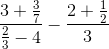
Simplify the following:
Tap to reveal answer
This problem merely requires careful working out of each part. Begin by simplifying the first fraction:

The numerator will be:
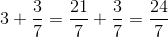
The denominator will be:
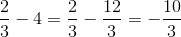
Thus, we have the following fraction:

Remember that you must multiply the numerator by the reciprocal of the denominator:
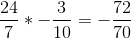
Now, work on the second fraction:

This fraction is much easier. After simplifying the numerator, you get:

This is the same as:

Thus, we come to our original expression! It is:

The common denominator of these fractions is  . Thus, you have:

This problem merely requires careful working out of each part. Begin by simplifying the first fraction:
The numerator will be:
The denominator will be:
Thus, we have the following fraction:
Remember that you must multiply the numerator by the reciprocal of the denominator:
Now, work on the second fraction:
This fraction is much easier. After simplifying the numerator, you get:
This is the same as:
Thus, we come to our original expression! It is:
The common denominator of these fractions is
← Didn't Know|Knew It →

Quantity A: 
Quantity B: 
Quantity A:
Quantity B:
Tap to reveal answer
As it is, quantities A and B have different denominators, so making a comparison can be tricky. Making a common denominator will allow for comparison of just the numerators, so that would make a good first step:
Quantity A:

Quantity B:

Disregarding equal denominators, since they'll always have a positive value, compare the numerators. If  is subtracted from quantity A and from quantity B, we're left with
  for the former and
  for the latter.
Quantity A is greater.
As it is, quantities A and B have different denominators, so making a comparison can be tricky. Making a common denominator will allow for comparison of just the numerators, so that would make a good first step:
Quantity A:
Quantity B:
Disregarding equal denominators, since they'll always have a positive value, compare the numerators. If
Quantity A is greater.
← Didn't Know|Knew It →
Quantity A: 
Quantity B: 
Quantity A:
Quantity B:
Tap to reveal answer
One way to approach this question is to try to reduce the complexity of each quantity. By subtracting the value of Quantity A,  from both A and B, we can make a new comparison:
Quantity A': 
Quantity B': 
Now, it's easy to see that for different values of  Quantity B may be greater, lesser, or equal to Quantity A.
Since  is not restricted in its possible values, the relationship cannot be determined.
One way to approach this question is to try to reduce the complexity of each quantity. By subtracting the value of Quantity A,
Quantity A':
Quantity B':
Now, it's easy to see that for different values of
Since
← Didn't Know|Knew It →
Rhoda can prune  rhododendrons in
  hours, while Rhonda can prune
  in
in  hours. If a work day is
  hours, how many rhododendrons will Rita have to prune per hour so that the team prunes the garden's
  rhododendrons?
Rhoda can prune
Tap to reveal answer
To find out how many rhododendrons Rita will need to prune in an hour, we must first find out how many she needs to prune.
If Rhoda can prune  rhododendrons in
  hours, then she can prune
  in
in  hours, and if Rhonda can prune
  in
in  hours, she can prune
  in
in  hours.
If this is not readily apparent, it can be found by finding out how many each prunes in one hour, then multiplying by  .
.
Rhoda: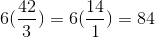
Rhonda: 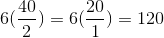
Between Rhoda and Rhonda,  of the
  rhododendrons can be pruned, leaving
  for Rita.
Since she has  hours for the task, her rate of pruning can be found to be:

To find out how many rhododendrons Rita will need to prune in an hour, we must first find out how many she needs to prune.
If Rhoda can prune
If this is not readily apparent, it can be found by finding out how many each prunes in one hour, then multiplying by
Rhoda:
Rhonda:
Between Rhoda and Rhonda,
Since she has
← Didn't Know|Knew It →
Simplify the following:
Simplify the following:
Tap to reveal answer
This problem merely requires careful working out of each part. Begin by simplifying the first fraction:
The numerator will be:
The denominator will be:
Thus, we have the following fraction:
Remember that you must multiply the numerator by the reciprocal of the denominator:
Now, work on the second fraction:
This fraction is much easier. After simplifying the numerator, you get:
This is the same as:
Thus, we come to our original expression! It is:
The common denominator of these fractions is . Thus, you have:
This problem merely requires careful working out of each part. Begin by simplifying the first fraction:
The numerator will be:
The denominator will be:
Thus, we have the following fraction:
Remember that you must multiply the numerator by the reciprocal of the denominator:
Now, work on the second fraction:
This fraction is much easier. After simplifying the numerator, you get:
This is the same as:
Thus, we come to our original expression! It is:
The common denominator of these fractions is
← Didn't Know|Knew It →
Quantity A:
Quantity B:
Quantity A:
Quantity B:
Tap to reveal answer
As it is, quantities A and B have different denominators, so making a comparison can be tricky. Making a common denominator will allow for comparison of just the numerators, so that would make a good first step:
Quantity A:
Quantity B:
Disregarding equal denominators, since they'll always have a positive value, compare the numerators. If is subtracted from quantity A and from quantity B, we're left with for the former and for the latter.
Quantity A is greater.
As it is, quantities A and B have different denominators, so making a comparison can be tricky. Making a common denominator will allow for comparison of just the numerators, so that would make a good first step:
Quantity A:
Quantity B:
Disregarding equal denominators, since they'll always have a positive value, compare the numerators. If
Quantity A is greater.
← Didn't Know|Knew It →
Quantity A:
Quantity B:
Quantity A:
Quantity B:
Tap to reveal answer
One way to approach this question is to try to reduce the complexity of each quantity. By subtracting the value of Quantity A, from both A and B, we can make a new comparison:
Quantity A':
Quantity B':
Now, it's easy to see that for different values of Quantity B may be greater, lesser, or equal to Quantity A.
Since is not restricted in its possible values, the relationship cannot be determined.
One way to approach this question is to try to reduce the complexity of each quantity. By subtracting the value of Quantity A,
Quantity A':
Quantity B':
Now, it's easy to see that for different values of
Since
← Didn't Know|Knew It →
Rhoda can prune rhododendrons in hours, while Rhonda can prune in hours. If a work day is hours, how many rhododendrons will Rita have to prune per hour so that the team prunes the garden's rhododendrons?
Rhoda can prune
Tap to reveal answer
To find out how many rhododendrons Rita will need to prune in an hour, we must first find out how many she needs to prune.
If Rhoda can prune rhododendrons in hours, then she can prune in hours, and if Rhonda can prune in hours, she can prune in hours.
If this is not readily apparent, it can be found by finding out how many each prunes in one hour, then multiplying by .
Rhoda:
Rhonda:
Between Rhoda and Rhonda, of the rhododendrons can be pruned, leaving for Rita.
Since she has hours for the task, her rate of pruning can be found to be:
To find out how many rhododendrons Rita will need to prune in an hour, we must first find out how many she needs to prune.
If Rhoda can prune
If this is not readily apparent, it can be found by finding out how many each prunes in one hour, then multiplying by
Rhoda:
Rhonda:
Between Rhoda and Rhonda,
Since she has
← Didn't Know|Knew It →
Simplify the following:
Simplify the following:
Tap to reveal answer
This problem merely requires careful working out of each part. Begin by simplifying the first fraction:
The numerator will be:
The denominator will be:
Thus, we have the following fraction:
Remember that you must multiply the numerator by the reciprocal of the denominator:
Now, work on the second fraction:
This fraction is much easier. After simplifying the numerator, you get:
This is the same as:
Thus, we come to our original expression! It is:
The common denominator of these fractions is . Thus, you have:
This problem merely requires careful working out of each part. Begin by simplifying the first fraction:
The numerator will be:
The denominator will be:
Thus, we have the following fraction:
Remember that you must multiply the numerator by the reciprocal of the denominator:
Now, work on the second fraction:
This fraction is much easier. After simplifying the numerator, you get:
This is the same as:
Thus, we come to our original expression! It is:
The common denominator of these fractions is
← Didn't Know|Knew It →
Quantity A:
Quantity B:
Quantity A:
Quantity B:
Tap to reveal answer
As it is, quantities A and B have different denominators, so making a comparison can be tricky. Making a common denominator will allow for comparison of just the numerators, so that would make a good first step:
Quantity A:
Quantity B:
Disregarding equal denominators, since they'll always have a positive value, compare the numerators. If is subtracted from quantity A and from quantity B, we're left with for the former and for the latter.
Quantity A is greater.
As it is, quantities A and B have different denominators, so making a comparison can be tricky. Making a common denominator will allow for comparison of just the numerators, so that would make a good first step:
Quantity A:
Quantity B:
Disregarding equal denominators, since they'll always have a positive value, compare the numerators. If
Quantity A is greater.
← Didn't Know|Knew It →
Quantity A:
Quantity B:
Quantity A:
Quantity B:
Tap to reveal answer
One way to approach this question is to try to reduce the complexity of each quantity. By subtracting the value of Quantity A, from both A and B, we can make a new comparison:
Quantity A':
Quantity B':
Now, it's easy to see that for different values of Quantity B may be greater, lesser, or equal to Quantity A.
Since is not restricted in its possible values, the relationship cannot be determined.
One way to approach this question is to try to reduce the complexity of each quantity. By subtracting the value of Quantity A,
Quantity A':
Quantity B':
Now, it's easy to see that for different values of
Since
← Didn't Know|Knew It →
Rhoda can prune rhododendrons in hours, while Rhonda can prune in hours. If a work day is hours, how many rhododendrons will Rita have to prune per hour so that the team prunes the garden's rhododendrons?
Rhoda can prune
Tap to reveal answer
To find out how many rhododendrons Rita will need to prune in an hour, we must first find out how many she needs to prune.
If Rhoda can prune rhododendrons in hours, then she can prune in hours, and if Rhonda can prune in hours, she can prune in hours.
If this is not readily apparent, it can be found by finding out how many each prunes in one hour, then multiplying by .
Rhoda:
Rhonda:
Between Rhoda and Rhonda, of the rhododendrons can be pruned, leaving for Rita.
Since she has hours for the task, her rate of pruning can be found to be:
To find out how many rhododendrons Rita will need to prune in an hour, we must first find out how many she needs to prune.
If Rhoda can prune
If this is not readily apparent, it can be found by finding out how many each prunes in one hour, then multiplying by
Rhoda:
Rhonda:
Between Rhoda and Rhonda,
Since she has
← Didn't Know|Knew It →
Simplify the following:
Simplify the following:
Tap to reveal answer
This problem merely requires careful working out of each part. Begin by simplifying the first fraction:
The numerator will be:
The denominator will be:
Thus, we have the following fraction:
Remember that you must multiply the numerator by the reciprocal of the denominator:
Now, work on the second fraction:
This fraction is much easier. After simplifying the numerator, you get:
This is the same as:
Thus, we come to our original expression! It is:
The common denominator of these fractions is . Thus, you have:
This problem merely requires careful working out of each part. Begin by simplifying the first fraction:
The numerator will be:
The denominator will be:
Thus, we have the following fraction:
Remember that you must multiply the numerator by the reciprocal of the denominator:
Now, work on the second fraction:
This fraction is much easier. After simplifying the numerator, you get:
This is the same as:
Thus, we come to our original expression! It is:
The common denominator of these fractions is
← Didn't Know|Knew It →
Quantity A:
Quantity B:
Quantity A:
Quantity B:
Tap to reveal answer
As it is, quantities A and B have different denominators, so making a comparison can be tricky. Making a common denominator will allow for comparison of just the numerators, so that would make a good first step:
Quantity A:
Quantity B:
Disregarding equal denominators, since they'll always have a positive value, compare the numerators. If is subtracted from quantity A and from quantity B, we're left with for the former and for the latter.
Quantity A is greater.
As it is, quantities A and B have different denominators, so making a comparison can be tricky. Making a common denominator will allow for comparison of just the numerators, so that would make a good first step:
Quantity A:
Quantity B:
Disregarding equal denominators, since they'll always have a positive value, compare the numerators. If
Quantity A is greater.
← Didn't Know|Knew It →
Quantity A:
Quantity B:
Quantity A:
Quantity B:
Tap to reveal answer
One way to approach this question is to try to reduce the complexity of each quantity. By subtracting the value of Quantity A, from both A and B, we can make a new comparison:
Quantity A':
Quantity B':
Now, it's easy to see that for different values of Quantity B may be greater, lesser, or equal to Quantity A.
Since is not restricted in its possible values, the relationship cannot be determined.
One way to approach this question is to try to reduce the complexity of each quantity. By subtracting the value of Quantity A,
Quantity A':
Quantity B':
Now, it's easy to see that for different values of
Since
← Didn't Know|Knew It →
Rhoda can prune rhododendrons in hours, while Rhonda can prune in hours. If a work day is hours, how many rhododendrons will Rita have to prune per hour so that the team prunes the garden's rhododendrons?
Rhoda can prune
Tap to reveal answer
To find out how many rhododendrons Rita will need to prune in an hour, we must first find out how many she needs to prune.
If Rhoda can prune rhododendrons in hours, then she can prune in hours, and if Rhonda can prune in hours, she can prune in hours.
If this is not readily apparent, it can be found by finding out how many each prunes in one hour, then multiplying by .
Rhoda:
Rhonda:
Between Rhoda and Rhonda, of the rhododendrons can be pruned, leaving for Rita.
Since she has hours for the task, her rate of pruning can be found to be:
To find out how many rhododendrons Rita will need to prune in an hour, we must first find out how many she needs to prune.
If Rhoda can prune
If this is not readily apparent, it can be found by finding out how many each prunes in one hour, then multiplying by
Rhoda:
Rhonda:
Between Rhoda and Rhonda,
Since she has
← Didn't Know|Knew It →
Simplify the following:
Simplify the following:
Tap to reveal answer
This problem merely requires careful working out of each part. Begin by simplifying the first fraction:
The numerator will be:
The denominator will be:
Thus, we have the following fraction:
Remember that you must multiply the numerator by the reciprocal of the denominator:
Now, work on the second fraction:
This fraction is much easier. After simplifying the numerator, you get:
This is the same as:
Thus, we come to our original expression! It is:
The common denominator of these fractions is . Thus, you have:
This problem merely requires careful working out of each part. Begin by simplifying the first fraction:
The numerator will be:
The denominator will be:
Thus, we have the following fraction:
Remember that you must multiply the numerator by the reciprocal of the denominator:
Now, work on the second fraction:
This fraction is much easier. After simplifying the numerator, you get:
This is the same as:
Thus, we come to our original expression! It is:
The common denominator of these fractions is
← Didn't Know|Knew It →
Quantity A:
Quantity B:
Quantity A:
Quantity B:
Tap to reveal answer
As it is, quantities A and B have different denominators, so making a comparison can be tricky. Making a common denominator will allow for comparison of just the numerators, so that would make a good first step:
Quantity A:
Quantity B:
Disregarding equal denominators, since they'll always have a positive value, compare the numerators. If is subtracted from quantity A and from quantity B, we're left with for the former and for the latter.
Quantity A is greater.
As it is, quantities A and B have different denominators, so making a comparison can be tricky. Making a common denominator will allow for comparison of just the numerators, so that would make a good first step:
Quantity A:
Quantity B:
Disregarding equal denominators, since they'll always have a positive value, compare the numerators. If
Quantity A is greater.
← Didn't Know|Knew It →
Quantity A:
Quantity B:
Quantity A:
Quantity B:
Tap to reveal answer
One way to approach this question is to try to reduce the complexity of each quantity. By subtracting the value of Quantity A, from both A and B, we can make a new comparison:
Quantity A':
Quantity B':
Now, it's easy to see that for different values of Quantity B may be greater, lesser, or equal to Quantity A.
Since is not restricted in its possible values, the relationship cannot be determined.
One way to approach this question is to try to reduce the complexity of each quantity. By subtracting the value of Quantity A,
Quantity A':
Quantity B':
Now, it's easy to see that for different values of
Since
← Didn't Know|Knew It →
Rhoda can prune rhododendrons in hours, while Rhonda can prune in hours. If a work day is hours, how many rhododendrons will Rita have to prune per hour so that the team prunes the garden's rhododendrons?
Rhoda can prune
Tap to reveal answer
To find out how many rhododendrons Rita will need to prune in an hour, we must first find out how many she needs to prune.
If Rhoda can prune rhododendrons in hours, then she can prune in hours, and if Rhonda can prune in hours, she can prune in hours.
If this is not readily apparent, it can be found by finding out how many each prunes in one hour, then multiplying by .
Rhoda:
Rhonda:
Between Rhoda and Rhonda, of the rhododendrons can be pruned, leaving for Rita.
Since she has hours for the task, her rate of pruning can be found to be:
To find out how many rhododendrons Rita will need to prune in an hour, we must first find out how many she needs to prune.
If Rhoda can prune
If this is not readily apparent, it can be found by finding out how many each prunes in one hour, then multiplying by
Rhoda:
Rhonda:
Between Rhoda and Rhonda,
Since she has
← Didn't Know|Knew It →