How to find if two acute / obtuse triangles are similar - ISEE Upper Level Quantitative Reasoning
Card 1 of 12
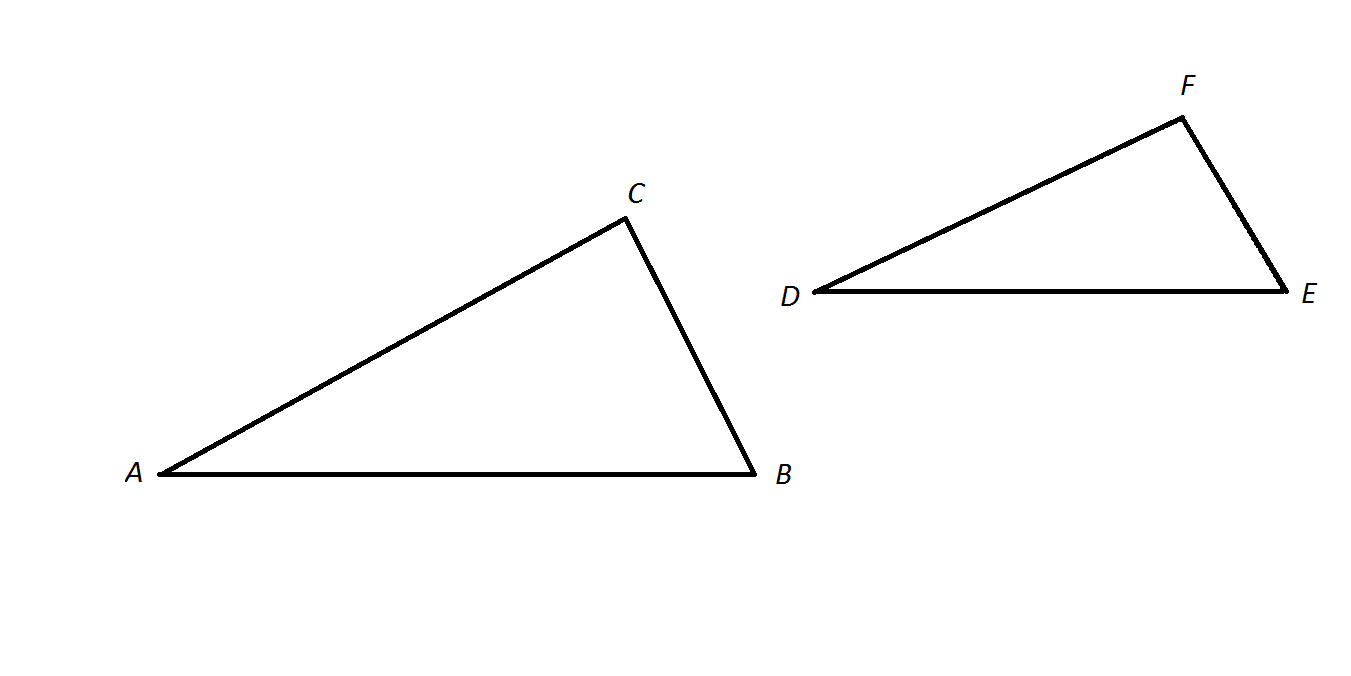
NOTE: Figures NOT drawn to scale.
Refer to the above two triangles.

What is  ?
?
NOTE: Figures NOT drawn to scale.
Refer to the above two triangles.
What is
Tap to reveal answer
Corresponding sides of similar triangle are proportional, so if
 , then

Substitute the known sidelengths, then solve for  :
:

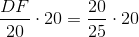


Corresponding sides of similar triangle are proportional, so if
Substitute the known sidelengths, then solve for
← Didn't Know|Knew It →


What is the perimeter of  ?
?
What is the perimeter of
Tap to reveal answer
By definition, since,  , side lengths are in proportion.
So,

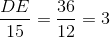
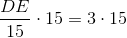


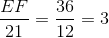
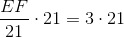

The perimeter of  is
is
 .
.
By definition, since,
So,
The perimeter of
← Didn't Know|Knew It →

What is  ?
?
What is
Tap to reveal answer
By definition, since , all side lengths are in proportion.


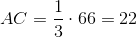
By definition, since
← Didn't Know|Knew It →
NOTE: Figures NOT drawn to scale.
Refer to the above two triangles.
What is ?
NOTE: Figures NOT drawn to scale.
Refer to the above two triangles.
What is
Tap to reveal answer
Corresponding sides of similar triangle are proportional, so if
, then
Substitute the known sidelengths, then solve for :
Corresponding sides of similar triangle are proportional, so if
Substitute the known sidelengths, then solve for
← Didn't Know|Knew It →
What is the perimeter of ?
What is the perimeter of
Tap to reveal answer
By definition, since, , side lengths are in proportion.
So,
The perimeter of is
.
By definition, since,
So,
The perimeter of
← Didn't Know|Knew It →
What is ?
What is
Tap to reveal answer
By definition, since , all side lengths are in proportion.
By definition, since
← Didn't Know|Knew It →
NOTE: Figures NOT drawn to scale.
Refer to the above two triangles.
What is ?
NOTE: Figures NOT drawn to scale.
Refer to the above two triangles.
What is
Tap to reveal answer
Corresponding sides of similar triangle are proportional, so if
, then
Substitute the known sidelengths, then solve for :
Corresponding sides of similar triangle are proportional, so if
Substitute the known sidelengths, then solve for
← Didn't Know|Knew It →
What is the perimeter of ?
What is the perimeter of
Tap to reveal answer
By definition, since, , side lengths are in proportion.
So,
The perimeter of is
.
By definition, since,
So,
The perimeter of
← Didn't Know|Knew It →
What is ?
What is
Tap to reveal answer
By definition, since , all side lengths are in proportion.
By definition, since
← Didn't Know|Knew It →
NOTE: Figures NOT drawn to scale.
Refer to the above two triangles.
What is ?
NOTE: Figures NOT drawn to scale.
Refer to the above two triangles.
What is
Tap to reveal answer
Corresponding sides of similar triangle are proportional, so if
, then
Substitute the known sidelengths, then solve for :
Corresponding sides of similar triangle are proportional, so if
Substitute the known sidelengths, then solve for
← Didn't Know|Knew It →
What is the perimeter of ?
What is the perimeter of
Tap to reveal answer
By definition, since, , side lengths are in proportion.
So,
The perimeter of is
.
By definition, since,
So,
The perimeter of
← Didn't Know|Knew It →
What is ?
What is
Tap to reveal answer
By definition, since , all side lengths are in proportion.
By definition, since
← Didn't Know|Knew It →