How to add trinomials - PSAT Math
Card 1 of 70
Evaluate the following:

Evaluate the following:
Tap to reveal answer
With this problem, you need to take the trinomials out of parentheses and combine like terms. Since the two trinomials are being added together, you can remove the parentheses without needing to change any signs:


The next step is to combine like terms, based on the variables. You have two terms with  , two terms with
  , and two terms with no variable. Make sure to pay attention to plus and minus signs with each term when combining like terms:

With this problem, you need to take the trinomials out of parentheses and combine like terms. Since the two trinomials are being added together, you can remove the parentheses without needing to change any signs:
The next step is to combine like terms, based on the variables. You have two terms with
← Didn't Know|Knew It →
Evaluate the following:

Evaluate the following:
Tap to reveal answer
With this problem, you need to distribute the two fractions across each of the trinomials. To do this, you multiply each term inside the parentheses by the fraction outside of it:


The next step is to combine like terms, based on the variables. You have two terms with  , two terms with
  , and two terms with no variable. Make sure to pay attention to plus and minus signs with each term when combining like terms. Since you have a positive and negative
  , those two terms will cancel out:

With this problem, you need to distribute the two fractions across each of the trinomials. To do this, you multiply each term inside the parentheses by the fraction outside of it:
The next step is to combine like terms, based on the variables. You have two terms with
← Didn't Know|Knew It →
Evaluate the following:

Evaluate the following:
Tap to reveal answer
To add these two trinomials, you will first begin by combining like terms. You have two terms with  , two terms with
  , and two terms with no variable. For the two fractions with
  , you can immediately add because they have common denominators:

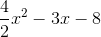

To add these two trinomials, you will first begin by combining like terms. You have two terms with
← Didn't Know|Knew It →
Add:

Add:
Tap to reveal answer
To add trinomials, identify and group together the like-terms:  . Next, factor out what is common between the like-terms:
 . Finally, add what is left inside the parentheses to obtain the final answer of
  .
.
To add trinomials, identify and group together the like-terms:
← Didn't Know|Knew It →
Simplify:

Simplify:
Tap to reveal answer
All operations are addition, so we can first remove the parentheses:

Now rearrange the terms so that like terms are next to each other:

Combine like terms:

All operations are addition, so we can first remove the parentheses:
Now rearrange the terms so that like terms are next to each other:
Combine like terms:
← Didn't Know|Knew It →
Add, expressing the result in simplest form:

Add, expressing the result in simplest form:
Tap to reveal answer


← Didn't Know|Knew It →
Add, expressing the result in simplest form:

Add, expressing the result in simplest form:
Tap to reveal answer


← Didn't Know|Knew It →
Add, expressing the result in simplest form:

Add, expressing the result in simplest form:
Tap to reveal answer


← Didn't Know|Knew It →
Add, expressing the result in simplest form:

Add, expressing the result in simplest form:
Tap to reveal answer


← Didn't Know|Knew It →
Find the sum:

Write the answer in standard form.
Find the sum:
Write the answer in standard form.
Tap to reveal answer
Find the sum:

Write the answer in standard form.
Combine like terms:

Write the answer in standard form (terms with the highest degree first):

Find the sum:
Write the answer in standard form.
Combine like terms:
Write the answer in standard form (terms with the highest degree first):
← Didn't Know|Knew It →
Evaluate the following:
Evaluate the following:
Tap to reveal answer
With this problem, you need to take the trinomials out of parentheses and combine like terms. Since the two trinomials are being added together, you can remove the parentheses without needing to change any signs:
The next step is to combine like terms, based on the variables. You have two terms with , two terms with , and two terms with no variable. Make sure to pay attention to plus and minus signs with each term when combining like terms:
With this problem, you need to take the trinomials out of parentheses and combine like terms. Since the two trinomials are being added together, you can remove the parentheses without needing to change any signs:
The next step is to combine like terms, based on the variables. You have two terms with
← Didn't Know|Knew It →
Evaluate the following:
Evaluate the following:
Tap to reveal answer
With this problem, you need to distribute the two fractions across each of the trinomials. To do this, you multiply each term inside the parentheses by the fraction outside of it:
The next step is to combine like terms, based on the variables. You have two terms with , two terms with , and two terms with no variable. Make sure to pay attention to plus and minus signs with each term when combining like terms. Since you have a positive and negative , those two terms will cancel out:
With this problem, you need to distribute the two fractions across each of the trinomials. To do this, you multiply each term inside the parentheses by the fraction outside of it:
The next step is to combine like terms, based on the variables. You have two terms with
← Didn't Know|Knew It →
Evaluate the following:
Evaluate the following:
Tap to reveal answer
To add these two trinomials, you will first begin by combining like terms. You have two terms with , two terms with , and two terms with no variable. For the two fractions with , you can immediately add because they have common denominators:
To add these two trinomials, you will first begin by combining like terms. You have two terms with
← Didn't Know|Knew It →
Add:
Add:
Tap to reveal answer
To add trinomials, identify and group together the like-terms: . Next, factor out what is common between the like-terms:. Finally, add what is left inside the parentheses to obtain the final answer of .
To add trinomials, identify and group together the like-terms:
← Didn't Know|Knew It →
Simplify:
Simplify:
Tap to reveal answer
All operations are addition, so we can first remove the parentheses:
Now rearrange the terms so that like terms are next to each other:
Combine like terms:
All operations are addition, so we can first remove the parentheses:
Now rearrange the terms so that like terms are next to each other:
Combine like terms:
← Didn't Know|Knew It →
Add, expressing the result in simplest form:
Add, expressing the result in simplest form:
Tap to reveal answer
← Didn't Know|Knew It →
Add, expressing the result in simplest form:
Add, expressing the result in simplest form:
Tap to reveal answer
← Didn't Know|Knew It →
Add, expressing the result in simplest form:
Add, expressing the result in simplest form:
Tap to reveal answer
← Didn't Know|Knew It →
Add, expressing the result in simplest form:
Add, expressing the result in simplest form:
Tap to reveal answer
← Didn't Know|Knew It →
Find the sum:
Write the answer in standard form.
Find the sum:
Write the answer in standard form.
Tap to reveal answer
Find the sum:
Write the answer in standard form.
Combine like terms:
Write the answer in standard form (terms with the highest degree first):
Find the sum:
Write the answer in standard form.
Combine like terms:
Write the answer in standard form (terms with the highest degree first):
← Didn't Know|Knew It →