How to find if right triangles are congruent - PSAT Math
Card 1 of 7
You are given triangles  and
and  ,with
,with  and
and  both right angles, and
  . Which of these statements, along with what you are given, is not enough to prove that
  ?
?
I) 
II) 
III)  and
and  have the same area.
You are given triangles
I)
II)
III)
Tap to reveal answer
 , and the right angles are
  and
and  , so we have two right triangles with congruent legs.
If we also know that  , then the hypotenuses of the right triangles are also congruent, and this sets up the conditions of the Hypotenuse-Leg Theorem.
If we also know that  , then, along with the fact that
  (both being right angles) and nonincluded sides
  , the conditions of the Angle-Angle-Side Theorem are set up.
If we also know  and
and  have the same area, we can demonstrate that the other legs are congruent. The area of a right triangle is half the product of its legs, and since we have the same areas,



Since  ,
,
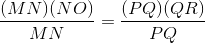

The legs and the included angles (the right angles) are congruent, thus setting up the conditions for the Angle-Side-Angle Postulate.
In all three cases, congruence follows, so the correct response is "Any of the three statements is enough to prove congruence."
If we also know that
If we also know that
If we also know
Since
The legs and the included angles (the right angles) are congruent, thus setting up the conditions for the Angle-Side-Angle Postulate.
In all three cases, congruence follows, so the correct response is "Any of the three statements is enough to prove congruence."
← Didn't Know|Knew It →
You are given triangles and ,with and both right angles, and . Which of these statements, along with what you are given, is not enough to prove that ?
I)
II)
III) and have the same area.
You are given triangles
I)
II)
III)
Tap to reveal answer
, and the right angles are and , so we have two right triangles with congruent legs.
If we also know that , then the hypotenuses of the right triangles are also congruent, and this sets up the conditions of the Hypotenuse-Leg Theorem.
If we also know that , then, along with the fact that (both being right angles) and nonincluded sides , the conditions of the Angle-Angle-Side Theorem are set up.
If we also know and have the same area, we can demonstrate that the other legs are congruent. The area of a right triangle is half the product of its legs, and since we have the same areas,
Since ,
The legs and the included angles (the right angles) are congruent, thus setting up the conditions for the Angle-Side-Angle Postulate.
In all three cases, congruence follows, so the correct response is "Any of the three statements is enough to prove congruence."
If we also know that
If we also know that
If we also know
Since
The legs and the included angles (the right angles) are congruent, thus setting up the conditions for the Angle-Side-Angle Postulate.
In all three cases, congruence follows, so the correct response is "Any of the three statements is enough to prove congruence."
← Didn't Know|Knew It →
You are given triangles and ,with and both right angles, and . Which of these statements, along with what you are given, is not enough to prove that ?
I)
II)
III) and have the same area.
You are given triangles
I)
II)
III)
Tap to reveal answer
, and the right angles are and , so we have two right triangles with congruent legs.
If we also know that , then the hypotenuses of the right triangles are also congruent, and this sets up the conditions of the Hypotenuse-Leg Theorem.
If we also know that , then, along with the fact that (both being right angles) and nonincluded sides , the conditions of the Angle-Angle-Side Theorem are set up.
If we also know and have the same area, we can demonstrate that the other legs are congruent. The area of a right triangle is half the product of its legs, and since we have the same areas,
Since ,
The legs and the included angles (the right angles) are congruent, thus setting up the conditions for the Angle-Side-Angle Postulate.
In all three cases, congruence follows, so the correct response is "Any of the three statements is enough to prove congruence."
If we also know that
If we also know that
If we also know
Since
The legs and the included angles (the right angles) are congruent, thus setting up the conditions for the Angle-Side-Angle Postulate.
In all three cases, congruence follows, so the correct response is "Any of the three statements is enough to prove congruence."
← Didn't Know|Knew It →
You are given triangles and ,with and both right angles, and . Which of these statements, along with what you are given, is not enough to prove that ?
I)
II)
III) and have the same area.
You are given triangles
I)
II)
III)
Tap to reveal answer
, and the right angles are and , so we have two right triangles with congruent legs.
If we also know that , then the hypotenuses of the right triangles are also congruent, and this sets up the conditions of the Hypotenuse-Leg Theorem.
If we also know that , then, along with the fact that (both being right angles) and nonincluded sides , the conditions of the Angle-Angle-Side Theorem are set up.
If we also know and have the same area, we can demonstrate that the other legs are congruent. The area of a right triangle is half the product of its legs, and since we have the same areas,
Since ,
The legs and the included angles (the right angles) are congruent, thus setting up the conditions for the Angle-Side-Angle Postulate.
In all three cases, congruence follows, so the correct response is "Any of the three statements is enough to prove congruence."
If we also know that
If we also know that
If we also know
Since
The legs and the included angles (the right angles) are congruent, thus setting up the conditions for the Angle-Side-Angle Postulate.
In all three cases, congruence follows, so the correct response is "Any of the three statements is enough to prove congruence."
← Didn't Know|Knew It →
You are given triangles and ,with and both right angles, and . Which of these statements, along with what you are given, is not enough to prove that ?
I)
II)
III) and have the same area.
You are given triangles
I)
II)
III)
Tap to reveal answer
, and the right angles are and , so we have two right triangles with congruent legs.
If we also know that , then the hypotenuses of the right triangles are also congruent, and this sets up the conditions of the Hypotenuse-Leg Theorem.
If we also know that , then, along with the fact that (both being right angles) and nonincluded sides , the conditions of the Angle-Angle-Side Theorem are set up.
If we also know and have the same area, we can demonstrate that the other legs are congruent. The area of a right triangle is half the product of its legs, and since we have the same areas,
Since ,
The legs and the included angles (the right angles) are congruent, thus setting up the conditions for the Angle-Side-Angle Postulate.
In all three cases, congruence follows, so the correct response is "Any of the three statements is enough to prove congruence."
If we also know that
If we also know that
If we also know
Since
The legs and the included angles (the right angles) are congruent, thus setting up the conditions for the Angle-Side-Angle Postulate.
In all three cases, congruence follows, so the correct response is "Any of the three statements is enough to prove congruence."
← Didn't Know|Knew It →
You are given triangles and ,with and both right angles, and . Which of these statements, along with what you are given, is not enough to prove that ?
I)
II)
III) and have the same area.
You are given triangles
I)
II)
III)
Tap to reveal answer
, and the right angles are and , so we have two right triangles with congruent legs.
If we also know that , then the hypotenuses of the right triangles are also congruent, and this sets up the conditions of the Hypotenuse-Leg Theorem.
If we also know that , then, along with the fact that (both being right angles) and nonincluded sides , the conditions of the Angle-Angle-Side Theorem are set up.
If we also know and have the same area, we can demonstrate that the other legs are congruent. The area of a right triangle is half the product of its legs, and since we have the same areas,
Since ,
The legs and the included angles (the right angles) are congruent, thus setting up the conditions for the Angle-Side-Angle Postulate.
In all three cases, congruence follows, so the correct response is "Any of the three statements is enough to prove congruence."
If we also know that
If we also know that
If we also know
Since
The legs and the included angles (the right angles) are congruent, thus setting up the conditions for the Angle-Side-Angle Postulate.
In all three cases, congruence follows, so the correct response is "Any of the three statements is enough to prove congruence."
← Didn't Know|Knew It →
You are given triangles and ,with and both right angles, and . Which of these statements, along with what you are given, is not enough to prove that ?
I)
II)
III) and have the same area.
You are given triangles
I)
II)
III)
Tap to reveal answer
, and the right angles are and , so we have two right triangles with congruent legs.
If we also know that , then the hypotenuses of the right triangles are also congruent, and this sets up the conditions of the Hypotenuse-Leg Theorem.
If we also know that , then, along with the fact that (both being right angles) and nonincluded sides , the conditions of the Angle-Angle-Side Theorem are set up.
If we also know and have the same area, we can demonstrate that the other legs are congruent. The area of a right triangle is half the product of its legs, and since we have the same areas,
Since ,
The legs and the included angles (the right angles) are congruent, thus setting up the conditions for the Angle-Side-Angle Postulate.
In all three cases, congruence follows, so the correct response is "Any of the three statements is enough to prove congruence."
If we also know that
If we also know that
If we also know
Since
The legs and the included angles (the right angles) are congruent, thus setting up the conditions for the Angle-Side-Angle Postulate.
In all three cases, congruence follows, so the correct response is "Any of the three statements is enough to prove congruence."
← Didn't Know|Knew It →