How to find the slope of parallel lines - PSAT Math
Card 1 of 35
Consider line c to be y= -4x - 7. Which is the reflection of line c across the x-axis?
Consider line c to be y= -4x - 7. Which is the reflection of line c across the x-axis?
Tap to reveal answer
A line reflected across the x-axis will have the negative value of the slope and intercept. This leaves y= 4x + 7.
A line reflected across the x-axis will have the negative value of the slope and intercept. This leaves y= 4x + 7.
← Didn't Know|Knew It →
Line  is represented by the equation
  .
.
If line  passes through the points
  and
and  , and if
  is parallel to
  , then what is the value of
  ?
?
Line
If line
Tap to reveal answer
We are told that lines l and m are parallel. This means that the slope of line m must be the same as the slope of l. Line l is written in the standard form of Ax + By = C, so its slope is equal to –A/B, or –2/–3, which equals 2/3. Therefore, the slope of line m must also be 2/3.
We are told that line m passes through the points (1, 4) and (2, a). The slope between these two points must equal 2/3. We can use the formula for the slope between two points and then set this equal to 2/3.
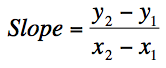
slope = (a – 4)/(2 – 1) = a – 4 = 2/3
a – 4 = 2/3
Multiply both sides by 3:
3(a – 4) = 2
3a – 12 = 2
Add 12 to both sides:
3a = 14
a = 14/3
We are told that lines l and m are parallel. This means that the slope of line m must be the same as the slope of l. Line l is written in the standard form of Ax + By = C, so its slope is equal to –A/B, or –2/–3, which equals 2/3. Therefore, the slope of line m must also be 2/3.
We are told that line m passes through the points (1, 4) and (2, a). The slope between these two points must equal 2/3. We can use the formula for the slope between two points and then set this equal to 2/3.
slope = (a – 4)/(2 – 1) = a – 4 = 2/3
a – 4 = 2/3
Multiply both sides by 3:
3(a – 4) = 2
3a – 12 = 2
Add 12 to both sides:
3a = 14
a = 14/3
← Didn't Know|Knew It →
If line J passes through the points (1, 3) and (2, 4) and line K passes through (0, x) and (10, 3), what would be the value of x in order for lines J and K to be parallel?
If line J passes through the points (1, 3) and (2, 4) and line K passes through (0, x) and (10, 3), what would be the value of x in order for lines J and K to be parallel?
Tap to reveal answer
Find the slope of line J, (4 – 3)/(2 – 1) = 1
Now use this slope in for the equation of line K of the form y = mx + b for the other point (10, 3)
3 = 10 + b → b = –7
So for the point (0, X) → X = 0 – 7,
so x = –7 when these two lines are parallel.
Find the slope of line J, (4 – 3)/(2 – 1) = 1
Now use this slope in for the equation of line K of the form y = mx + b for the other point (10, 3)
3 = 10 + b → b = –7
So for the point (0, X) → X = 0 – 7,
so x = –7 when these two lines are parallel.
← Didn't Know|Knew It →
Which of the following lines is parallel to  ?
?
Which of the following lines is parallel to
Tap to reveal answer
Two lines are parallel if they have the same slope. In the  equation,
  represents the line's slope. The correct answer must therefore have a slope of 2. That line is
 .
.
Two lines are parallel if they have the same slope. In the
← Didn't Know|Knew It →
In the xy-plane, what is the equation for a line that is parallel to  and passes through the point
  ?
?
In the xy-plane, what is the equation for a line that is parallel to
Tap to reveal answer
In order to solve the equation for this line, you need to things: the slope, and at least one point. You are already given a point for the line, so you just need to figure out the slope. The other piece of information you have is a line parallel to the line that you're looking for; since parallel lines have the same slope, you just need to figure out the slope of the parallel line you've already been given.
To figure out the slope, change the equation into point-slope form (y = m_x+_b) so the slope m is easy to find. To do that, you need to isolate y on one side of the equation.



By the calculations above, you'll find that the slope of the parallel line is -1/2.
Now, use this slope of -1/2 and the point 4,1 to find the equation. First, plug them both into the point-slope form, then solve for the slope-intercept form.



In order to solve the equation for this line, you need to things: the slope, and at least one point. You are already given a point for the line, so you just need to figure out the slope. The other piece of information you have is a line parallel to the line that you're looking for; since parallel lines have the same slope, you just need to figure out the slope of the parallel line you've already been given.
To figure out the slope, change the equation into point-slope form (y = m_x+_b) so the slope m is easy to find. To do that, you need to isolate y on one side of the equation.
By the calculations above, you'll find that the slope of the parallel line is -1/2.
Now, use this slope of -1/2 and the point 4,1 to find the equation. First, plug them both into the point-slope form, then solve for the slope-intercept form.
← Didn't Know|Knew It →
Consider line c to be y= -4x - 7. Which is the reflection of line c across the x-axis?
Consider line c to be y= -4x - 7. Which is the reflection of line c across the x-axis?
Tap to reveal answer
A line reflected across the x-axis will have the negative value of the slope and intercept. This leaves y= 4x + 7.
A line reflected across the x-axis will have the negative value of the slope and intercept. This leaves y= 4x + 7.
← Didn't Know|Knew It →
Line is represented by the equation .
If line passes through the points and , and if is parallel to , then what is the value of ?
Line
If line
Tap to reveal answer
We are told that lines l and m are parallel. This means that the slope of line m must be the same as the slope of l. Line l is written in the standard form of Ax + By = C, so its slope is equal to –A/B, or –2/–3, which equals 2/3. Therefore, the slope of line m must also be 2/3.
We are told that line m passes through the points (1, 4) and (2, a). The slope between these two points must equal 2/3. We can use the formula for the slope between two points and then set this equal to 2/3.
slope = (a – 4)/(2 – 1) = a – 4 = 2/3
a – 4 = 2/3
Multiply both sides by 3:
3(a – 4) = 2
3a – 12 = 2
Add 12 to both sides:
3a = 14
a = 14/3
We are told that lines l and m are parallel. This means that the slope of line m must be the same as the slope of l. Line l is written in the standard form of Ax + By = C, so its slope is equal to –A/B, or –2/–3, which equals 2/3. Therefore, the slope of line m must also be 2/3.
We are told that line m passes through the points (1, 4) and (2, a). The slope between these two points must equal 2/3. We can use the formula for the slope between two points and then set this equal to 2/3.
slope = (a – 4)/(2 – 1) = a – 4 = 2/3
a – 4 = 2/3
Multiply both sides by 3:
3(a – 4) = 2
3a – 12 = 2
Add 12 to both sides:
3a = 14
a = 14/3
← Didn't Know|Knew It →
If line J passes through the points (1, 3) and (2, 4) and line K passes through (0, x) and (10, 3), what would be the value of x in order for lines J and K to be parallel?
If line J passes through the points (1, 3) and (2, 4) and line K passes through (0, x) and (10, 3), what would be the value of x in order for lines J and K to be parallel?
Tap to reveal answer
Find the slope of line J, (4 – 3)/(2 – 1) = 1
Now use this slope in for the equation of line K of the form y = mx + b for the other point (10, 3)
3 = 10 + b → b = –7
So for the point (0, X) → X = 0 – 7,
so x = –7 when these two lines are parallel.
Find the slope of line J, (4 – 3)/(2 – 1) = 1
Now use this slope in for the equation of line K of the form y = mx + b for the other point (10, 3)
3 = 10 + b → b = –7
So for the point (0, X) → X = 0 – 7,
so x = –7 when these two lines are parallel.
← Didn't Know|Knew It →
Which of the following lines is parallel to ?
Which of the following lines is parallel to
Tap to reveal answer
Two lines are parallel if they have the same slope. In the equation, represents the line's slope. The correct answer must therefore have a slope of 2. That line is
.
Two lines are parallel if they have the same slope. In the
← Didn't Know|Knew It →
In the xy-plane, what is the equation for a line that is parallel to and passes through the point ?
In the xy-plane, what is the equation for a line that is parallel to
Tap to reveal answer
In order to solve the equation for this line, you need to things: the slope, and at least one point. You are already given a point for the line, so you just need to figure out the slope. The other piece of information you have is a line parallel to the line that you're looking for; since parallel lines have the same slope, you just need to figure out the slope of the parallel line you've already been given.
To figure out the slope, change the equation into point-slope form (y = m_x+_b) so the slope m is easy to find. To do that, you need to isolate y on one side of the equation.
By the calculations above, you'll find that the slope of the parallel line is -1/2.
Now, use this slope of -1/2 and the point 4,1 to find the equation. First, plug them both into the point-slope form, then solve for the slope-intercept form.
In order to solve the equation for this line, you need to things: the slope, and at least one point. You are already given a point for the line, so you just need to figure out the slope. The other piece of information you have is a line parallel to the line that you're looking for; since parallel lines have the same slope, you just need to figure out the slope of the parallel line you've already been given.
To figure out the slope, change the equation into point-slope form (y = m_x+_b) so the slope m is easy to find. To do that, you need to isolate y on one side of the equation.
By the calculations above, you'll find that the slope of the parallel line is -1/2.
Now, use this slope of -1/2 and the point 4,1 to find the equation. First, plug them both into the point-slope form, then solve for the slope-intercept form.
← Didn't Know|Knew It →
Consider line c to be y= -4x - 7. Which is the reflection of line c across the x-axis?
Consider line c to be y= -4x - 7. Which is the reflection of line c across the x-axis?
Tap to reveal answer
A line reflected across the x-axis will have the negative value of the slope and intercept. This leaves y= 4x + 7.
A line reflected across the x-axis will have the negative value of the slope and intercept. This leaves y= 4x + 7.
← Didn't Know|Knew It →
Line is represented by the equation .
If line passes through the points and , and if is parallel to , then what is the value of ?
Line
If line
Tap to reveal answer
We are told that lines l and m are parallel. This means that the slope of line m must be the same as the slope of l. Line l is written in the standard form of Ax + By = C, so its slope is equal to –A/B, or –2/–3, which equals 2/3. Therefore, the slope of line m must also be 2/3.
We are told that line m passes through the points (1, 4) and (2, a). The slope between these two points must equal 2/3. We can use the formula for the slope between two points and then set this equal to 2/3.
slope = (a – 4)/(2 – 1) = a – 4 = 2/3
a – 4 = 2/3
Multiply both sides by 3:
3(a – 4) = 2
3a – 12 = 2
Add 12 to both sides:
3a = 14
a = 14/3
We are told that lines l and m are parallel. This means that the slope of line m must be the same as the slope of l. Line l is written in the standard form of Ax + By = C, so its slope is equal to –A/B, or –2/–3, which equals 2/3. Therefore, the slope of line m must also be 2/3.
We are told that line m passes through the points (1, 4) and (2, a). The slope between these two points must equal 2/3. We can use the formula for the slope between two points and then set this equal to 2/3.
slope = (a – 4)/(2 – 1) = a – 4 = 2/3
a – 4 = 2/3
Multiply both sides by 3:
3(a – 4) = 2
3a – 12 = 2
Add 12 to both sides:
3a = 14
a = 14/3
← Didn't Know|Knew It →
If line J passes through the points (1, 3) and (2, 4) and line K passes through (0, x) and (10, 3), what would be the value of x in order for lines J and K to be parallel?
If line J passes through the points (1, 3) and (2, 4) and line K passes through (0, x) and (10, 3), what would be the value of x in order for lines J and K to be parallel?
Tap to reveal answer
Find the slope of line J, (4 – 3)/(2 – 1) = 1
Now use this slope in for the equation of line K of the form y = mx + b for the other point (10, 3)
3 = 10 + b → b = –7
So for the point (0, X) → X = 0 – 7,
so x = –7 when these two lines are parallel.
Find the slope of line J, (4 – 3)/(2 – 1) = 1
Now use this slope in for the equation of line K of the form y = mx + b for the other point (10, 3)
3 = 10 + b → b = –7
So for the point (0, X) → X = 0 – 7,
so x = –7 when these two lines are parallel.
← Didn't Know|Knew It →
Which of the following lines is parallel to ?
Which of the following lines is parallel to
Tap to reveal answer
Two lines are parallel if they have the same slope. In the equation, represents the line's slope. The correct answer must therefore have a slope of 2. That line is
.
Two lines are parallel if they have the same slope. In the
← Didn't Know|Knew It →
In the xy-plane, what is the equation for a line that is parallel to and passes through the point ?
In the xy-plane, what is the equation for a line that is parallel to
Tap to reveal answer
In order to solve the equation for this line, you need to things: the slope, and at least one point. You are already given a point for the line, so you just need to figure out the slope. The other piece of information you have is a line parallel to the line that you're looking for; since parallel lines have the same slope, you just need to figure out the slope of the parallel line you've already been given.
To figure out the slope, change the equation into point-slope form (y = m_x+_b) so the slope m is easy to find. To do that, you need to isolate y on one side of the equation.
By the calculations above, you'll find that the slope of the parallel line is -1/2.
Now, use this slope of -1/2 and the point 4,1 to find the equation. First, plug them both into the point-slope form, then solve for the slope-intercept form.
In order to solve the equation for this line, you need to things: the slope, and at least one point. You are already given a point for the line, so you just need to figure out the slope. The other piece of information you have is a line parallel to the line that you're looking for; since parallel lines have the same slope, you just need to figure out the slope of the parallel line you've already been given.
To figure out the slope, change the equation into point-slope form (y = m_x+_b) so the slope m is easy to find. To do that, you need to isolate y on one side of the equation.
By the calculations above, you'll find that the slope of the parallel line is -1/2.
Now, use this slope of -1/2 and the point 4,1 to find the equation. First, plug them both into the point-slope form, then solve for the slope-intercept form.
← Didn't Know|Knew It →
Consider line c to be y= -4x - 7. Which is the reflection of line c across the x-axis?
Consider line c to be y= -4x - 7. Which is the reflection of line c across the x-axis?
Tap to reveal answer
A line reflected across the x-axis will have the negative value of the slope and intercept. This leaves y= 4x + 7.
A line reflected across the x-axis will have the negative value of the slope and intercept. This leaves y= 4x + 7.
← Didn't Know|Knew It →
Line is represented by the equation .
If line passes through the points and , and if is parallel to , then what is the value of ?
Line
If line
Tap to reveal answer
We are told that lines l and m are parallel. This means that the slope of line m must be the same as the slope of l. Line l is written in the standard form of Ax + By = C, so its slope is equal to –A/B, or –2/–3, which equals 2/3. Therefore, the slope of line m must also be 2/3.
We are told that line m passes through the points (1, 4) and (2, a). The slope between these two points must equal 2/3. We can use the formula for the slope between two points and then set this equal to 2/3.
slope = (a – 4)/(2 – 1) = a – 4 = 2/3
a – 4 = 2/3
Multiply both sides by 3:
3(a – 4) = 2
3a – 12 = 2
Add 12 to both sides:
3a = 14
a = 14/3
We are told that lines l and m are parallel. This means that the slope of line m must be the same as the slope of l. Line l is written in the standard form of Ax + By = C, so its slope is equal to –A/B, or –2/–3, which equals 2/3. Therefore, the slope of line m must also be 2/3.
We are told that line m passes through the points (1, 4) and (2, a). The slope between these two points must equal 2/3. We can use the formula for the slope between two points and then set this equal to 2/3.
slope = (a – 4)/(2 – 1) = a – 4 = 2/3
a – 4 = 2/3
Multiply both sides by 3:
3(a – 4) = 2
3a – 12 = 2
Add 12 to both sides:
3a = 14
a = 14/3
← Didn't Know|Knew It →
If line J passes through the points (1, 3) and (2, 4) and line K passes through (0, x) and (10, 3), what would be the value of x in order for lines J and K to be parallel?
If line J passes through the points (1, 3) and (2, 4) and line K passes through (0, x) and (10, 3), what would be the value of x in order for lines J and K to be parallel?
Tap to reveal answer
Find the slope of line J, (4 – 3)/(2 – 1) = 1
Now use this slope in for the equation of line K of the form y = mx + b for the other point (10, 3)
3 = 10 + b → b = –7
So for the point (0, X) → X = 0 – 7,
so x = –7 when these two lines are parallel.
Find the slope of line J, (4 – 3)/(2 – 1) = 1
Now use this slope in for the equation of line K of the form y = mx + b for the other point (10, 3)
3 = 10 + b → b = –7
So for the point (0, X) → X = 0 – 7,
so x = –7 when these two lines are parallel.
← Didn't Know|Knew It →
Which of the following lines is parallel to ?
Which of the following lines is parallel to
Tap to reveal answer
Two lines are parallel if they have the same slope. In the equation, represents the line's slope. The correct answer must therefore have a slope of 2. That line is
.
Two lines are parallel if they have the same slope. In the
← Didn't Know|Knew It →
In the xy-plane, what is the equation for a line that is parallel to and passes through the point ?
In the xy-plane, what is the equation for a line that is parallel to
Tap to reveal answer
In order to solve the equation for this line, you need to things: the slope, and at least one point. You are already given a point for the line, so you just need to figure out the slope. The other piece of information you have is a line parallel to the line that you're looking for; since parallel lines have the same slope, you just need to figure out the slope of the parallel line you've already been given.
To figure out the slope, change the equation into point-slope form (y = m_x+_b) so the slope m is easy to find. To do that, you need to isolate y on one side of the equation.
By the calculations above, you'll find that the slope of the parallel line is -1/2.
Now, use this slope of -1/2 and the point 4,1 to find the equation. First, plug them both into the point-slope form, then solve for the slope-intercept form.
In order to solve the equation for this line, you need to things: the slope, and at least one point. You are already given a point for the line, so you just need to figure out the slope. The other piece of information you have is a line parallel to the line that you're looking for; since parallel lines have the same slope, you just need to figure out the slope of the parallel line you've already been given.
To figure out the slope, change the equation into point-slope form (y = m_x+_b) so the slope m is easy to find. To do that, you need to isolate y on one side of the equation.
By the calculations above, you'll find that the slope of the parallel line is -1/2.
Now, use this slope of -1/2 and the point 4,1 to find the equation. First, plug them both into the point-slope form, then solve for the slope-intercept form.
← Didn't Know|Knew It →